If you’d like to pack chocolate sprinkles for school, start by choosing a bread base that suits the lunch: wholemeal bread if that’s your priority, sourdough if you specifically want that flavour, or rusks or crispbread if you’re after something crunchy. Sourdough doesn’t automatically mean wholemeal. Before packing lunch, check the allergens in both the base and the sprinkles, and find out what the school’s policy says about sweet toppings.
Who should consider this choice?
Parents checking school policies and allergens
If you want to check that your chosen base and chocolate sprinkles suit your child and comply with the school’s policy before packing lunch, this is for you. The Netherlands Food and Consumer Product Safety Authority explains how allergens are listed on labels, while the Netherlands Nutrition Centre says schools can set their own food policies.
Families looking to combine sourdough and wholemeal
If you’re after the flavour of sourdough but also want to choose a wholemeal bread base, this is for you. The word ‘sourdough’ doesn’t tell you whether a loaf is wholemeal, so check the product name and ingredients.
Shoppers looking for a crunchy lunch base
If you’d rather portion out crispbread in advance than pack fresh sandwiches, this is for you. Check the grain and allergens in this base too; Albert Heijn, for example, lists rye and barley among the ingredients in Wasa Sourdough Rye.
What should you look for when buying?
Bread, crispbread and rusks all serve the same purpose in this lunch combination, but each calls for a slightly different consideration. Choose the base separately from the chocolate sprinkles, then check both products.
Wholemeal sourdough bread
Choose this when: you want to combine sourdough flavour with a bread base that’s explicitly labelled wholemeal.
Bear in mind: sourdough alone doesn’t confirm that the bread is wholemeal.
Sourdough crispbread
Choose this when: you want a crunchy base that you can portion out in advance.
Bear in mind: check the grain and allergens for your chosen variety separately.
Rusks with chocolate sprinkles
Choose this when: you want to pack this familiar, crunchy combination and it fits the school’s policy.
Bear in mind: check the nutritional information for your chosen rusks; adding chocolate sprinkles doesn’t make the base wholemeal.
| What to consider |
What to check when buying |
Who should pay particular attention? |
| Allergens and school policies |
Check the allergen information for the base and chocolate sprinkles separately. If you’re buying unpackaged bread, ask about its ingredients and check the school’s policy. |
If I need to pack lunch around allergies or school rules, I want to be able to check both products in advance. This is the top priority for around 31% of consumers. |
| Wholemeal bread base |
Look for the wholemeal label on your chosen base; don’t rely on the word ‘sourdough’ or a rustic appearance. |
For everyday lunches, I want to know which grain product I’m packing, separately from the sweet topping. Around 31% of consumers give choosing a wholemeal base the highest priority. |
| Sourdough flavour |
Check that your chosen bread or crispbread is actually labelled as sourdough, and that its format suits the lunchbox. |
Sourdough’s flavour and texture are why I’d look beyond ordinary rusks. This is the main thing around 23% of consumers are looking for. |
| Availability and portioning |
Find out where you can buy the specific product and how you want to portion the base for the lunchbox. |
If I regularly prepare lunches, I want a base that’s easy to buy and portion. This practical consideration matters most to around 15% of consumers. |
Common mistakes
-
Assuming sourdough means wholemeal
Sourdough describes the method, not the type of flour. The Netherlands Nutrition Centre says the choice between white, brown and wholemeal bread is relevant when you’re assessing your bread base.
Check the bread’s name and ingredients, then choose based on its sourdough flavour.
-
Only checking the chocolate sprinkles’ label
The base may contain allergens too. Albert Heijn lists rye, barley and cereals containing gluten in Wasa Sourdough Rye; individual chocolate sprinkle products may also list milk and soya.
Check the current packaging for each product separately, and ask about allergen information if you’re buying unpackaged bread.
-
Assuming all sourdough bread contains baker’s salt
The Netherlands Nutrition Centre says baker’s salt isn’t required when baking bread. The word ‘sourdough’ doesn’t tell you whether it’s included.
If baker’s salt matters to you, check the ingredients list or ask about it when buying unpackaged bread.
-
Assuming a product page matches every pack
Ingredients and product information can change. A shop’s range also doesn’t tell you which variety is available at your local branch.
Check the actual packaging when you buy, and ask the shop for information about your chosen fresh bread.
Brands and shops to explore
De Ruijter
A chocolate sprinkle brand to consider as a separate topping for your chosen bread base.
- Albert Heijn provides product information for De Ruijter Specials Intens Puur.
- Milk and soya are listed as allergens for this specific variety. Check the label on the one you buy.
Venz
A chocolate sprinkle brand for shoppers who want to choose their topping separately from their bread, rusks or crispbread.
- Jumbo publishes allergen information for Venz Puur Chocolade Hagelslag.
- Jumbo lists milk and soya for this product. Don’t assume the same applies to other Venz varieties.
Albert Heijn
A shop where you can compare product information for different types of chocolate sprinkles and crispbread.
- The product information for Wasa Sourdough Rye lists the relevant grain allergens.
- When buying, compare this information with the packaging of your chosen variety.
Jumbo
A shop with sourdough bread and individual chocolate sprinkle products, for shoppers who want to compare both parts of their lunch.
- Jumbo describes its own range of sourdough breads.
- The term ‘sourdough bread’ doesn’t confirm whether your chosen variety is wholemeal; check the product information.
ALDI
A shop with a range of breads and separate chocolate sprinkle products.
- ALDI lists white, brown and wholemeal bread in its bread range.
- Check the ingredients and allergens for the specific bread and topping you choose.
Lidl
A shop with freshly baked bread and information about its ingredients and allergens.
- Lidl provides information about its freshly baked bread range.
- Check which variety is available and which information applies to that product.
Products for your lunch combination
These products include one sourdough crispbread base and two types of chocolate sprinkles as separate toppings. If you’d prefer rusks or bread, choose that base separately; check the allergens and school policies for every combination.
 Image unavailable
Wasa Sourdough Rye crispbread 235 g
A sourdough crispbread base for anyone who wants to portion out something crunchy for their lunchbox; chocolate sprinkles are sold separately.
Albert Heijn lists rye, barley and cereals containing gluten in Wasa Sourdough Rye. Check the current packaging. If baker’s salt matters to you, check the ingredients list too.
View at Joybuy
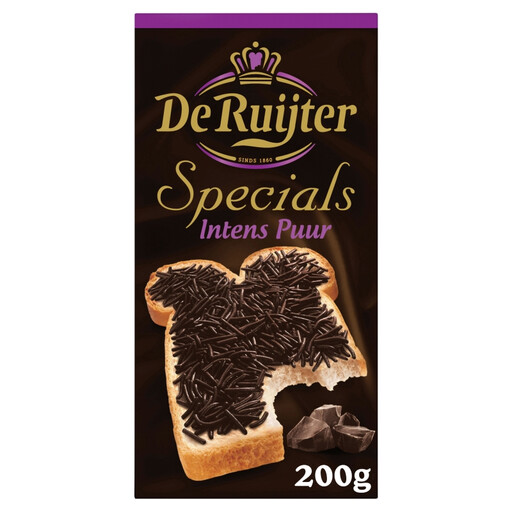 Image unavailable
De Ruijter Intense Pure chocolate sprinkles 200 g
Chocolate sprinkles to serve as a separate sweet topping on your choice of bread, rusks or crispbread.
Check the current packaging for allergen information, including details about milk and soya, and make sure sweet toppings are allowed under the school’s policy.
View at Joybuy
 Image unavailable
Venz chocolate and vanilla sprinkles 400 g
A mix of chocolate and vanilla sprinkles for anyone who wants to serve both flavours as separate toppings; choose your lunch base separately.
Before packing lunch, check the current allergen information, paying particular attention to milk, soya and wheat, and check the school’s policy.
View at Joybuy
Frequently asked questions
Is sourdough bread automatically wholemeal?
No. Sourdough doesn’t automatically tell you what type of flour has been used. If it matters to your lunch choice, look for the wholemeal label on the bread you choose. The Netherlands Nutrition Centre recommends replacing white bread with wholemeal or brown bread as often as possible.
Can I pack chocolate sprinkles in a school lunchbox?
It depends on the school’s policy and the products you’re packing. Check the rules on sweet toppings and, if there are allergy restrictions, read the labels on both the chocolate sprinkles and the base. The Netherlands Nutrition Centre says schools can set their own food policies.
How do I check allergens in this lunch combination?
Check the current allergen information for the bread, rusks or crispbread and the chocolate sprinkles separately. The Netherlands Food and Consumer Product Safety Authority explains which allergens must be listed on labels. Ask for product information if you’re buying unpackaged bread.
Does sourdough bread always contain baker’s salt?
No. The Netherlands Nutrition Centre says baker’s salt isn’t required in bread. If this matters to you, check the ingredients list on packaged sourdough bread or ask about it when buying unpackaged bread.


