
If you’re comparing fibre and seeds
You want to pair chocolate sprinkles with rusks whose wholegrain ingredients, seeds and fibre content you can compare per 100 g. The picture on the pack alone doesn’t give you enough information.


If you’re taking rusks with chocolate sprinkles for lunch on the go, choose your rusks based on the ingredients and nutritional values that matter to you: multiseed doesn’t automatically mean wholegrain. Check the allergens in both the rusks and the sprinkles, and consider the amount of sweet topping separately from the rusk base.
You want to pair chocolate sprinkles with rusks whose wholegrain ingredients, seeds and fibre content you can compare per 100 g. The picture on the pack alone doesn’t give you enough information.
You’re choosing rusks with chocolate sprinkles for their taste and convenience, but want to balance the amount of topping with the rest of your lunch.
You read the information for both products before combining them. The rusks discussed here include sesame and cereals containing gluten, among other allergens; milk and soya are relevant to the chocolate sprinkles discussed here.
If you have an allergy, check both labels first. Then compare the rusk base and decide separately how much chocolate sprinkles you want to take with you.
| What to consider | What to check when buying | Who it matters to |
|---|---|---|
| Fibre and seeds | Look for wholemeal flour in the ingredients and compare fibre per 100 g; check separately which seeds and kernels are listed. | I want to choose a rusk base based on more than just the word ‘multiseed’. For around 50% of consumers, the fibre and seed content comes first. |
| Sweet topping | Check the serving of chocolate sprinkles and the nutritional information per serving or per 100 g. | For my lunch on the go, the taste of the chocolate sprinkles matters, but I also want to decide how much to use. Around 30% of consumers prioritise this balance. |
| Allergens | Read the current ingredients and allergen information for both the rusks and the chocolate sprinkles, including any ‘may contain’ statements. | I need to be able to check before buying whether both products meet my dietary requirements. This check comes first for around 20% of consumers. |
Rusks with seeds and kernels can also contain wheat flour. The seeds alone don’t tell you how much wholemeal flour or fibre the product contains.
Check the ingredients for wholemeal flour and compare fibre per 100 g if this will help you decide.
The nutritional value of the rusks doesn’t change the composition of the topping. The Netherlands Nutrition Centre lists 9.1 g of sugars in 15 g of dark chocolate sprinkles.
Choose the rusk base and the amount of chocolate sprinkles as two separate parts of your lunch.
The multiseed rusks discussed here include sesame and cereals containing gluten, among other allergens; some also list egg. The De Ruijter Dark Chocolate Sprinkles product discussed here lists milk and soya.
Read the current allergen information on both packs before combining them.
According to the Netherlands Nutrition Centre, using baker’s salt in bread isn’t compulsory. This doesn’t tell you whether a particular type of rusk contains iodised salt.
If iodised salt is an important factor in your choice, check the ingredients of the rusks you’ve chosen.
The two AH multiseed rusks discussed here let you compare a wholegrain option with another seed-based rusk.
TastyBasics Multiseed Rusks are worth comparing if you’re mainly looking at the listed fibre and protein content.
Bolletje High-Fibre Farmer’s Multiseed Rusks are another option to compare for their seeds, kernels and nutritional value.
De Ruijter is relevant here for the chocolate sprinkles, not for the seed-based rusk.
Venz Dark Chocolate Sprinkles are another topping to consider alongside your rusk base.
These are multiseed rusks you could consider as a base for chocolate sprinkles on rusks. Choose your chocolate sprinkles separately, and if you’re taking lunch with you, check that the pack size is practical for your needs.
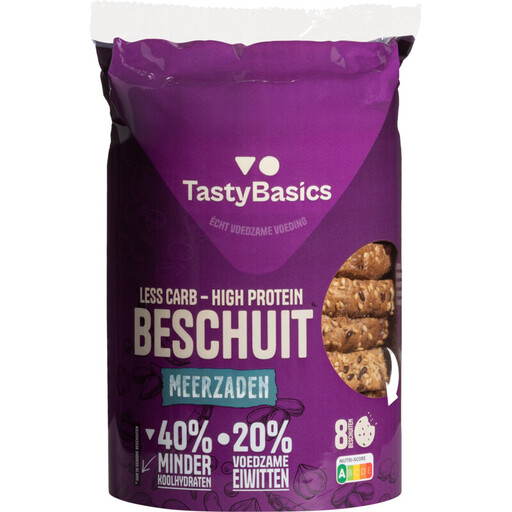 No image available
A rusk base to consider if you want to pair seeded rusks with chocolate sprinkles chosen separately.
184 g pack. Check the current ingredients and allergen information, and see whether the pack size suits your lunch on the go.
 No image available
A rusk base to consider if you’re looking for a seeded option for lunch and want to take the topping separately.
Pack of 10. Check the ingredients if a wholegrain base matters to you, and read the current allergen information.
No. Seeds and kernels don’t automatically make a rusk wholegrain. According to Albert Heijn, AH Multiseed Rusks list both wheat flour and wholemeal wheat flour, so check the ingredients of the option you choose.
Assess the amount of chocolate sprinkles separately from the nutritional value of the rusks. The Netherlands Nutrition Centre advises against eating too many chocolate sprinkles or having them too often, so don’t choose a particular rusk base as a reason to use more topping.
You can’t assume this is the case for every rusk. According to the Netherlands Nutrition Centre, using baker’s salt in bread isn’t compulsory; check the ingredients of a specific rusk for iodised salt or baker’s salt.
Check the current packaging for both products. The multiseed rusks discussed here list sesame and cereals containing gluten, among other allergens, and sometimes egg; the De Ruijter Dark Chocolate Sprinkles product discussed here lists milk and soya.
Keep the rusks and chocolate sprinkles separate until just before eating if you want to keep the rusks crisp. Seal the rusk pack properly after use and follow the storage advice on the packaging.