
If you’re keeping an eye on fibre
You want to eat rusk with chocolate sprinkles late in the evening, but would prefer a wholemeal base. Compare the fibre per 100 g on the packs you’re considering; don’t rely on a dark colour alone.


Choose wholemeal rusk if a wholemeal base and fibre content are your priorities; choose plain if you prefer a milder base for your chocolate sprinkles. If you have a fussy eater, try both types with the same sprinkles so that only the rusk changes. Check the ingredients and allergens on both packs for every combination.
You want to eat rusk with chocolate sprinkles late in the evening, but would prefer a wholemeal base. Compare the fibre per 100 g on the packs you’re considering; don’t rely on a dark colour alone.
You prefer a mild-tasting rusk and want to try both plain and wholemeal to see which goes down better. Using the same chocolate sprinkles on both types makes it easier to spot the difference between the bases.
You’ll need to check two labels: one for the rusk and one for the chocolate sprinkles. For example, Jumbo lists egg, gluten and wheat for its plain rusk; Albert Heijn lists milk and soya for De Ruijter milk chocolate sprinkles.
First decide whether you want a wholemeal base or a milder-tasting rusk. Then choose your chocolate sprinkles and check the labels on both products, even if you’ve bought a different variety from the same brand before.
| What to consider | What to check when buying | Who it matters to |
|---|---|---|
| Wholemeal base and fibre | Check whether the pack says ‘wholemeal’ and compare the fibre per 100 g. | If fibre is my main priority, I want to know what’s in the rusk base, even when I’m adding chocolate sprinkles. Around 40% of consumers prioritise a wholemeal base when making this choice. |
| Mild flavour and texture | Compare plain and wholemeal rusk with the same chocolate sprinkles; also check the serving size on the pack. | If I find wholemeal rusk too strong-tasting, I want to try a milder base first without changing the topping at the same time. For around 30% of consumers, flavour is the most important factor. |
| Ingredients and allergens | Read the current ingredients and allergen information for both the rusk and the chocolate sprinkles. | If there’s an ingredient I need to avoid, the whole combination has to be suitable: for example, one rusk product checked contains wheat and egg, while the chocolate sprinkle varieties reviewed list milk or soya. Checking ingredients is the top priority for around 30% of consumers. |
The colour or a name such as ‘farmhouse rusk’ doesn’t tell you on its own whether you’re buying a wholemeal variety. That distinction matters if the rusk base is your main consideration.
Look for the wholemeal wording on the pack, then compare the stated fibre per 100 g.
Rusk and chocolate sprinkles each have their own ingredients list. Jumbo lists egg, gluten and wheat in its plain rusk; Albert Heijn lists lactose, milk and soya in De Ruijter milk chocolate sprinkles.
Check the current information on both packs just before buying, even if a product name looks familiar.
The Netherlands Food and Consumer Product Safety Authority sets a limit for iodine in baker’s salt. This doesn’t mean that the rusk you choose contains iodised baker’s salt.
If this matters to you, check the ingredients on the specific pack or ask the manufacturer.
For these brands, compare the specific rusk or chocolate sprinkle variety, rather than just the brand name: ingredients and allergens can vary from product to product.
A brand of chocolate sprinkles and other toppings, including milk chocolate sprinkles.
A chocolate sprinkle brand with varieties including milk and vanilla.
Jumbo’s rusk range includes plain and wholemeal varieties.
The rusk range includes AH plain rusk and AH wholemeal rusk.
ALDI lists products including Goud Gebakken plain and wholemeal rusk, and Kiekeboe dark chocolate sprinkles.
These products are separate components for rusk with a topping: two wholemeal rusk varieties, two types of dark chocolate sprinkles and a mix of chocolate and vanilla flakes. Choose your rusk and topping separately, and check that the combination suits your taste and ingredient requirements.
 Image unavailable
A wholemeal rusk base for anyone who wants to keep this in mind when choosing a late-night snack. The pack contains 10 pieces; choose your chocolate sprinkles separately and check the ingredients on the pack.
 Image unavailable
Another wholemeal rusk option to pair with your choice of chocolate sprinkles. The pack contains 13 pieces; check the ingredients on this pack if allergens are important to your choice.
 Image unavailable
Dark chocolate sprinkles for anyone who wants to choose the topping after settling on a rusk base. The pack contains 200 g; if you have an allergy, check this pack for milk and soya too.
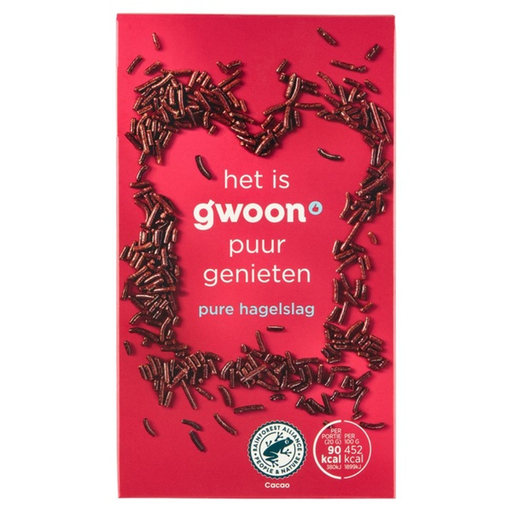 Image unavailable
Dark chocolate sprinkles to pair with your choice of rusk. The pack contains 400 g; if you have an allergy, check the label for milk and possible traces of wheat.
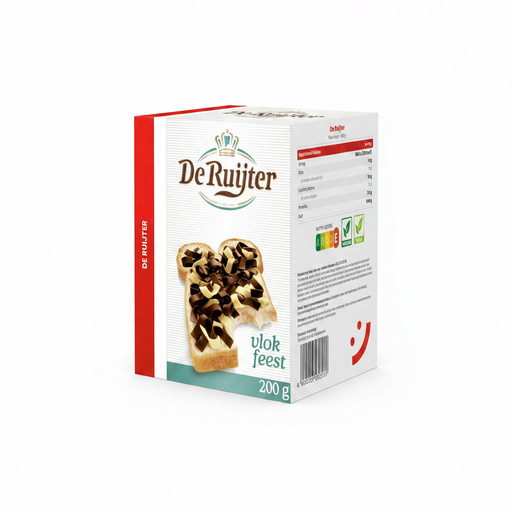 Image unavailable
A mix of flakes as an alternative to chocolate sprinkles if you fancy trying a different topping. The pack contains 200 g; choose your rusk separately and check the ingredients of both products.
No: choose wholemeal if a wholemeal base and the stated fibre content are your priorities, and plain if you’d prefer a milder-tasting rusk. If you have a fussy eater, you can compare both types with the same chocolate sprinkles.
No, the word ‘dark’ is no substitute for checking allergens. If you have a milk allergy, read the current packaging for the chocolate sprinkles you choose, and check the rusk as well.
No, the rule doesn’t tell you which rusk contains iodised baker’s salt. The Netherlands Food and Consumer Product Safety Authority sets a maximum of 65 mg of iodine per kg of salt in baker’s salt; check the ingredients for a specific product or ask the manufacturer.
Follow the storage instructions on each product’s own packaging. Seal the chocolate sprinkles well after use, and check how to store your chosen rusk once opened.