For making several homemade party treats, a 300 g pack gives you more sprinkles to work with than a 200 or 240 g pack, but the amount you need depends on how much you use for each treat. Choose plain, milk or mixed sprinkles to suit the flavour and look you want, and check the allergens and school’s rules for treats before you buy. Read the current packaging just before use: even plain sprinkles may carry a milk allergy warning.
Who is this choice relevant to?
Parents decorating lots of treats themselves
If you’re topping cupcakes or fruit, or filling small bags with sprinkles, you’ll want to know how many treats one pack will cover. Jumbo lists several 300 g varieties, while its range also includes De Ruijter varieties in 200 and 240 g packs. Work out how much you need for your own treats rather than looking at pack size alone.
Parents who need to check allergens
When handing out treats in a class, rules concerning milk, lactose, soya, gluten or wheat, among other things, may determine what you can choose. Information varies by product and variety. Ask about any individual requirements and read the packaging of the pack you’re actually using.
Parents looking for a mixed topping
A mix of dark and white sprinkles adds a noticeable contrast without having to open two separate packs. Both Jumbo and Albert Heijn list a 300 g mix. Check the ingredients and allergens for your chosen mix, though: they’re not the same for both products.
What should you look for when choosing?
Start by checking the rules for your group, then work out how many sprinkles you want to use on each treat. Flavour, appearance and what you’ll do with an opened pack can then help you choose between plain, milk and mixed varieties.
| What to consider |
What to check when buying |
Who does this matter to? |
| Quantity |
Compare the net weight in grams and work out how many sprinkles you use for each treat. |
If I’m decorating lots of treats myself, I don’t want to run out halfway through. Having enough to work with would be the main concern for around 36% of consumers. |
| Allergens and school rules |
Ask about the school’s policy for treats and any individual requirements, then check the allergen information on the current packaging. |
When I’m handing something out in a class, the variety I choose needs to meet the agreed requirements. This would be the top priority for around 29% of consumers. |
| Flavour and appearance |
Choose plain, milk or mixed sprinkles; if you’re buying a mix, check its ingredients and proportions. |
For a treat that’s decorated to stand out, I care about colour contrast or a particular chocolate flavour. This would be the main reason for choosing a particular product for around 21% of consumers. |
| Using up leftovers |
Choose a pack size that suits what you need and how you’ll store any leftover sprinkles. |
If I’m only using a small amount, I don’t want to be left with more sprinkles than I’ll use later. Avoiding leftovers would be the main consideration for around 14% of consumers. |
Common mistakes
-
Assuming ‘plain’ means ‘milk-free’
Jumbo and PLUS warn that their plain sprinkles may contain milk; PLUS also mentions lactose. So the name of the flavour variety isn’t enough to tell you about allergens.
Check any allergy requirements in advance and read the current packaging of the pack you’ve chosen.
-
Assuming an online ingredients list will always be up to date
Albert Heijn and PLUS state that product information may change. A description you looked at earlier may therefore not match the pack you use for your treats.
Read the physical packaging before using the sprinkles and keep it available until the treats have been handed out.
-
Choosing a large pack without working out how much you need
The serving size on the label isn’t a set amount for decorating a cupcake or filling a small bag.
Finish one treat the way you plan to hand it out, then use that to work out how many sprinkles you’ll need.
Otherwise, you could end up with a larger pack you don’t use up.
-
Checking the school’s rules only after you’ve prepared everything
According to VOO, schools can set their own rules for treats. That means an edible treat you’ve planned at home may not meet the school’s requirements.
Check the school handbook or ask the teacher what’s allowed before you prepare the treats.
If the rules are different, you may have to start again and be left with sprinkles you can’t use.
Brands compared
The pack sizes and allergen information below apply to specific varieties, not every sprinkle product from each brand.
Jumbo
Jumbo lists plain, milk and duo sprinkles in 300 g packs.
- The duo variety lets you use dark and white sprinkles from one pack.
- Allergen information varies: the milk variety contains milk, while the plain and duo varieties carry warnings about possible allergens.
Albert Heijn
According to Albert Heijn, AH Mix sprinkles combine equal amounts of plain chocolate sprinkles and white sprinkles in a 300 g pack.
- The proportions make it clear what sort of colour contrast you can achieve with one pack.
- The mix contains milk and lactose; check the current packaging before decorating treats for a group.
PLUS
PLUS offers a 300 g variety of plain chocolate sprinkles whose product name specifies Fairtrade cocoa.
- The 300 g pack gives you one plain variety to use for several homemade treats.
- PLUS warns that the sprinkles may contain milk and lactose.
Kiekeboe
ALDI lists Kiekeboe chocolate sprinkles in milk or plain varieties, in a 300 g pack.
- You can choose your preferred flavour in the same stated pack size.
- Before using the sprinkles for a group, check the ingredients and allergen information on the pack in store.
De Ruijter
Pack sizes and ingredients vary by De Ruijter variety. Jumbo, for example, lists Royaal Chocoladevlokken in a 240 g pack and Witte Vlokken in a 300 g pack.
- A particular flavour variety may be the deciding factor if pack size isn’t your only consideration.
- According to Jumbo, Royaal Chocoladevlokken contains soya and may contain milk; the Witte Vlokken mentioned contain milk, soya and lactose.
Sprinkles for homemade party treats
These milk chocolate sprinkles are a good fit for treats you’re decorating yourself. The 300 g pack gives you more to work with, while the 200 g variety is an option if you need less topping. Check the packaging of both products if allergens are a concern for your group.
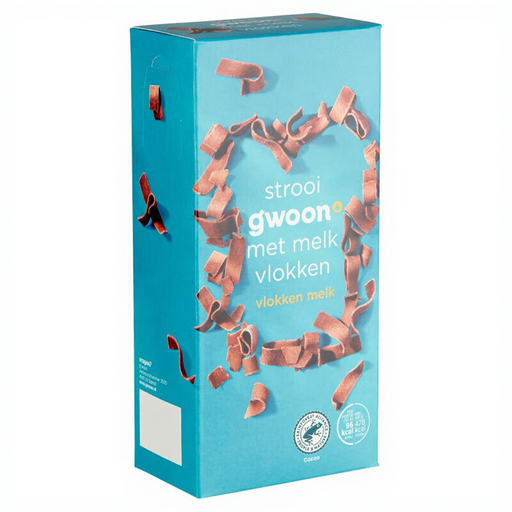 Image unavailable
g'woon milk chocolate sprinkles 300 g
A pack for anyone looking to decorate several treats with milk chocolate sprinkles. It contains 300 g; how many treats that covers depends on how much you use for each one. The sprinkles contain milk. If wheat is a concern, check the current packaging carefully too.
View at Joybuy
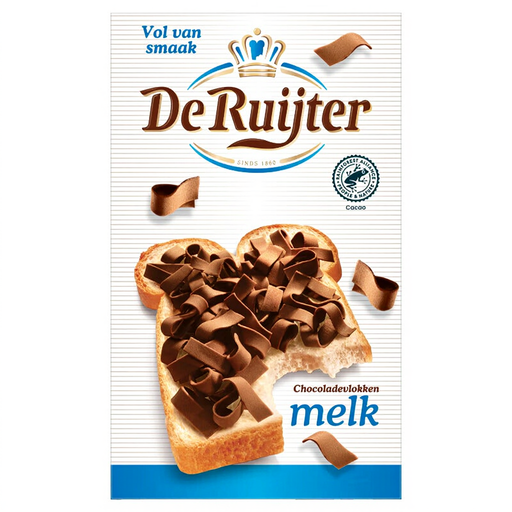 Image unavailable
De Ruijter milk chocolate sprinkles 200 g
These milk chocolate sprinkles are described as a topping for cupcakes and cakes, among other things. The pack contains 200 g, so it’s smaller than the 300 g variety mentioned above; work out how much you need for your treats in advance. The sprinkles contain milk and soya.
View at Joybuy
Frequently asked questions
Is a 300 g pack of sprinkles a bag of individual treats for children to hand out?
No. The 300 g packs mentioned are supplies for decorating treats yourself or making portions, not individually wrapped bags to hand out. Don’t use any serving size on the label as a set number of finished treats.
Can I choose plain sprinkles if milk is a concern?
Don’t choose plain sprinkles based on the name alone: Jumbo warns that its plain variety may contain milk, while PLUS mentions possible traces of milk and lactose. Ask what the individual requirements are, then check the allergen information on the current packaging.
Can I send sprinkles to school as a treat?
Check the school’s rules first. According to VOO, schools can set their own policy for treats, so ask in advance what kinds are allowed before buying sprinkles or preparing anything.
How should I store sprinkles until the day of the party?
Follow the storage advice on the packaging you’ve chosen and seal an opened pack according to the product instructions. Keep the packaging with the treats so you can check the ingredients and allergens again if needed.


