
If you’re shopping for a group
You’re putting out several rusks and toppings and want to have enough chocolate sprinkles, even if some are left over after coffee.


A 600 g pack works well when you’re having coffee with friends and want to use one flavour on several rusks, with some chocolate sprinkles left to enjoy after your guests have gone. If you’d like to offer a choice of flavours or avoid having too much of one variety left over, smaller packs are more practical. Before serving, check the ingredients and allergens in both the chocolate sprinkles and the rusks.
You’re putting out several rusks and toppings and want to have enough chocolate sprinkles, even if some are left over after coffee.
For example, you might like to serve dark and milk chocolate side by side. Two smaller packs may be a better fit than one large pack of a single flavour.
You’re mindful of guests’ allergies, or want to compare the sugars and fats in different varieties on the same basis.
First decide whether you want plenty of one flavour or a choice of different ones. Then check the nutritional information and allergen label for each product you’re considering. A different pack size doesn’t change a product’s characteristics.
A good fit if: you want to top plenty of rusks with one flavour and can use the rest later.
The trade-off: if you’re catering for a small group or offering several flavours, you may have quite a lot of that one variety left over.
A good fit if: you want to give guests a choice or buy less of one flavour.
The trade-off: work out how many rusks you want to top before adding up the total contents of the packs.
| What to consider | What to check before buying | Who should pay particular attention? |
|---|---|---|
| Quantity | Compare the net weight with the number of rusks you want to top. Don’t assume the serving size on one pack applies to every other product. | If there are lots of rusks on the table, I don’t want to run out of my chosen chocolate sprinkles halfway through. Getting enough is the top priority for around 42% of consumers. |
| Choice of flavours | Check the exact variety and decide whether one large pack or several smaller packs in different flavours would suit you better. | I want guests to be able to choose between, for example, dark and milk chocolate, even if that means opening more than one pack. Around 25% of consumers give flavour choice top priority. |
| Label | Read the ingredients, allergens and any ‘may contain’ statements for the variety you’ve chosen; compare nutritional values per 100 g. | Before serving anything, I want to know what it contains and which nutritional values apply to the chocolate sprinkles I’ve chosen. Label information comes first for around 33% of consumers. |
You don’t have to finish a 600 g pack during one visit. If you’re serving other toppings too, you may have some left over.
Estimate how many rusks you’re likely to top, then choose between one large pack and smaller packs in different flavours. Once opened, follow the storage advice on the pack.
‘Dark’ describes the flavour, not whether a product is suitable for every guest. The 390 g De Ruijter Dark Chocolate Sprinkles product described by Jumbo lists milk and soya as allergens.
Check the current packaging for the exact variety you’re serving, even if you’ve bought the same flavour before.
Information about baker’s salt in bakery products won’t tell you which ingredients are in a particular chocolate sprinkle product.
Check the labels on the rusks and chocolate sprinkles separately if salt, iodine or other ingredients matter to your choice.
These brands give you an idea of the flavours and pack sizes you may come across. Always check the specific variety: information about one product doesn’t necessarily apply to the whole brand.
The dark chocolate sprinkles reviewed come in a 390 g pack.
Albert Heijn describes Venz Dark Chocolate Sprinkles in a 400 g pack.
ALDI lists Kiekeboe Dark Chocolate Sprinkles in a 600 g pack.
The Jumbo range described includes own-brand varieties in 600 g packs.
Mister Choc Dark Chocolate Sprinkles is a dark variety in the Lidl range.
These products include 600 g and 400 g packs of chocolate sprinkles, as well as smaller packs and a flake mix for anyone who wants to switch between flavours. Choose according to the quantity and variety you want, and check the current packaging if you’re considering ingredients or allergens.
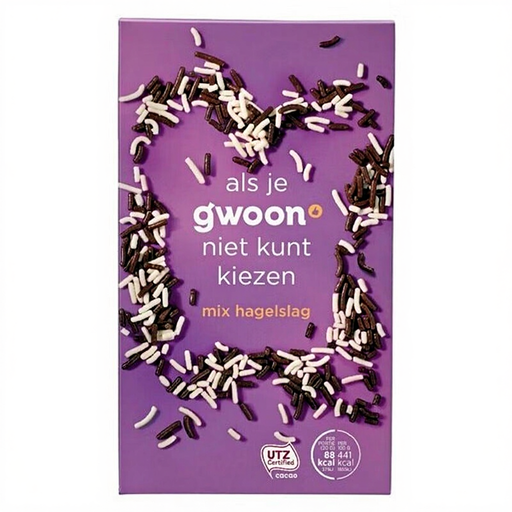 Image unavailable
A 600 g pack for anyone who wants to top several rusks with one milk chocolate variety and can use the rest later.
Check the ingredients and allergens on the pack before serving.
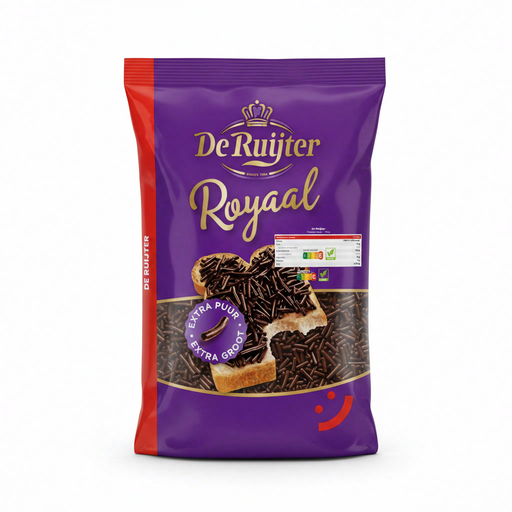 Image unavailable
At 390 g, this pack is smaller than a 600 g one, making it a good option if you’d also like to offer another topping.
Check whether this specific chocolate variety suits the flavours and ingredients you’re looking for.
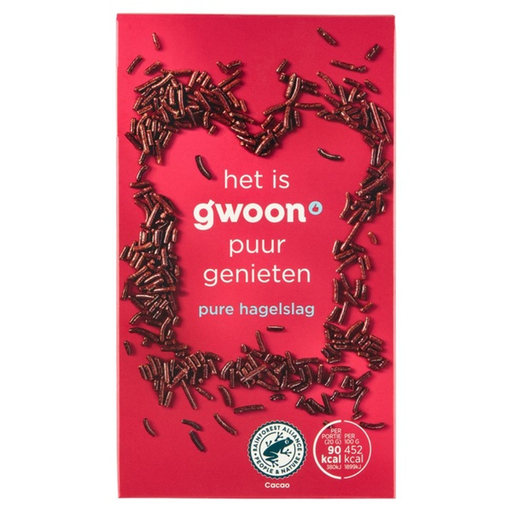 Image unavailable
A 400 g pack of dark chocolate sprinkles if you want to serve less than 600 g or offer a choice of flavours.
Read the label for this variety before serving it to guests with allergies.
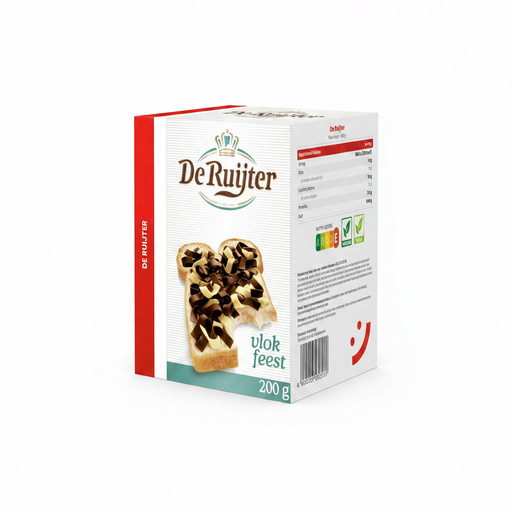 Image unavailable
This 200 g pack can work as a second topping if you want to put more than one flavour on the table.
This is a flake mix, not a large pack of chocolate sprinkles. Check the pack for ingredients and allergens.
 Image unavailable
A 200 g pack of dark chocolate sprinkles if you want to offer a smaller amount alongside other flavours.
For a group, don’t expect this to go as far as a 400 g or 600 g pack, and check the current label.
It depends on how many rusks you’re serving and how much you use on each one. The Netherlands Nutrition Centre uses 15 g of chocolate sprinkles per slice of bread in its nutritional information; a described 600 g pack of g'woon gives 20 g as a topping serving. That means 600 g works out at 40 or 30 servings respectively. Remember to allow for other toppings and anything you’ll use later.
No, the word ‘dark’ isn’t enough to be sure. For its 390 g De Ruijter Dark Chocolate Sprinkles, Jumbo lists milk and soya as allergens. The Netherlands Food and Consumer Product Safety Authority advises checking allergen information on labels. Read the label on the exact chocolate sprinkles and the rusks you’re serving.
No, you can’t work out the ingredients of a particular chocolate sprinkle product from information about baker’s salt. Check the labels on the rusks and chocolate sprinkles separately if iodine or salt matters to your purchase.
The pack size won’t tell you how much sugar or fat is in a serving. The Netherlands Nutrition Centre recommends comparing different varieties using their nutritional values per 100 g, then considering how much you actually use on each rusk.