If fibre is a consideration at coffee time, wholemeal rusk is a sensible base for chocolate sprinkles. Then choose your topping to suit your taste, and compare the sugars and saturated fat on the label of the exact product; a higher cocoa percentage alone doesn’t tell you what you need to know. Check allergens separately, and if someone has difficulty swallowing, ask for advice about what they can eat safely.
Who might find this choice relevant?
If you’re looking for a wholemeal base
For coffee time with chocolate sprinkles, when the grain base matters too. The Netherlands Nutrition Centre highlights the fibre and nutrients in wholegrain products. Check the packaging to make sure the rusk you choose is genuinely wholemeal.
If you want to measure out a sweet topping
For anyone who wants to enjoy the familiar taste of chocolate sprinkles while keeping an eye on how much they use and the topping’s nutritional information. The Netherlands Nutrition Centre gives nutritional values for a 15 g portion of chocolate sprinkles; the values for the product you choose may differ.
If allergens or swallowing difficulties need to be considered
For anyone who needs to check the allergen statement before buying. If the person you’re buying for has difficulty swallowing, simply choosing a crunchy rusk isn’t enough: Thuisarts advises contacting a GP about swallowing difficulties.
What should you look for when choosing?
When choosing rusk with chocolate sprinkles, start with a suitable base, then compare the topping. If allergens or swallowing difficulties are a concern, consider those before taste preferences.
| What to consider | What to check when buying | Who it matters to |
|---|
| Grain base |
Check whether the rusk is labelled wholemeal; don’t judge by its dark colour or the presence of seeds alone. |
If I want to give more thought to the grain base at coffee time, I’ll first look for wholemeal rusk. This is the priority for around 46% of consumers considering this combination. |
| Topping and portion |
Compare the sugars and saturated fat in the exact chocolate sprinkles product per 100 g, and work out how much you’ll actually use. |
I want to keep serving chocolate sprinkles, but decide for myself how much goes on the rusk. Around 36% of consumers prioritise the portion and the topping’s nutritional information. |
| Allergens and suitability for eating |
Read the current allergen statement. If someone has difficulty swallowing, contact a GP rather than judging by the product’s form. |
If someone needs to avoid an allergen or has difficulty swallowing, I want to look into that before choosing based on taste. This is the main consideration for around 18% of consumers. |
Common mistakes
-
Assuming the cocoa percentage tells you everything about the nutritional value
The cocoa percentage doesn’t tell you how much sugar or saturated fat the chocolate sprinkles contain. A description such as ‘intensely dark’ doesn’t replace the nutritional values on the label either.
Compare the exact products on the same basis, such as per 100 g, then consider how much you use.
-
Ordering a familiar product without checking the packaging
The product name alone doesn’t provide all the information you need if you have an allergy. Ingredients and allergen statements can also vary between products.
Check the allergen statement on the packaging you’ve chosen when you buy it, even if you’ve used the same brand before.
-
Assuming all rusk contains iodised baker’s salt
Information about the use of baker’s salt doesn’t confirm which ingredients are in a particular rusk.
If the ingredients matter to your choice, check the list on the packaging or ask the baker.
Brands to consider
These brands offer rusk or chocolate sprinkles that may suit your coffee-time choice. Always compare the exact product, not just the brand name.
De Ruijter
Worth considering if you want to compare standard dark chocolate sprinkles with a product that has a different cocoa percentage.
- Albert Heijn lists 64 g of sugars and 8.8 g of saturated fat per 100 g for De Ruijter Chocoladehagel Puur.
- Another dark variety will have its own nutritional values, so compare the packaging separately.
Venz
Offers dark chocolate sprinkles and a separate variety labelled ‘30% less sugar’.
- The varieties have different labels that you can compare side by side.
- Albert Heijn marked the 30%-less-sugar variety checked as discontinued. Check current availability and the information for any alternative.
Albert Heijn
Stocks own-brand chocolate sprinkles and rusk, including wholemeal rusk.
- Albert Heijn’s rusk page lists wholemeal options that you can compare as a base.
- Check the nutritional information and allergens on the page or packaging for the product you choose.
Jumbo
An own-brand option to consider when comparing pack sizes of chocolate sprinkles.
- Jumbo offers, among other options, a 600 g pack of dark chocolate sprinkles.
- For a nutritional comparison, use the information for the specific product.
Lidl
An option to look at if you’re after a larger pack of milk chocolate sprinkles.
- Lidl Netherlands describes a 600 g pack of milk chocolate sprinkles.
- The product page says it’s available in store only; check the current packaging and nutritional information there.
Rusk and toppings on Joybuy
These products let you put the combination together yourself: the selection includes dark chocolate sprinkles, wholemeal rusk and a separate chocolate chunks topping. Rusk and toppings are separate products, so choose the topping and base that suit your coffee break.
 No image available
De Ruijter dark chocolate sprinkles, 390 g
For anyone who wants to use dark chocolate sprinkles as a topping for rusk. The pack contains 390 g; choose your rusk separately and check the current nutritional information and allergen statement.
View on Joybuy
 No image available
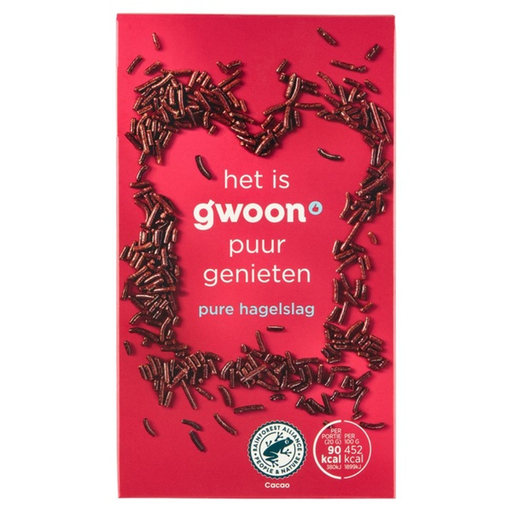
g'woon dark chocolate sprinkles, 400 g
A dark chocolate sprinkles option to pair with rusk chosen separately. The pack contains 400 g; compare the nutritional information and allergens on the label before making your choice.
View on Joybuy
 No image available
Bolletje wholemeal rusk, 13 pieces
A wholemeal base for anyone who wants the grain choice to count at coffee time. The pack contains 13 rusks; choose your chocolate sprinkles separately. Read the allergen statement, and if someone has difficulty swallowing, don’t judge suitability by the product name or its crunchy texture alone.
View on Joybuy
 No image available
Bolletje dark wholemeal rusk, 10 pieces
Another wholemeal rusk option to pair with a separately chosen topping. The pack contains 10 rusks; if you want to compare portions, check the nutritional information per 100 g and the weight of each piece.
View on Joybuy
 No image available
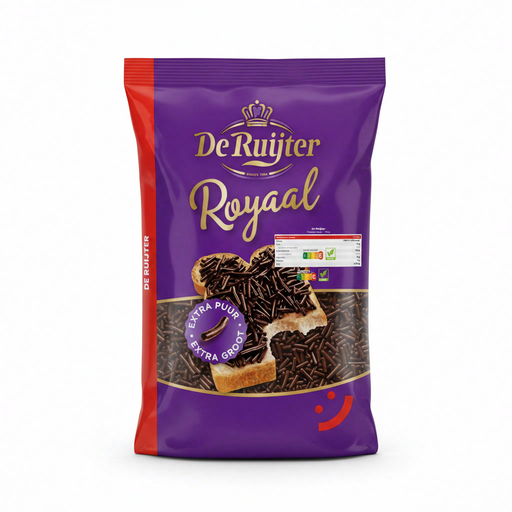
De Ruijter Chocolate Chunks, 390 g
A 390 g chocolate topping for anyone considering a different format from chocolate sprinkles. Chocolate Chunks aren’t necessarily the same as chocolate sprinkles; check the shape and choose your rusk separately.
View on Joybuy
Frequently asked questions
When should you choose wholemeal rusk instead of regular rusk?
Choose wholemeal rusk if the grain base and fibre are your priorities at coffee time. The Netherlands Nutrition Centre explains the fibre and nutrients found in wholegrain products; check the packaging to make sure your rusk is genuinely wholemeal.
How can you compare how much chocolate sprinkles to put on rusk?
First measure or weigh how much chocolate sprinkles you use, then compare the nutritional information for that product. The Netherlands Nutrition Centre lists 67 kcal and 9.4 g of sugars for 15 g of chocolate sprinkles; the values for your product and portion may differ.
Does a higher cocoa percentage tell you enough about chocolate sprinkles?
No. The cocoa percentage alone doesn’t show how much sugar or saturated fat the chocolate sprinkles contain. Check both values on the packaging for the exact product and compare them for the same quantity.
Does rusk always contain iodine from baker’s salt?
Don’t assume that all rusk contains iodised baker’s salt. Check the ingredients list for the specific product or ask the baker about its ingredients if this matters to your choice.
What if someone has difficulty swallowing rusk?
If so, don’t use this product list to decide which rusk is suitable. Thuisarts advises contacting a GP if someone has difficulty swallowing, so they can assess the problem and suitable foods individually.


