
Host with a full coffee table
You’re serving crispbread to several people and want to work out how much chocolate sprinkles you’ll need. A large pack is especially useful if you expect to use it after this coffee break too.


For coffee time with several guests, a 600 g pack is a practical starting point if everyone likes the same chocolate sprinkles. A smaller pack is a better fit if you want to offer several flavours or don’t use them often. Then choose the flavour, and check the ingredients, allergens and best-before date on the pack you’ve chosen before serving.
You’re serving crispbread to several people and want to work out how much chocolate sprinkles you’ll need. A large pack is especially useful if you expect to use it after this coffee break too.
You’re choosing between milk, dark, duo or another variety. As well as the flavour description, check the product format and, if stated, the cocoa content of the specific chocolate sprinkles.
You want to know which ingredients and allergens a product contains before serving it. For a reduced-sugar variety, the nutritional information and any warnings on the pack are also relevant.
First, work out how many pieces of crispbread you want to top and whether one flavour will suit everyone. Then compare the labels of the varieties you’re considering.
| What to consider | What should you check? | Who is it important for? |
|---|---|---|
| Quantity | Compare the net weight with how much you expect to use, and check the best-before date. Jumbo lists 30 portions of 20 g for each of its 600 g packs of milk and dark chocolate sprinkles; the amount people sprinkle on their crispbread may vary. | When I’m preparing crispbread for several guests, I want to have enough chocolate sprinkles without choosing a pack that will be left open for a long time. Around 42% of consumers say quantity is their top priority. |
| Flavour and format | Check whether it’s the specific milk, dark or duo variety, and look at the shape of the chocolate sprinkles. Jumbo states that its 600 g dark chocolate sprinkles contain at least 32% cocoa solids, while its milk variety contains at least 20%; this isn’t a flavour rating. | When people at the table have different preferences, I want to serve a variety that suits the group. Around 33% of consumers put flavour first. |
| Label | Read the ingredients, allergens and nutritional information for the exact pack you’ve chosen. Note the difference between ‘contains’ and ‘may contain’. | If a guest needs to avoid certain ingredients, I want to be able to check the label before serving crispbread. For around 25% of consumers, this product information is their top priority. |
Large packs don’t have a standard weight: the named branded varieties contain 390–400 g, while chocolate sprinkles are also available in 600 g packs. The name alone doesn’t tell you how many pieces of crispbread you can top.
Check the net weight and consider whether you’ll use the pack after your coffee gathering too.
Jumbo states that its 600 g dark chocolate sprinkles may contain milk. De Ruijter lists milk and soya as allergens for its 390 g dark chocolate sprinkles.
If a guest has an allergy, check the allergen information on the pack you’re actually serving; don’t rely on the word ‘dark’ alone.
The Voedingscentrum’s information about iodine and baker’s salt relates to the bread and salt used, not to the choice between types of chocolate sprinkles. Bakers aren’t required to use baker’s salt.
If you want to know which salt was used in the bread or crispbread, check its ingredients or ask the baker.
A claim about sugar doesn’t replace the rest of the label. The specific Céréal reduced-sugar dark chocolate sprinkles carry a warning that excessive consumption may have a laxative effect.
For this type of product, check the ingredients, nutritional information, allergens and warnings before choosing it for your guests.
These brands offer different pack sizes and varieties. Always compare the label on the specific product, not just the brand name.
Jumbo lists 600 g packs of chocolate sprinkles, including milk, dark and duo varieties.
ALDI lists Kiekeboe dark chocolate sprinkles in a 600 g pack.
Albert Heijn lists De Ruijter dark chocolate sprinkles in a 390 g pack, for anyone specifically looking for this branded variety.
Jumbo lists Venz milk and dark chocolate sprinkles in 400 g packs, alongside other varieties weighing around 380–400 g.
Lidl lists Mister Choc dark chocolate sprinkles in a 600 g pack.
This 600 g pack is a good fit for a coffee gathering where several people will be eating crispbread with chocolate sprinkles. Check the ingredients on the pack if the precise type of chocolate or the allergens matter to your choice.
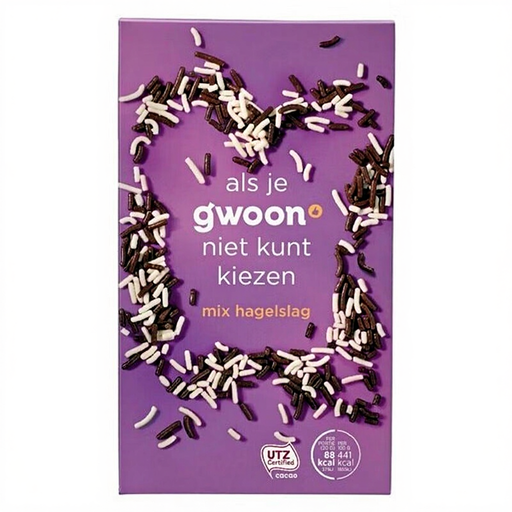 Image unavailable
A 600 g pack to consider if you’re preparing crispbread with chocolate sprinkles for several guests.
Check the exact chocolate ingredients and allergens on the label before serving.
A 600 g pack is practical if several guests eat chocolate sprinkles and you’ll use the rest later too. Jumbo lists 30 portions of 20 g for each of its 600 g milk and dark varieties, but the amount people put on a piece of crispbread varies. A smaller pack may be a better choice if you’re serving a small group or want to offer several flavours.
Follow the storage instructions and best-before date on the pack you’ve bought. The Jumbo and De Ruijter products mentioned recommend storing them in a cool, dry place; seal the pack carefully after use.
Don’t assume so based on the word ‘dark’. Jumbo states that its 600 g dark chocolate sprinkles may contain milk, while De Ruijter lists milk and soya for its 390 g dark chocolate sprinkles. Read the allergen information on the exact pack you intend to serve.
No. The question of which salt was used relates to the bread or crispbread, not to the choice between types of chocolate sprinkles. The Voedingscentrum says that bakers aren’t required to use baker’s salt. Check the ingredients of the bread or crispbread you’ve chosen, or ask the baker.