
Dark chocolate lover
You’re looking for a pronounced dark chocolate flavour to finish rusks or a dessert. So, compare the stated minimum percentage of cocoa solids before choosing a pack size.


If you want a pronounced dark chocolate flavour on rusks or in a Christmas dessert, compare the stated minimum percentage of cocoa solids rather than choosing on the word ‘dark’ alone. A larger pack may be more practical for a full table, while sugar per 100 g, allergens and how much you’ll actually use all deserve separate consideration.
You’re looking for a pronounced dark chocolate flavour to finish rusks or a dessert. So, compare the stated minimum percentage of cocoa solids before choosing a pack size.
You want to use chocolate sprinkles on rusks, at brunch or as a decoration, while also gauging how much you’ll use after Christmas dinner. In a Lidl Christmas recipe, the sprinkles are added only after the bake has cooled completely.
You compare sugar per 100 g and check ingredients and allergens for your guests. The word ‘dark’ doesn’t tell you whether a product contains milk or soya.
First decide whether chocolate flavour, the label or the quantity you need for your Christmas table will be the deciding factor. Then compare options using the information that matters for your choice.
| What to consider | What to check before buying | Who it matters to |
|---|---|---|
| Dark chocolate flavour | Compare the stated minimum percentage of cocoa solids. For example, Albert Heijn lists at least 52% for De Ruijter Intens Puur and at least 43% for De Ruijter Royaal Extra Puur. | If I’m only using a small amount of sprinkles on rusks or a dessert, I want to choose a variety with a pronounced dark chocolate flavour. For around 50% of consumers, this chocolate flavour comes first. |
| Sugars and allergens | Check the sugar per 100 g and the allergens on the label of the pack you choose; assess any claim about reduced sugar against the stated comparison product. | When ingredients matter to my guests, I don’t want to rely on the word ‘dark’. Around 30% of consumers give checking the label top priority. |
| Quantity and how you’ll use it | Compare the net weight with how much you plan to use on rusks and as a topping. Let bakes cool before decorating them with sprinkles. | For a table where the sprinkles will be used in several ways, I want to have enough without being left with too much. The quantity needed comes first for around 20% of consumers. |
The stated minimum cocoa solids content varies between the products reviewed. Product information from Albert Heijn and Jumbo includes minimums of 32%, 43%, 50% and 52%, so the word ‘dark’ doesn’t indicate a set percentage.
If this is an important factor in the chocolate flavour you’re after, compare the percentage on the pack you choose.
Albert Heijn says that AH Hagelslag Puur Minder Suiker has 30% less sugar than its regular dark chocolate sprinkles. The reduced-sugar variety still contains 43 g of sugars per 100 g.
Compare the nutritional information per 100 g and decide how much you want to use as a topping or decoration.
The product information reviewed for De Ruijter and Venz lists milk and soya in dark varieties. The product name alone isn’t enough to help you choose for guests with an allergy.
Check the ingredients and allergens on the current packaging of the exact variety you’re serving.
Voedingscentrum discusses baker’s salt in relation to bread and says that baking with baker’s salt isn’t compulsory. This tells you nothing about the sprinkles you’re putting on your rusk.
Check the labels for the bread or rusk and the chocolate sprinkles separately.
Worth considering if you want to compare varieties with different stated cocoa percentages from the same brand.
A regular dark variety to consider if you’re looking for a larger pack for rusks or several occasions.
Worth considering if you’re weighing up a large regular pack against a smaller, reduced-sugar variety.
A supermarket own brand to compare if the quantity you need for your Christmas table is a key consideration.
An ALDI own brand to look at if you’re after a large pack of dark chocolate sprinkles.
These Joybuy products offer two pack sizes of dark chocolate sprinkles: a smaller De Ruijter variety for a finishing touch and a larger g'woon pack for sharing at the table. Check the latest product information and label before choosing.
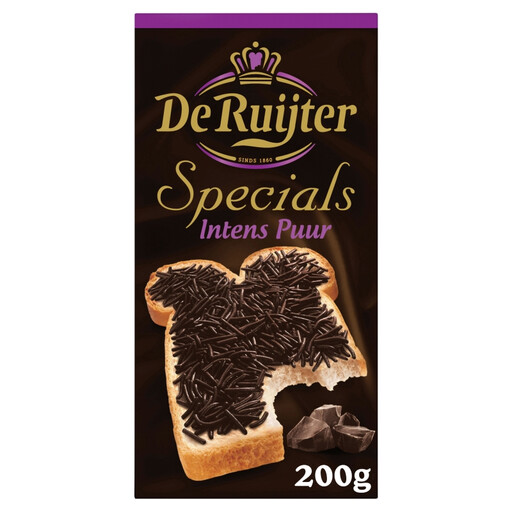 Image unavailable
A 200 g pack for anyone who wants to use a small amount of sprinkles on rusks or a dessert.
Joybuy’s product information for De Ruijter Intens Puur 200 g lists at least 52% cocoa solids. Before serving, check the current packaging for sugars and allergens.
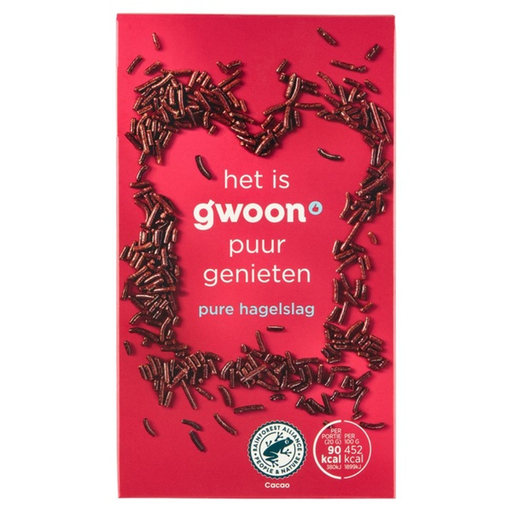 Image unavailable
The 400 g pack is a good fit for a Christmas table where you want to use sprinkles on several rusks or with different desserts.
Before choosing this variety, check the current packaging for the cocoa percentage, sugar per 100 g and allergens.
If you’re looking for a pronounced dark chocolate flavour, start with the stated minimum percentage of cocoa solids. Product information from Albert Heijn and Jumbo shows that the minimums for the regular and intensely dark varieties reviewed range from 32% to 52%. Then compare the pack size, sugars and allergens of the option you’re considering.
No: according to Albert Heijn, the AH Hagelslag Puur Minder Suiker reviewed contains 43 g of sugars per 100 g. The ‘30% less sugar’ claim compares this variety with AH Chocoladehagel Puur; it doesn’t replace the nutritional information for the product you choose.
Only choose after checking the allergens on the packaging of the specific variety. The De Ruijter and Venz product information reviewed lists milk and soya; the word ‘dark’ says nothing about allergens.
No, information about baker’s salt in bread won’t tell you what’s in chocolate sprinkles. Voedingscentrum says that using baker’s salt when baking bread isn’t compulsory; check the label on the bread or rusks and the chocolate sprinkles separately for their ingredients.
Add the sprinkles as decoration once the bake has cooled completely. In Lidl’s Christmas wreath biscuit recipe, the biscuits are left to cool before being decorated with chocolate spread and sprinkles.