
Anyone who regularly serves something with coffee
Older people and carers who often serve chocolate rice cakes and want to compare the nutritional information per 100 g and the portion size.


A chocolate rice cake is only suitable with afternoon coffee if its crunchy texture is right for the person you’re serving it to. If it’s a regular coffee-time treat, compare sugars, saturated fat and fibre per 100 g. If you need to avoid milk, check the ingredients and any ‘may contain’ warnings too. If someone has difficulty chewing or swallowing, their individual care advice should take priority over choosing a rice cake.
Older people and carers who often serve chocolate rice cakes and want to compare the nutritional information per 100 g and the portion size.
Shoppers for whom the ingredients matter and who also need to check for ‘may contain’ warnings if they have an allergy.
Older people and their carers for whom the crunchy texture is only suitable if it aligns with individual care or swallowing advice. Amsterdam UMC describes food texture levels according to IDDSI.
First, check whether the texture is suitable for the person the rice cake is intended for. Then compare the nutritional information and check the ingredients on the current packaging.
| What to consider | What to check when buying | Who it matters most to |
|---|---|---|
| Nutritional information | Compare sugars and saturated fat per 100 g; check the fibre too. | If rice cakes are a regular with coffee, I want to know how the chocolate varieties compare on the label. For around 37% of consumers, this nutritional comparison comes first. |
| Crunchy texture | If there are chewing or swallowing difficulties, ask for individual care or IDDSI advice. | If someone has difficulty chewing or is at risk of choking, I don’t want to choose a crunchy snack based on taste alone. A suitable texture is the main concern for around 27% of consumers. |
| Milk and other allergens | Read the ingredients and any ‘may contain’ warnings on the pack. | If I need to avoid milk, I want to distinguish between lactose-free claims and warnings that are relevant to an allergy. Around 18% of consumers make this check their priority. |
| Availability and packaging | Check the current range and pack size. | When I’m shopping for a coffee-time treat, I want to be able to rely on finding a suitable pack at the shop where I’m buying. For around 18% of consumers, current availability is the most important starting point. |
The weight of one rice cake doesn’t tell you how much sugar and saturated fat the variety contains per 100 g. The labels of the products discussed differ in this respect.
Compare similar chocolate rice cakes per 100 g, then consider how many you plan to serve. The Netherlands Nutrition Centre advises using the nutrition table to compare products.
Coughing or choking while eating may be a reason to have the suitability of the texture assessed. A rice cake isn’t automatically suitable for a prescribed modified food texture level.
If you know or suspect that someone has difficulty chewing or swallowing, follow their individual care or speech and language therapy advice before offering a crunchy snack.
A lactose-free claim doesn’t automatically answer the question of whether a product is suitable for someone with a milk allergy. For example, the Consenza variety listed by PLUS warns that it may contain traces of milk, nuts, soya and sesame.
If you have an allergy, check both the ingredients and the ‘may contain’ warning on the current packaging.
Albert Heijn has product pages for rice cakes with dark chocolate and milk chocolate.
Jumbo lists rice cakes with dark and milk chocolate; its organic dark chocolate variety is described as a 100 g pack.
PLUS features its own chocolate rice cake and a separate product page for Consenza rice cakes.
ALDI describes Goud-Gebakken rice cakes with yoghurt, milk chocolate or dark chocolate as products available in store.
Consenza makes a chocolate rice cake that’s labelled vegan, gluten-free and lactose-free on the PLUS product page.
This chocolate rice cake is suitable for a coffee break when you fancy a crunchy snack. Before serving, check that the texture and allergen information meet the needs of the person you’re buying it for.
 No image available
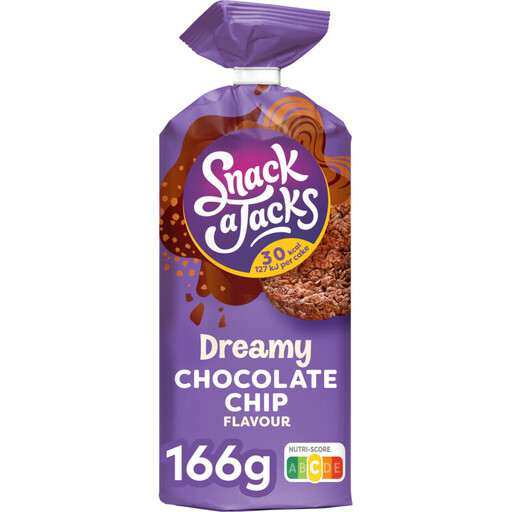
A crunchy chocolate rice cake option to enjoy with coffee. The pack contains 166 g. If you have allergies, check the current information for milk, soya and sesame. If you have difficulty chewing or swallowing, follow individual advice on suitable textures.
No, it depends on the nutritional values and ingredients of the specific products. According to Albert Heijn, the dark chocolate variety contains 27 g of sugars per 100 g, compared with 32 g for the milk chocolate variety. Also compare saturated fat and fibre on the current labels.
Don’t assume a crunchy rice cake is suitable without an assessment. Amsterdam UMC explains that the right food for someone with chewing or swallowing difficulties depends on their individual IDDSI advice. Ask which food texture level applies to them.
Not necessarily: a pack can be labelled lactose-free and also carry a warning that it may contain traces of milk. According to the PLUS product page, this applies to the Consenza variety discussed here. If you have an allergy, check the current ingredients and ‘may contain’ warning, and ask for individual advice if needed.
The label on the packaging must include allergen information, according to the Netherlands Food and Consumer Product Safety Authority. For the variety you choose, also read any warnings that it may contain traces, as information varies by product.
Follow the storage instructions and use-by date on the packaging. The product information from Albert Heijn, Jumbo and PLUS advises storing the rice cakes in a cool, dry place and protecting them from moisture and heat. Seal the pack carefully after opening.