
Office buyers stocking a shared tin
You want to know how many portions are in a pack and how to store the rice cakes once opened. For shared snacks, it should also be clear which ingredients and allergens are in the tin.


When choosing snacks for a shared office biscuit tin, compare more than just dark and milk chocolate. Check the nutritional information, allergens, portions and storage instructions for the exact pack. The dark chocolate options reviewed contain less sugar per 100 g than the milk chocolate options, but ‘dark’ doesn’t mean a rice cake is free from milk or other allergens. Keep the product information handy when filling the tin.
You want to know how many portions are in a pack and how to store the rice cakes once opened. For shared snacks, it should also be clear which ingredients and allergens are in the tin.
You look beyond the ‘dark’ or ‘milk’ chocolate label and compare sugars, saturated fat and fibre on a like-for-like basis. Product information from Albert Heijn and Jumbo shows that these values vary between the options reviewed.
You want to be able to check whether a specific pack contains milk, lactose, soya or sesame, or carries a warning about them. A ‘gluten-free’ label doesn’t answer those other questions.
First, make sure everyone can identify what’s in the tin and find the allergen information. Then compare portions, storage instructions and nutritional values. Only after that should you choose between dark chocolate, milk chocolate or an organic option.
| What to consider | What to check when buying | Who does this matter to? |
|---|---|---|
| Storage and sharing | Check the number of pieces or portions and the storage advice for after opening. A stated number of portions doesn’t tell you whether the rice cakes are individually wrapped. | If the tin is often left open, I want to be able to seal the contents properly and top them up without confusion. This would be the main purchasing concern for around 33% of consumers. |
| Allergens and dietary requirements | Check the ingredients and both ‘contains’ and ‘may contain’ statements on the current pack; keep this information with the tin. | When colleagues need to avoid certain allergens, I want to be able to see exactly what’s in these rice cakes. This clarity would come first for around 27% of consumers. |
| Nutritional value | Compare sugars, saturated fat and fibre per 100 g, then check what the stated portion contains. | I want to choose a treat based on its nutrition table, not just the type of chocolate. An estimated 27% of consumers would make this comparison their top priority. |
| Flavour and pack size | Check the type of chocolate, pack size and number of pieces in the option you want to order. | If I top up the tin regularly, I want to choose a flavour that suits our preferences and know how many rice cakes are in a pack. This would matter most to around 13% of consumers. |
The Albert Heijn rice cakes reviewed are labelled gluten-free, but the milk chocolate option contains milk and lactose. The dark chocolate option carries a warning about the possible presence of milk, sesame seeds and lactose. Other products reviewed also list allergens unrelated to gluten.
Use a gluten-free label only to check for gluten. For each relevant allergy, check the ingredients and allergen warnings on the pack you’re actually putting out.
According to Jumbo’s product information, the dark chocolate option reviewed contains 25,0 g of sugars per 100 g; Albert Heijn lists 27 g per 100 g for its dark chocolate option. So the type of chocolate alone doesn’t tell you the nutritional value of a specific rice cake.
Compare sugars, saturated fat and fibre per 100 g for the exact options. Also check the portion size before comparing values per portion.
Without the pack, colleagues can no longer easily check the ingredients, allergens, best-before date and storage instructions. The Netherlands Food and Consumer Product Safety Authority highlights the importance of clear allergen and product information on labels for prepacked foods.
Keep the original pack with the tin. If you use a product card, copy the product name and relevant information accurately, and keep the pack handy so you can check the details.
These examples can help you compare specific options; a brand name alone says nothing about the nutritional value or allergens of every rice cake from that brand.
Albert Heijn lists 150 g packs of dark and milk chocolate rice cakes, each with nine portions. This makes it easy to compare the two options in the same range.
Jumbo lists 150 g packs of dark and milk chocolate rice cakes, with nutritional information per 100 g and per portion on the product pages reviewed.
The dark chocolate option reviewed is worth considering if organic ingredients are a factor in your office purchase.
The milk chocolate rice cake reviewed also contains sesame. This makes the ingredients list important when several colleagues are sharing the same tin.
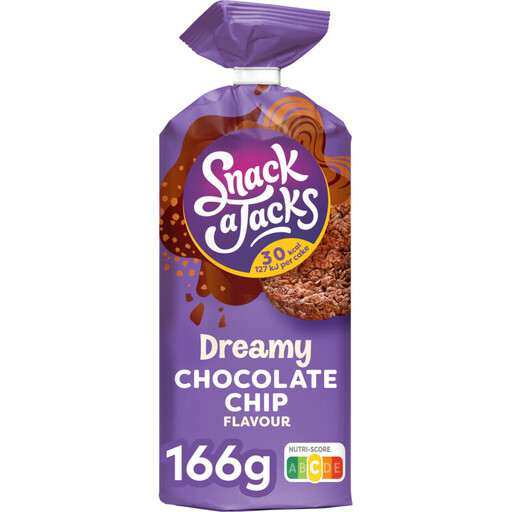
If you’re also considering a chocolate-flavoured rice snack, this Snack a Jacks product is a related option. The product information describes a rice and corn snack with a chocolate flavour and milk chocolate as an ingredient; don’t assume it has the same chocolate coating as the rice cakes discussed above.
 No image available
An option to consider if you’d also like a chocolate-flavoured rice and corn snack for the office biscuit tin. According to Joybuy’s product information, this product contains milk and soya.
Check the sesame information on the current pack if it matters to your colleagues. Also check whether the rice cakes are individually wrapped if you plan to hand them out one at a time.
No, you can’t tell that for every product just from the type of chocolate. In the product information reviewed, Jumbo lists 25,0 g of sugars per 100 g for its dark chocolate option and 31,7 g for its milk chocolate option; Albert Heijn lists 27 g and 32 g respectively. For other options, check the nutrition table on the exact pack and don’t judge a product on just one nutritional value.
Follow the storage advice on the pack you choose and seal the tin properly. For the options reviewed, Albert Heijn recommends storing them somewhere cool, dark and dry; Jumbo advises protecting them from heat and moisture. Keep the pack with the snacks so you can check the instructions after topping up the tin.
Keep the original pack with the tin so colleagues can check the ingredients and allergens for the right product. The Netherlands Food and Consumer Product Safety Authority describes allergen labelling on prepacked foods; a homemade card can help people identify the product, but it shouldn’t leave out important information or warnings.