
Vandaag of morgen in huis

Kwaliteit gegarandeerd

Welkomstaanbiedingen ontgrendelen: GRATIS bezorging | Tot 80% korting | Gratis 30 dagen JoyPlus-proefperiode
Download de app
A pack labelled with chocolate, fibre or “zero sugar” can quickly look like a sensible choice. But chocolate muesli and granola can vary considerably in their ingredients, serving sizes and nutritional values. If you only look at the front of the pack, you could end up buying more sugar, calories or allergens than you expected.
This buying guide will help you compare chocolate granola, chocolate muesli and handy muesli bars objectively. The nutritional values listed come from the product information and are per 100 grams unless stated otherwise.
A product labelled 0% added sugar can still contain naturally occurring sugars. So always check the “of which sugars” line in the nutrition table. For example, according to the product information, Quaker Cruesli Choco Zero Sugar contains 3.4 grams of sugar per 100 grams and no added sugars or sweeteners.
A muesli bar with no added sugar isn’t automatically low in carbohydrates either. According to the label, Hero B’Tween Muesli Bar Zero White Chocolate contains 42 grams of polyols per 100 grams. The packaging also states that excessive consumption may have a laxative effect. This is useful to know if you’re planning to eat several bars in one day.
A high-protein muesli can also be relatively high in fat or calories. So don’t just look at the protein percentage: check energy, saturated fat, fibre and serving size too. Holie’s Crunchy Muesli Protein Chocolate contains 22 grams of protein and 21 grams of fibre per 100 grams, but also provides 429 kcal per 100 grams.
Crunchy muesli and granola often contain oil, syrup or other ingredients that give them their crisp texture. A bar is handy when you’re out and about, but the serving is smaller, so it isn’t directly comparable with a bowl of breakfast cereal.
Look out for conflicting or unclear claims too. MadeGood Granola Chocolate Chips is described as gluten-free, while its allergen information also lists gluten. If you have an allergy or coeliac disease, always check the current packaging and contact the manufacturer if you’re unsure.
First compare sugars per 100 grams, then check the ingredients list. Sugar, glucose syrup, fructose syrup, date syrup and maltitol can all play different roles in a product. A low sugar content doesn’t automatically mean a low calorie content either.
According to the product information, Quaker Cruesli Chocolate contains 16 grams of sugar per 100 grams. The Choco Zero Sugar version contains 3.4 grams. That difference shows why the nutrition table matters more than the product name alone.
If you’re active or want to feel fuller for longer, high-protein muesli, protein granola and high-fibre granola may be worth considering. Treat these terms as search and comparison criteria, though, not as a guarantee of a particular effect.
Examples:
Always check the ingredients and allergen information. Many varieties contain oats, wheat, spelt, milk, soya, peanuts or nuts. A product may also contain traces of other allergens.
If you’re looking for a gluten-free option, Holie’s Granola Glutenfree Peanut Chocolate lists gluten-free wholegrain oats as an ingredient. However, the product contains peanuts and may contain traces of almond, cashew, hazelnut, pecan and soya. So “gluten-free” doesn’t remove the need to check the full allergen information.
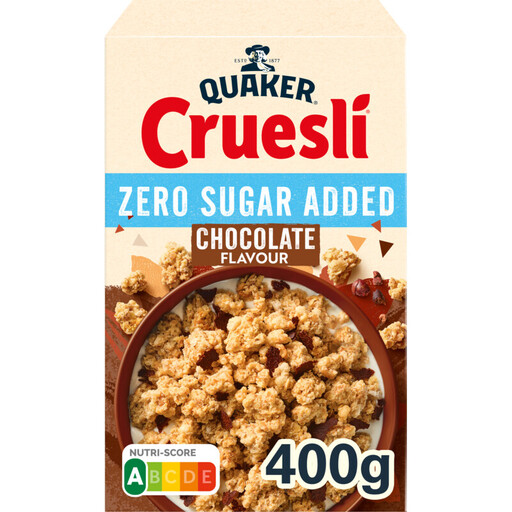
Why it suits this profile: A familiar crunchy muesli for anyone who wants to start comparing sugar and fibre without choosing a large pack straight away.
The nutritional information lists 3.4 grams of sugar per 100 grams and no added sugars or sweeteners. Remember to check the serving size and allergens.
21 grams of fibre per 100 grams, 40% wholegrain oats and a 400-gram pack.

Why it suits this profile: For anyone looking for a compact granola with nuts and seeds, and a relatively high protein and fibre content.
The claim about having fewer carbohydrates comes from TastyBasics’ product description. Check the nutrition table for yourself: it lists 26 grams of carbohydrates per 100 grams.
21 grams of protein, 28 grams of fibre and 19 grams of fat per 100 grams; contains soya, oats, hazelnuts and almonds.
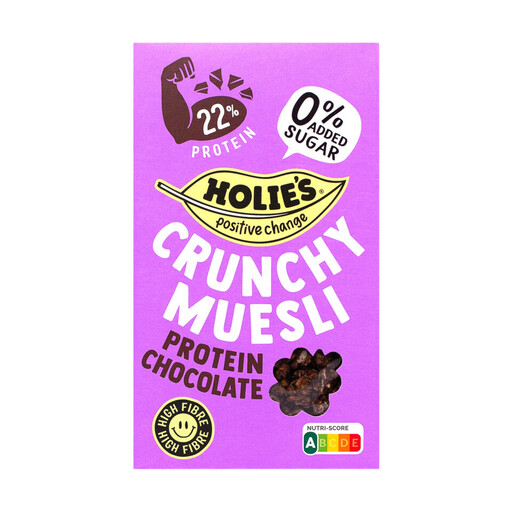
Why it suits this profile: Suitable for athletes and active adults who want to compare chocolate protein granola with a low sugar content.
The ingredients list states 0% added sugar and 2.1 grams of sugar per 100 grams. The energy value is still 429 kcal per 100 grams, so portion sizes matter.
22 grams of protein, 21 grams of fibre and 38 grams of carbohydrates per 100 grams; contains oats, wheat and wheat gluten.

Why it suits this profile: An option for anyone looking for chocolate granola made with gluten-free oats and peanuts, with a clear ingredients list.
The product information lists gluten-free wholegrain oats and 0% added sugar. If you have an allergy, always check the packaging and warnings about possible traces.
15 grams of protein, 14 grams of fibre and 4 grams of sugar per 100 grams; contains peanuts and may contain traces of nuts and soya.
We’ve put together a complete, up-to-date list of products that meet these strict selection criteria and the applicable European safety regulations.
That depends on the ingredients and your serving size. Compare the sugar, fibre, protein and energy per 100 grams. You could add yoghurt or fruit, but remember to take the nutritional value of your whole meal into account.
In practice, the terms are sometimes used interchangeably. Crunchy muesli and granola usually contain toasted or crunchy ingredients. So focus on the ingredients list and nutrition table, rather than just the name on the front of the pack.
Follow the label instructions for both products: store them in a cool, dry place, away from direct sunlight and moisture. Seal an opened bag tightly. Individually wrapped muesli bars are handy when you’re out and about; for larger packs, check the best-before date and serving size.
