
Milkshake maker with a full kitchen cupboard
You want to make chocolate milkshakes at home and be able to put the blender, cup and loose parts away after use.


If you usually make one chocolate milkshake at a time, start by looking for a compact blender with a blending cup, and measure the available cupboard space, including room for loose parts. A larger cup or extra features may be useful for bigger portions or other recipes, but wattage alone doesn’t prove how smooth a milkshake will be.
You want to make chocolate milkshakes at home and be able to put the blender, cup and loose parts away after use.
You may want to use ice or other firm, cold ingredients, so check what the instructions for your chosen model allow.
You usually make one drink and want a size that suits your portion, without having to use or store a large blender jug.
Measure your storage space first, then compare the cup capacity, suitable ingredients and cleaning requirements for each model.
| Buying concern | What to look for | Who cares more about this? |
|---|---|---|
| Storage space | Measure the width, depth and height, and allow for cups and accessories. Bosch lists the MMB2111S as measuring 367 × 122 × 126 mm (h × w × d). | If I need to put the blender in a full cupboard after use, I count all the parts too. Around 33% of consumers say storage space is their main buying concern. |
| Ingredients and texture | Check the instructions for the ingredients you want to use. The Consumentenbond notes that wattage alone doesn’t tell you everything about blending results. | If I want to make a thicker shake or use cold, firm ingredients, I first check what the model can handle. This is the top priority for around 27% of consumers. |
| Portion size | Compare the cup capacity with your usual portion and check the filling instructions. Bosch lists a 0.6 l capacity for the MMB2111S; nutribullet lists 700 and 500 ml cups for the NB606DG. | If I usually make one drink, I want a cup that suits my portion; for several people, a smaller capacity may mean blending in extra batches. Around 20% of consumers focus mainly on portion size. |
| Cleaning | Check the cleaning instructions for each part and see which parts are dishwasher-safe. | After making a shake, I want to know which parts need cleaning and how to do it safely. Around 13% of consumers put cleaning at the top of their list. |
| Cost and features | Compare the same version and included accessories. Check whether extra programmes suit the recipes you actually want to make. | If I only make a milkshake now and then, I don’t want to pay for features I won’t use. Around 7% of consumers say cost is their main buying concern. |
The cup, lid and included accessories can take up space too, and may affect whether you can store everything together.
Measure your cupboard and compare it with the appliance and all the parts included with the exact version you’re considering.
Wattage alone doesn’t tell you how well a blender handles a particular recipe. The Consumentenbond assesses blending results separately from the stated wattage.
Choose based on your portion and ingredients, and check the model instructions. Use comparative test results only if they cover a suitable recipe and comparable test conditions.
The VitaPower Serie 2 MMB2111S is a useful model to compare if you’re looking for a slim blender with a drinking cup.
The 3000 Series HR2620/40 is a compact blender version supplied with a tumbler.
The Original 600 NB606DG is available with cups in two sizes.
The Blend Up BL19H4F0 is a compact blender version with programmes and drinking bottles.
These product picks cover compact and portable blenders for small portions. Check the ingredient instructions for each model and consider how much space its parts will take up.
 Image unavailable
The stated jug capacity can help you decide whether this size suits your portion; check that you have room to store the jug too.
Power: 250 W. Glass jug: 500 ml.
 Image unavailable
A portable model to consider if you want to make a small portion; check that the capacity and run time suit your routine.
Capacity: 475 ml. Rechargeable battery, USB-C charging and a stated run time of 20 minutes.
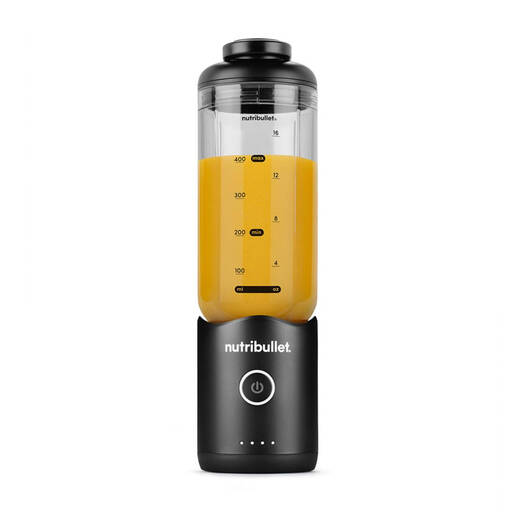 Image unavailable
This collapsible model is worth considering if storage space is a priority; check how to unfold the blender before use.
Capacity: 590 ml. Rechargeable battery and USB-C charging. Do not blend hot liquids, and fully unfold the blender cup before use.
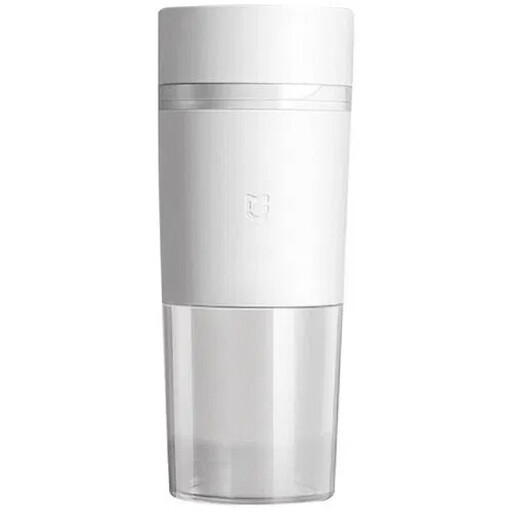 Image unavailable
A portable blender to compare if you’re looking for a compact option; check the capacity and instructions for the ingredients you want to use.
Do not blend hot liquids.
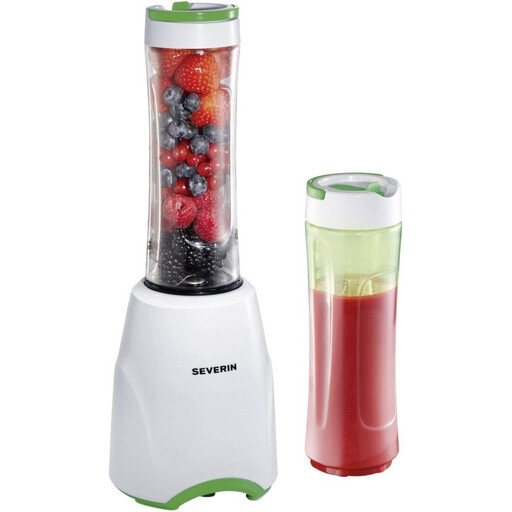 Image unavailable
The product name identifies this model as a smoothie maker; check the manual for guidance on the portion and ingredients for your chocolate milkshake.
The product name lists the version as Smoothie Mix & Go.
According to the product information, the appliance is not intended for children under 8. Children aged 8 and over may use it only under supervision.
A small blending cup may be suitable for one milkshake; the Consumentenbond lists milkshakes as one use for smoothie blenders. Check the instructions for the exact model, especially if you want to use hard or frozen ingredients.
Measure the available width, depth and height, and allow space for the cup, lid and accessories too. Bosch lists the MMB2111S appliance dimensions as 367 × 122 × 126 mm; also measure the space you plan to use for storing the parts.
Follow the cleaning instructions for each part, and clean the cup and blade after use. Dishwasher-safe and dismantling features apply only to the specific versions for which Bosch and Tefal list them.
Return milk that needs to be chilled to the fridge as soon as possible. The Voedingscentrum recommends an ideal fridge temperature of 4 °C.
No. According to the Dutch government, there is no fixed statutory warranty period in the Netherlands; you’re entitled to a product that works properly for as long as you can reasonably expect it to. If there’s a problem, the seller must provide a solution; the manufacturer’s warranty is additional.
Ondernemersplein explains that electrical appliances must meet the applicable European requirements and that, after assessment, the manufacturer is responsible for providing the required CE marking and EU declaration of conformity. The NVWA also outlines requirements for materials that come into contact with food; these general rules alone don’t prove that an individually offered model complies.