Which blender is right for you?

For making one shake after class

If you usually make one chocolate milkshake at home and want to minimise pouring and washing up, look for a personal blender that lets you blend directly in the drinking cup. The Consumentenbond explains how a blender-to-go combines preparation in a small cup with drinking straight from it or taking it with you.

For using ice or making several servings

If you regularly make shakes with ice or for more than one person, look at the jug capacity, whether it has a dedicated ice function and what settings it offers. Braun lists these features for the PowerBlend 1 JB1051BK; always check the instructions for ice use for each model.

For blending without a plug socket

A rechargeable blender could be a good fit if you want to blend somewhere without a plug socket after class and a smaller serving is enough. Bear in mind that milk needs to stay chilled: the Voedingscentrum advises storing fresh dairy products at 4 °C.

What should you look for when choosing?

Personal blender with drinking cup

A good fit if: you usually make one serving at home and want to drink it straight from the cup.

Bear in mind: the smaller cup limits the amount you can make at once; check the ice instructions for the specific model.

Jug blender

A good fit if: you want to make several shakes at once or regularly add ice; some models list a separate ice function for this purpose.

Bear in mind: a jug takes up space and may mean more parts to clean.

Cordless personal blender

A good fit if: being able to blend without a plug socket is essential for you.

Bear in mind: charging, the smaller cup and any restrictions on ice; you’ll also need to keep dairy chilled.

What to consider What to check before buying Who should pay particular attention?
Texture and ingredients Check the ice instructions and any quantity limit for the specific model. Look for comparable test results using the ingredients you plan to use; the Consumentenbond assesses texture in smoothies, not specifically in chocolate milkshakes. If I’m using milk, soft ingredients or ice, I want to know how the model handles that combination; around 31% of consumers are most concerned about texture and ingredients.
Less washing up Check which parts are dishwasher-safe and whether the cup, lid and blades can be removed. After a late class, I want to keep pouring and washing up to a minimum; around 25% of consumers prioritise quick cleaning.
Evening noise Look for noise results for the specific model and compare only measurements taken on the same basis. Bosch lists 86 dB(A) re 1 pW for the MMB2111S at maximum noise level in normal mode at air discharge; this isn’t directly comparable with values measured differently. If I’m blending in the evening, noise matters to me, especially if I share my home with others; around 25% of consumers are most concerned about evening noise.
Blending without a plug socket Check the cup capacity, charging method, instructions for ice and how you’ll keep dairy chilled. The Voedingscentrum recommends storing fresh dairy products at 4 °C. If I want to blend somewhere without a plug socket, cordless operation is essential for me; around 19% of consumers are most concerned about blending without a plug socket.

Common mistakes when choosing

  • Choosing by wattage alone for an iced milkshake

    Wattage alone doesn’t tell you how smooth your recipe will be or how much ice a blender can handle. The Consumentenbond assesses texture in smoothies; this isn’t a specific test of chocolate milkshakes.

    Check the ice instructions for the specific model and, if available, look for comparable independent test results.

  • Assuming a travel cup will keep milk chilled

    A sealed or cordless cup won’t keep perishable dairy chilled. The Voedingscentrum recommends storing fresh dairy products at 4 °C.

    Plan how you’ll keep milk chilled when taking it with you, and don’t leave it out of the fridge for long.

  • Assuming compact means quiet

    A compact design or wattage figure doesn’t tell you how loud an appliance is. Noise is a separate test category, and measurements may be taken on different bases.

    Compare noise results for specific models only when the measurement conditions are the same.

Brands to consider

Philips

The Blend & Go HR2670/01 is a personal blender for making one shake directly in a drinking cup.

  • Philips lists 350 W, two speeds and dishwasher-safe parts.
  • These specifications don’t show how the blender handles a milkshake with lots of ice; check the model’s instructions for that.

Bosch

The VitaPower Serie 2 MMB2111S is designed for an individual serving in a To Go cup.

  • Bosch lists a 0.6 l cup and dishwasher-safe parts.
  • Without the same measurement basis, the published noise figure can’t be used to rank it against other blenders.

Braun

The PowerBlend 1 JB1051BK is a jug blender for anyone looking for several servings or a dedicated ice function.

  • Braun lists a working capacity of 1.25 l, two speeds and a pulse/ice-crushing function. Braun says the removable parts are dishwasher-safe.
  • A manufacturer’s description of fast or efficient blending isn’t an independent measure of the results for chocolate milkshakes.

nutribullet

The Portable NBP003NBL is a personal blender for situations where blending without a plug socket is important.

  • nutribullet says the cup has a capacity of 475 ml and the appliance charges via USB-C.
  • The manufacturer says the model can crush only a small amount of ice; the stated blending cycles are manufacturer figures, not an independently measured operating time.

Blenders for milkshakes

This selection includes jug blenders for iced shakes or several servings, as well as a personal blender for one serving that you can drink straight from the cup.

Cecotec jug blender, 1.5 l, 1300 W

Cecotec Power Black Titanium 1300Max, 1300 W

A good fit if you’re looking for a 1.5 l jug and a model listed as able to crush ice; these details don’t guarantee a specific result for chocolate milkshakes.

The product name lists two speeds and ice crushing; the product description also mentions a pulse function.

View at Joybuy

ochama multifunction blender, 600 W, 1.5 l

ochama Multifunction Blender, 600 W, 1.5 l

The jug capacity and ice-crushing feature may suit you if you want to make more than one serving or add ice; check the instructions for your recipe.

The product description lists three speeds and an ice-crushing function.

View at Joybuy

Philips 3000 Series Mini Blender HR2510/90, 0.6 l

Philips 3000 Series Mini Blender HR2510/90

The 0.6 l capacity is suitable for a smaller batch; the product name also mentions ice crushing, but doesn’t say how the model will handle your milkshake.

The product name lists 350 W. The description mentions a separate speed for hard ingredients and ice, as well as dishwasher-safe removable parts.

View at Joybuy
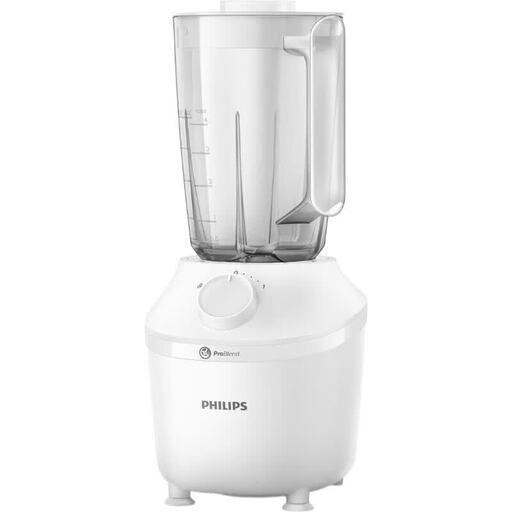
Philips 3000 Series Blender HR2041/00, 450 W

Philips 3000 Series Blender HR2041/00, 450 W

The product information lists ice crushing and a pulse function; if you want to make several servings, check the capacity available for your recipe.

The product name lists a capacity of 1.9 l; the description gives an effective capacity of 1.0 l. It also says the removable parts are dishwasher-safe.

View at Joybuy

Aigostar Marden BL-250, 250 W, 500 ml

Aigostar Marden BL-250, 250 W, 500 ml

The product description mentions shakes and a drinking spout lid, making it a good option for one serving that you want to drink straight from the cup.

It has a capacity of 500 ml; according to the description, the removable parts are dishwasher-safe.

View at Joybuy

Frequently asked questions

Does a blender need to crush ice for a chocolate milkshake?

Not if you’re blending only milk and soft ingredients. If you regularly add ice, check the ice function and any quantity limit for the specific model; wattage alone doesn’t prove the appliance can handle your recipe.

What should you do with the cup and milk after blending?

Check the manual to see which parts can go in the dishwasher, as this varies by model. Don’t leave fresh dairy products out of the fridge for long; the Voedingscentrum advises storing them at 4 °C.

In the Netherlands, are you only entitled to the manufacturer’s warranty?

No. According to the Rijksoverheid, a product must meet reasonable expectations, and you should contact the seller if something is wrong. There’s no fixed statutory warranty period in the Netherlands; what you can reasonably expect depends, among other things, on the product and the information provided at the time of purchase.

Do you have a cooling-off period when buying a blender online?

For distance sales from a business, the Rijksoverheid says you generally have a 14-day cooling-off period. Check the terms of your specific purchase; an online purchase from a private seller isn’t covered by the same distance-selling rules.

What safety information should you check for an electric blender?

Check the CE marking and product documentation. According to the Nederlandse Voedsel- en Warenautoriteit, the Low Voltage Directive applies to electrical equipment with a rated AC voltage of 50 to 1000 V or a rated DC voltage of 75 to 1500 V; the requirements that apply depend on the appliance and the relevant regulations. A CE marking isn’t a performance test for a milkshake.
