
Home baker looking to avoid scorching
You want to melt chocolate gently after your class and keep an eye on its temperature yourself if needed, for example if you plan to temper it afterwards.


Chocolate is best melted gently and indirectly, for example in a bain-marie. Then choose a separate hob that suits your pan and workspace. For induction, you’ll need a compatible pan; ceramic and cast-iron hobs offer other options, and Rommelsbacher says cast iron retains heat for longer. A hob’s temperature setting does not automatically tell you the temperature of the chocolate, so measure it separately if accuracy matters.
You want to melt chocolate gently after your class and keep an eye on its temperature yourself if needed, for example if you plan to temper it afterwards.
You’re looking for a separate cooking zone that you can set up without cutting into your worktop. The available power connection and your pan are both factors in your choice.
You want to keep using your current pan, so you’re comparing ceramic or cast-iron hobs with induction.
First consider the temperature you want to monitor, then check pan compatibility and where you plan to use the separate hob.
| What to consider | What should you check? | Who is this important for? |
|---|---|---|
| Controllable heat | Check what the setting measures and whether you’ll use a separate chocolate thermometer. | If you want to melt chocolate gently and monitor its temperature, this should be your priority. Around 33% of consumers focus primarily on controlled heat. |
| Workspace and power connection | Check the plug, instruction manual, available space and the load on the electrical circuit. | If you want to set up a separate cooking zone in a small workspace after an evening class, space and the power connection both matter. Around 27% of consumers prioritise compact, ready-to-use appliances. |
| Pan compatibility | For induction, check that your pan is compatible; with any hob, compare the pan base with the cooking zone. | If you want to keep using your existing pan, first check which type of hob is suitable. Around 20% of consumers prioritise keeping their current pans. |
| Monitoring temperature | Decide whether you only want to melt the chocolate or temper it too; if you’re considering a hob with a sensor, check how the supplied sensor is used. | If you plan to work with the chocolate after melting it, its actual temperature matters. Around 20% of consumers focus primarily on precise temperature control for further processing. |
For the CASO TC 2400, the stated ranges with and without the thermometer apply to different settings. Callebaut notes that the chocolate’s actual temperature matters when tempering.
Check what the setting measures and, if needed, use a suitable thermometer to check the chocolate itself.
An induction hob requires a compatible pan. You can’t necessarily use an existing pan if it isn’t suitable for induction.
Check your pan’s compatibility and base size before choosing a hob type.
A timer can switch the hob off after the set time, but that doesn’t automatically measure the chocolate’s temperature.
Use the timer as an extra control and keep checking the chocolate as it melts.
The TC 2400 is a portable induction hob supplied with a Thermo Control thermometer.
The CT 2203/TC is a portable ceramic hob; Rommelsbacher also explains the differences between ceramic, induction and cast iron.
The KP-6185 is a cast-iron hob; the IK-6178 is a separate induction model.
The 303010 is a portable induction hob with temperature, power and timer controls.
Severin offers a portable hob with the KP 1092 and a separate induction option with the KP 1032.
These products are portable hobs for use on a worktop; the selection includes induction hobs and an electric hob. Induction requires a compatible pan. Check the CE marking on the version offered: according to the Netherlands Food and Consumer Product Safety Authority, it is required for electrical products covered by the Commodities Act Decree on Electrical Equipment.
 No image available
A portable induction hob for anyone with an induction-compatible pan who needs a cooking zone for the worktop.
Only suitable for pans with a ferromagnetic base.
 No image available
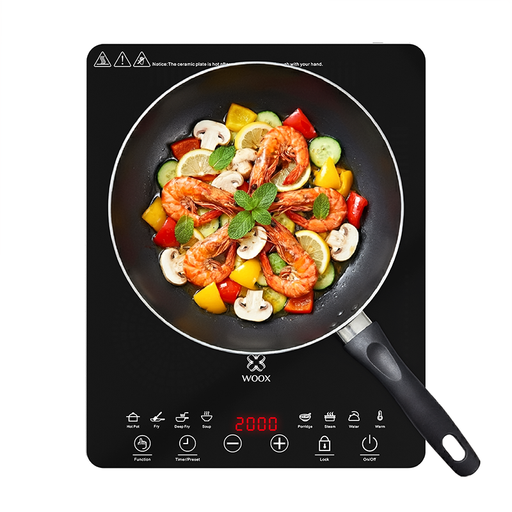
A portable induction hob for anyone looking for adjustable settings and using a compatible pan.
2000 W; eight temperature and eight power settings; 1.5 m cord. Only suitable for induction-compatible cookware.
 No image available
A slim, portable hob for anyone looking for a separate cooking zone for a small kitchen.
2000 W and 10 power settings. Only suitable for magnetic cookware; aluminium pans and ceramic pans without a magnetic base won’t work properly.
 No image available
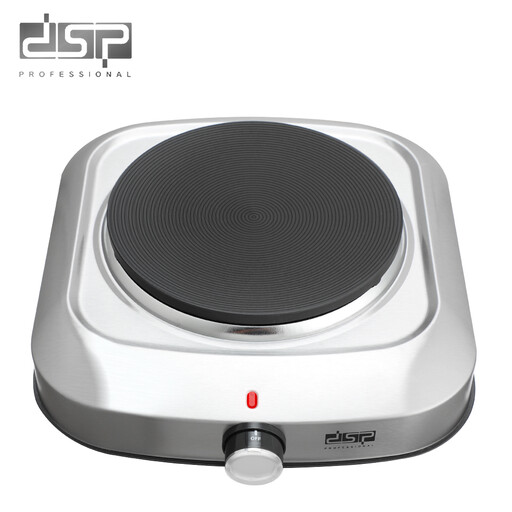
A portable electric hob for anyone looking for a non-induction model with an adjustable temperature.
1500 W; 185 mm cooking plate. The product information warns that odours and a little smoke may occur the first time it’s used; consult the instruction manual.
 No image available
An option for anyone who wants to use more than one cooking zone as well as melt chocolate.
Two cooking zones and five temperature settings. Induction requires a compatible pan.
No. In a Dutch recipe, Callebaut uses the bain-marie method. Decide whether you only want to melt the chocolate or temper it too; the hob setting isn’t the same as the chocolate’s temperature.
According to the Consumers’ Association, many freestanding induction models only require an earthed socket and don’t need a cut-out in the worktop. Check the connection requirements for the exact model and which other appliances share the same electrical circuit; this doesn’t automatically apply to every hob.
Only if your current pan isn’t suitable for induction. Check the pan size too: for example, CASO Design lists pans measuring 12–26 cm for the TC 2400; that range doesn’t automatically apply to other models.
According to the Netherlands Food and Consumer Product Safety Authority, electrical products covered by the Commodities Act Decree on Electrical Equipment must carry a CE marking. Separately, under the statutory guarantee described by ACM ConsuWijzer, if a product doesn’t meet your reasonable expectations when used normally, the seller is responsible. Check the CE information for the version being offered.
According to ACM ConsuWijzer, for online consumer purchases you’ll usually have a 14-day cooling-off period after delivery, with some exceptions. Check the terms for the specific offer; the cooling-off period is separate from your rights if a product is faulty or delivered incorrectly.