
Families eating together after school
If several people use chocolate flakes on bread or as a topping, the main question is whether you’ll finish a larger pack before its best-before date.


A 300 g pack is a good fit for a household where several people regularly use chocolate flakes on bread or as a topping. If you use them less often, a smaller pack in your preferred flavour may be more suitable. Don’t treat the pack as a sharing bag to eat from directly: serve a portion and check the ingredients, allergens and best-before date for your chosen variety.
If several people use chocolate flakes on bread or as a topping, the main question is whether you’ll finish a larger pack before its best-before date.
They want to serve chocolate flakes as a spread or topping without putting the pack out for everyone to eat from. For children aged 4 to 12, the Netherlands Nutrition Centre lists fruit, vegetables and wholemeal bread among its snack options.
If you have a relevant allergy or intolerance, read the label on the exact variety you’re buying: milk, dark and mixed chocolate flakes may have different ingredients or allergen warnings.
First, think about how often you’ll use the chocolate flakes and how you want to serve them. Then choose a flavour by checking the label: a 300 g pack size alone tells you nothing about the portion for each serving.
| What to consider | What to check before buying | Who is this most relevant to? |
|---|---|---|
| Pack size and usage | Compare the net weight with how often you serve chocolate flakes. Check the best-before date on the pack you choose. | If several people regularly use chocolate flakes on bread, I want to have enough at home without leaving a pack open for too long. Having enough in stock is the top priority for around 42% of consumers. |
| A defined snack occasion | Decide whether you’ll use the chocolate flakes as a spread or topping, and serve the amount you want. | After school, I want to be able to portion out chocolate flakes without everyone eating straight from the same pack. A defined snack occasion is the biggest priority for around 33% of consumers. |
| Flavour and label | Read the ingredients and allergen warnings for the exact milk, dark or mixed variety. | When choosing a flavour, I also want to know which ingredients and allergens are listed for that variety. Around 25% of consumers prioritise checking the variety and its label. |
Chocolate flakes are served as a spread or topping. Eating straight from a shared pack makes it harder to choose a portion for each person.
Spoon the chocolate flakes onto bread or use them as a topping, then put the pack away. For children aged 4 to 12, the Netherlands Nutrition Centre also lists fruit, vegetables and wholemeal bread as snack options.
Milk, dark and mixed varieties may have different ingredients and allergen information. The name or colour is no substitute for checking the label.
For every variety you choose, read the ingredients, listed allergens and any warnings about possible traces on the current packaging.
Lidl describes its 300 g pack as an in-store product, while a Jumbo page for De Ruijter Vlokfeest says that variety is no longer in its online range. So a variety shown online isn’t necessarily available through the store you want to shop at.
Before setting off or placing an order, check the current product page and availability at your chosen store.
An option if a particular flavour matters more to you than a large standard pack.
The Jumbo range includes 300 g packs of milk, dark and mixed chocolate flakes.
PLUS lists 300 g boxes of milk and dark chocolate flakes with a Fairtrade mark.
ALDI lists 300 g packs of Kiekeboe chocolate flakes in milk or dark varieties.
Joybuy lists 300 g packs of g'woon milk chocolate flakes to use as a spread or topping.
These two 300 g varieties are a good fit if you regularly use chocolate flakes on bread and serve a portion each time. Choose between dark and milk chocolate to suit your taste, and check the label for the exact variety; the pack size doesn’t mean it’s a sharing bag.
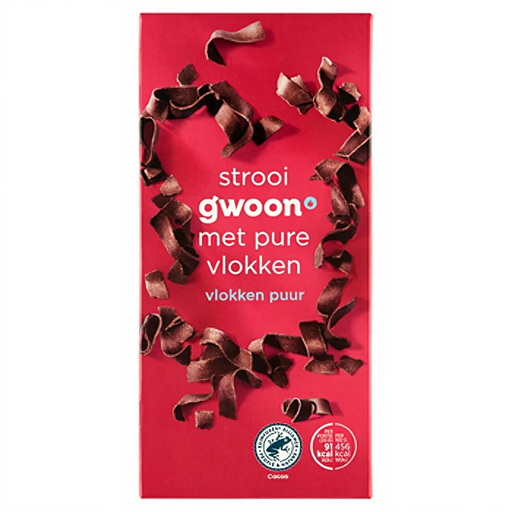 No image available
An option if several people regularly use dark chocolate flakes on bread. Serve a portion each time, and check the label on this variety for allergen information; the word ‘dark’ doesn’t tell you about allergens on its own.
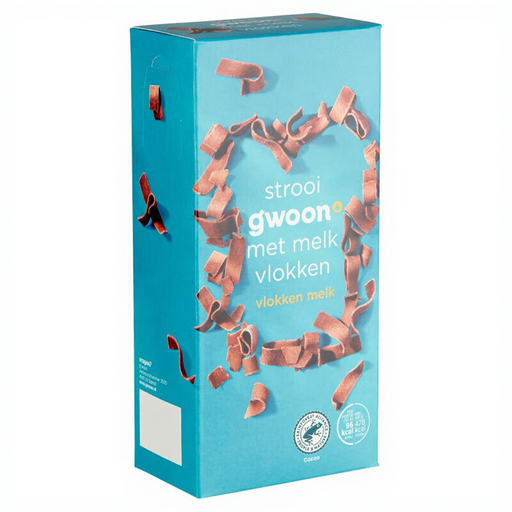 No image available
An option if you want to use milk chocolate flakes as a spread regularly. Before serving, check the ingredients, allergens and nutritional information on the current packaging.
It’s better to use chocolate flakes as a measured spread or topping than to eat them together straight from a pack. For children aged 4 to 12, the Netherlands Nutrition Centre lists vegetables, fruit, wholemeal bread and unsalted nuts among its snack options.
A 300 g pack is best suited to households where several people use chocolate flakes regularly and will finish the contents before the best-before date. If you only use them occasionally or want to try a flavour first, a smaller variety may be more practical. If you’re specifically looking for a sharing bag, check the packaging type too.
No. Check the allergens for the exact variety rather than relying on the flavour name. PLUS’s product information lists milk and lactose in its milk chocolate flakes, while other flakes may also list wheat or soya. If you have a relevant allergy or intolerance, always read the current packaging, including any warnings about possible traces.
Check the label on the pack you actually buy or use, especially for ingredients, allergens and the best-before date. The Netherlands Food and Consumer Product Safety Authority emphasises that allergens must be clearly and correctly listed on the label.