Choose individual 15 g sachets if you want to pack pre-measured portions; a 2-pack or a 300 g box is better suited to stocking up at home. Chocolate flakes are a filling or topping, not a snack to eat on their own in your gym bag. Pack something to have them with, such as bread, yoghurt or porridge, and check the ingredients and allergens for the variety you choose.
Which size is right for you?
If you prepare lunchboxes in advance
If you want to portion them out without scooping from a box each time, individual sachets are handy. Albert Heijn lists the De Ruijter small pack as containing 80 sachets of 15 g each. Pack something to have the flakes with too, such as bread or yoghurt.
Families stocking up at home
If you regularly use flakes as a bread topping or garnish, a larger box or a 2-pack could be a good fit. A 2-pack with two separate boxes gives you a supply, but not pre-measured portions for lunchboxes.
If you need to check ingredients and allergens
Check the specific variety before buying or sharing it. The ingredients and allergens listed by Albert Heijn and Jumbo differ between milk, dark and mixed varieties, so the flavour name alone isn’t enough to assess a product.
What should you look for when choosing?
First decide whether you need individual portions or mainly want to stock up at home. Then check the nutritional information and allergens for each variety.
| What to consider |
What to check when buying |
Who it matters most to |
| Individual portions |
Check the number of sachets and the weight of each one. Albert Heijn lists the De Ruijter small pack as containing 80 sachets of 15 g each. |
I want to fill several lunchboxes without measuring out a portion each time. For around 40% of consumers, portioning in advance is the priority. |
| Stocking up at home |
Check whether a 2-pack contains separate boxes or whether you’re buying one larger box. Albert Heijn describes the De Ruijter 2-pack as two separate products; Jumbo lists a 300 g box of the milk variety. |
If the flakes are mostly used at home, I mainly want enough in stock and compare pack sizes. That’s the most important consideration for around 30% of consumers. |
| Label and use |
Read the ingredients, allergens and nutritional information for the variety you’ve chosen. Compare nutritional values on the same basis, such as per 100 g. |
I need to know what the flakes contain and whether they go with what else I’m packing. Around 30% of consumers prioritise these checks over pack size. |
Common mistakes
-
Mistaking a 2-pack for portion sachets
The De Ruijter 2-pack described by Albert Heijn contains two separate boxes. It doesn’t automatically give you small portions for different lunchboxes.
Check that the pack actually contains individual sachets and see how many grams are in each one. Choose two boxes if you mainly want to split up your supply while keeping it sealed.
-
Packing only flakes in your gym bag
The chocolate flakes described are used as a bread topping or garnish. A sachet of flakes doesn’t replace the base you plan to eat them with.
Pack bread, yoghurt or porridge too, and make sure anything you take with you is sealed for the journey.
-
Relying on the flavour name to check allergens
Albert Heijn lists milk and soya in the De Ruijter milk small pack. The Venz and Choca mixes described by Jumbo also list wheat and cereals containing gluten, among other allergens.
Always read the current ingredients and allergen information on the packaging, even if you’ve bought a different variety from the same brand before.
Brands to consider
De Ruijter
Alongside boxes of chocolate flakes, Albert Heijn lists a 2-pack and a small pack of the milk variety containing 80 sachets of 15 g each.
- The small pack offers individual portions to share out.
- The 2-pack contains separate products, not portions for lunchboxes. Check the ingredients and allergens for each variety.
Jumbo
Jumbo lists its own milk chocolate flakes in a 300 g box.
- The box is an option if you want to portion out your supply at home.
- It’s a single box, not a pack with individual sachets for taking with you.
Venz
Jumbo describes Venz Rimboe kroko as a flakes variety with dark and vanilla flavours, plus fun shapes.
- The flavour combination and shapes set this variety apart from standard chocolate flakes.
- For this variety, Jumbo lists milk, cereals containing gluten, soya and wheat as allergens.
Choca
Jumbo lists Choca Vlokken mix in a 200 g pack.
- The mix offers a different kind of flakes to use as a filling or topping.
- It isn’t individually portioned; Jumbo lists milk, cereals containing gluten, soya and wheat as allergens.
Chocolate flakes for stocking up at home
This product is a box of chocolate flakes for use as a topping. If you want to take portions in a lunchbox or gym bag, check how the product is packed and portion some out yourself if needed.
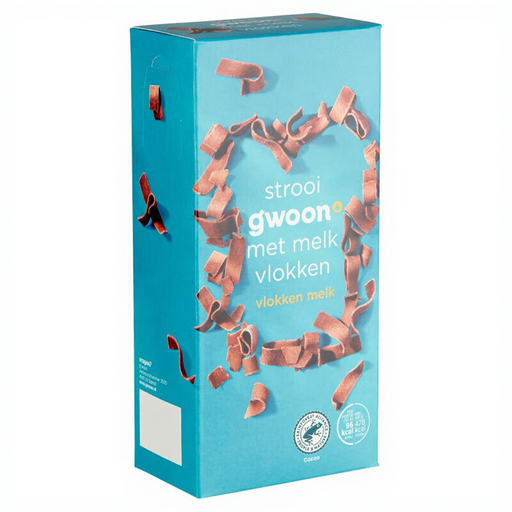 Image unavailable
g'woon milk chocolate flakes 300 g
For use as a bread topping from a multi-use pack.
Contents: 300 g. Check how the product is packed if you want to take individual portions with you, and read the latest ingredients and allergen information before buying.
View on Joybuy
Frequently asked questions
Are chocolate flakes a snack to have on their own in my gym bag?
The product information describes chocolate flakes as a filling or topping, not a snack to eat on their own. Pack something to have them with too, such as bread, yoghurt or porridge.
Which pack is handy for sharing out portions?
Individual sachets save you measuring out portions yourself: Albert Heijn lists the De Ruijter milk small pack as containing 80 sachets of 15 g each. The De Ruijter 2-pack described, by contrast, contains two separate boxes and is designed as a stock-up size.
How should I store flakes after opening?
Follow the instructions on the packaging for the variety you’ve chosen. The products described should be stored in a cool, dry place and resealed properly after use; also check the best-before date on the pack.
Where can I check the allergens in packaged flakes?
Check the ingredients and allergen information on the pack for the variety you’re buying. The European Commission explains that allergens must be clearly listed under EU rules, so don’t rely on the brand or flavour name alone.


