
Hosting breakfast or brunch
You want enough flakes for several guests or serving occasions. 300 g boxes are worth considering; check separately whether the quantity is sufficient and the packaging suits the way you want to serve them.


If you’re serving breakfast to several guests, consider a 300 g box when quantity per pack is your priority, but don’t assume that a box is a sharing bag. If you’d rather choose based on a stated cocoa content, De Ruijter Royaal 240 g is another option, with at least 40% cocoa solids. For either choice, check the packaging type and the ingredients and allergen information for the exact variant.
You want enough flakes for several guests or serving occasions. 300 g boxes are worth considering; check separately whether the quantity is sufficient and the packaging suits the way you want to serve them.
You’re looking for a clear difference between variants to serve at breakfast or use as a dessert topping. De Ruijter Royaal 240 g states that it contains at least 40% cocoa solids; that alone doesn’t tell you how every guest will find the taste.
You want to be able to check the allergen and nutritional information for the exact variant, for yourself or your guests. Even dark chocolate flakes can differ in the allergens listed, so the product name alone isn’t enough.
First decide how many flakes you want to serve at breakfast, then compare the type of flakes, cocoa content and label for the variant you choose.
| What to consider | What to check before buying | Who it matters to |
|---|---|---|
| Quantity and packaging | Check the net weight and whether the product comes in a box or a bag. | If I’m making breakfast for several guests, I want enough flakes for the planned servings. For around 40% of consumers, having enough in the pack is the top priority. |
| Cocoa content | Compare the cocoa solids stated for the exact variant; De Ruijter Royaal 240 g states at least 40%. | For a premium breakfast, I want to base my choice on a clearly stated cocoa content. For around 30% of consumers, this is the most important criterion. |
| Flavour variety | Decide whether you want dark, milk or mixed flakes, and which pack size suits you. | If I want to serve different types, smaller packs are worth considering. Flavour variety comes first for around 20% of consumers. |
| Label | Read the ingredients, allergen and nutritional information for the exact variant. | When I’m buying for guests, I want to check the ingredients and allergens on the label first. For around 10% of consumers, this check is the first priority. |
The quantity doesn’t tell you what shape the packaging is or how much you’ll use per guest. A box isn’t automatically a bag designed for sharing.
Check the net weight and packaging description before buying for a group.
You may need more packs for several guests than you’d planned based on a single box.
According to Jumbo, De Ruijter Dark Chocolate Flakes 200 g contain soya and may contain milk. Albert Heijn lists milk and lactose for AH Dark Chocolate Flakes.
If you have an allergy or intolerance, check the ingredients and allergen information on the packaging of the exact variant.
A larger pack doesn’t determine how many flakes you use at a time. Nutritional information per 100 g and per serving answers a different question from the total contents of the box.
Check both details on the label if the quantity per serving is important to your choice.
These examples show how specific variants differ; their features don’t necessarily apply to every type of flakes from the same brand.
Chocolate flakes, including a standard dark variant in a 200 g pack and Royaal in a 240 g pack.
Albert Heijn lists AH Dark Chocolate Flakes and AH Mixed Flakes as 300 g variants.
Jumbo’s range of flakes includes 300 g own-brand variants in dark, milk and duo mix.
PLUS sells milk and dark chocolate flakes in 300 g boxes.
ALDI describes Kiekeboe chocolate flakes in milk or dark chocolate, in a 300 g pack.
This selection includes one 300 g variant and two 200 g variants. The larger pack may suit several servings, while the smaller packs offer different flavours. If you’re specifically looking for a sharing bag, check the packaging type.
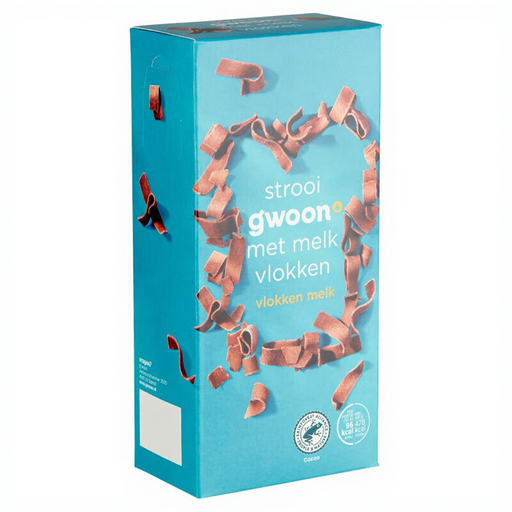 Image unavailable
An option if you want more in one pack for several servings. The product name states 300 g; check the packaging type if you’re looking for a bag.
If you have an allergy or intolerance, check the label of this variant for milk and wheat.
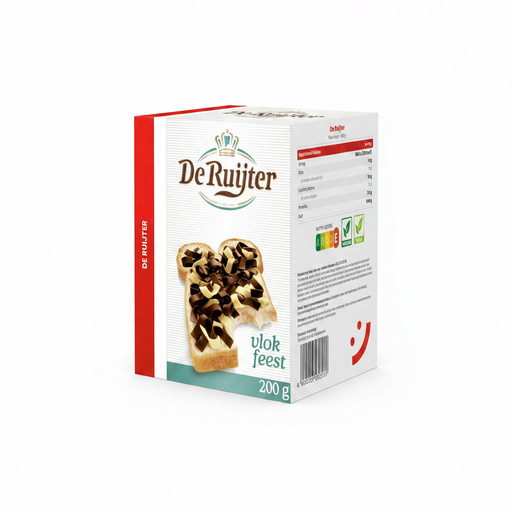 Image unavailable
A smaller option if you want to offer a mix of chocolate and vanilla flakes alongside other types. The product name states 200 g; this quantity doesn’t mean it’s a sharing bag.
If you have an allergy or intolerance, check the label for wheat and soya and for the warning that the product may contain milk.
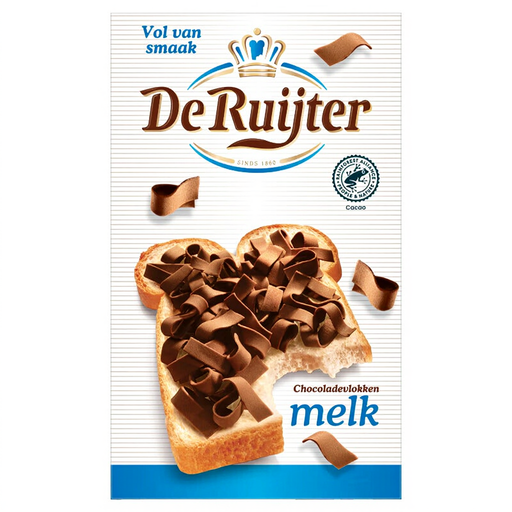 Image unavailable
An option if you want to serve milk chocolate flakes in a smaller quantity than 300 g. The product name states 200 g; check the packaging type if it matters for serving.
If you have an allergy or intolerance, check the label of this variant for milk and soya.
No. 300 g describes the quantity, not the shape or intended use of the packaging. If you want to buy a sharing bag, check that the product is actually sold in a bag.
No. According to Jumbo, De Ruijter Dark Chocolate Flakes 200 g may contain milk, while Albert Heijn lists milk and lactose for AH Dark Chocolate Flakes. Check the allergen information on the label for the exact variant.
Follow the storage instructions on the packaging of your chosen flakes and seal it properly after use. Also check the best-before date on the product you’ve bought.
According to the Netherlands Nutrition Centre, a 15 g serving of milk chocolate flakes contains 68 kcal, 10,5 g of sugars and 1,4 g of saturated fat. Check the nutritional information for your exact variant if you want to compare products per 100 g or per serving.