Before packing a chocolate digestive in a school lunch, check the allergens on the current packaging and the school’s rules. An explicitly labelled gluten-free digestive may be suitable if gluten needs to be avoided, but that doesn’t automatically mean it’s free from milk, soya or other allergens. Then consider the type of biscuit, the packaging and the nutritional information per 100 g and per serving.
Who is this choice important for?
Lunch packer checking for allergens
You’re packing a biscuit for a pupil with a food allergy, coeliac disease or a school rule about allergens. The current label and the school’s rules determine which biscuits you can consider; a standard chocolate digestive may contain wheat, milk and soya.
Buying for several lunches
You want to know how long a pack will last and how many biscuits to pack each time. Compare the pack size and stated serving, without assuming that a larger pack will suit every pupil.
Planning portions for a lunchbox
You’re looking for a biscuit that’s easy to pack, either in a small individual pack or as a portion measured out at home. You’ll also want to check the sugars and saturated fat per serving, as well as what else is in the lunch.
What should you look for when choosing?
Start with any allergens and school rules. Next, choose between a true digestive and another type of chocolate biscuit, and only then compare the packaging and nutritional information.
| What to consider | What to check when buying | Who this matters most to |
|---|
| Allergens |
Read the current allergen information and warnings on the packaging. If choosing a gluten-free option, check the other ingredients and the school’s rules too. |
If I need to take an allergy or coeliac disease into account, the biscuit must be suitable for the pupil concerned and comply with the school’s rules. Around 36% of consumers put this check first. |
| Pack size |
Compare the net weight and stated serving size to work out how many lunches a pack could cover. |
For several school days, I want to estimate how many portions I’ll get from a pack. Around 29% of consumers prioritise planning how long their supplies will last. |
| Portion and packaging |
Check how many biscuits are in each individual pack and the nutritional information per serving; if they come in a roll, you can pack a portion separately at home. |
If a single portion needs to fit easily into a lunchbox, I focus on how the biscuits are packaged. This is the first consideration for around 21% of consumers. |
| Type of biscuit |
Check whether it’s a digestive or, for example, chocolate speculoos. Also compare sugars and saturated fat per 100 g. |
If the pupil wants a particular type of biscuit, I choose between the different biscuits and chocolate varieties first. Around 14% of consumers give that preference priority. |
Common mistakes
-
Assuming the name ‘digestive’ tells you about its nutritional value
The name doesn’t tell you how much sugar or saturated fat a biscuit contains. Jumbo lists 27.4 g of sugars per 100 g for its dark chocolate digestive; Lotus lists 39.6 g per 100 g for its chocolate speculoos.
Use the nutritional information per 100 g to compare products, then consider the portion you’ll actually pack.
-
Reading ‘gluten-free’ as ‘free from allergens’
According to Jumbo, its gluten-free milk chocolate digestive contains milk, oats and soya, and may contain nuts. So the gluten-free label doesn’t answer every question about allergens.
Read the full, current packaging and choose according to the allergens relevant to the pupil and the school’s rules.
-
Relying only on an online product description
Ingredients and nutritional information can change. For Sondey Dark Chocolate Digestives, Lidl directs customers to the packaging for this information.
Check the label when you buy, especially if allergens or a specific dietary requirement determine your choice.
Brands compared
Jumbo
Jumbo offers both a standard dark chocolate digestive and a separate gluten-free milk chocolate digestive.
- According to Jumbo, the standard variety contains 30% dark chocolate and comes in a 300 g pack.
- According to Jumbo, the gluten-free variety contains milk, oats and soya, and may contain nuts. So compare the labels for each variety.
Verkade
Verkade Verk digestive puur is a wheat biscuit topped with dark chocolate.
- Albert Heijn lists 30% dark chocolate and a pack size of 400 g for this variety.
- The listed ingredients include wheat, milk and soya. Also check whether this particular variety is available before buying.
McVitie's
McVitie's is an option if you’re specifically looking for a digestive; the range includes an Original variety and chocolate varieties.
- Depending on the pack, you can choose a digestive without a chocolate coating or a chocolate variety.
- Check the ingredients, allergens and nutritional information for the exact variety you’re packing.
Lotus Biscoff
Lotus Chocolate Speculoos is a different type of biscuit from a digestive. It comes in a pack of three packets, each containing seven biscuits.
- The individual packs make it easy to take a packet along separately.
- According to Lotus, this speculoos contains ingredients including wheat flour, milk components and soya lecithin. Don’t treat it as interchangeable with a digestive.
Sondey
Lidl lists Sondey Dark Chocolate Digestives as a store product in a 300 g pack.
- You can compare the product type and pack size with other digestives in advance.
- Check the packaging in store for ingredients, allergens and nutritional information.
Chocolate digestives on Joybuy
These two McVitie's products are standard chocolate digestives. Choose between dark and milk chocolate if this is the right type of biscuit for the pupil. Always check the current packaging and any rules about allergens before packing one for a school lunch.
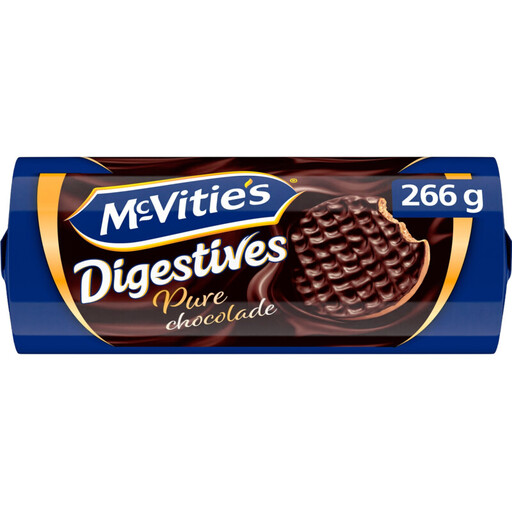 Image unavailable
McVitie's Dark Chocolate Digestives, 266 g
For anyone looking to pack a dark chocolate digestive in a school lunch. The pack contains 266 g; check the allergen information on the label and decide how many biscuits to pack.
View on Joybuy
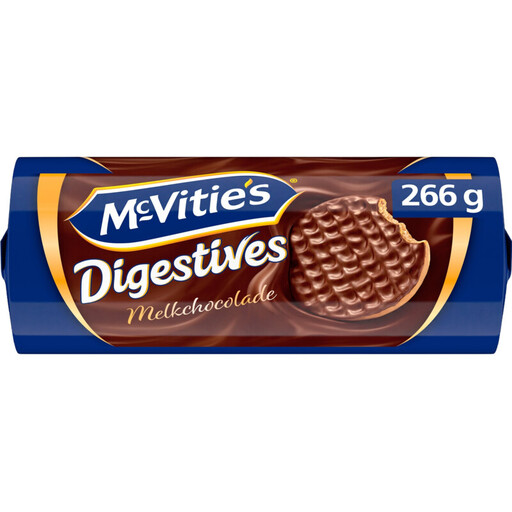 Image unavailable
McVitie's Milk Chocolate Digestives, 266 g
For anyone looking for the same type of biscuit but who prefers milk chocolate. The pack contains 266 g; read the current allergen information and check the portion you’re packing.
View on Joybuy
Frequently asked questions
Do all chocolate digestives contain gluten?
No. Jumbo lists wheat and gluten in its standard dark chocolate digestive, but also sells a specifically labelled gluten-free milk chocolate digestive. According to Jumbo, this gluten-free variety still contains milk, oats and soya, and may contain nuts. So check the label for the exact biscuit.
Can I simply send a biscuit containing allergens to school?
Check the rules at the school or in the class concerned, as well as which allergens are relevant to the pupil. The Netherlands Nutrition Centre explains that schools can take food allergies into account and make individual arrangements; this doesn’t mean there is one rule for all schools.
Can a chocolate digestive replace lunch?
No. Choose a chocolate digestive as a biscuit to go alongside the rest of the lunch, not as the whole meal. Check the nutritional information per 100 g and per serving on the chosen pack if you want to compare types of biscuit.
How should I store digestives for several lunches?
Seal an opened pack tightly and follow the storage advice on the packaging. Jumbo advises sealing its standard digestive pack tightly after opening and storing it in a dark place. Pack the portion for school separately in a clean, securely sealed lunchbox or container.


