A standard chocolate digestive is suitable for a school lunchbox only if its ingredients are appropriate for your child and it complies with the school’s rules. If gluten-free is essential, choose a product explicitly labelled gluten-free and check the other allergens on the current packaging too. Treat a chocolate digestive as a small addition to lunch at most, not as a replacement for lunch.
Who is this choice relevant to?
Parents who need to check for allergens
The standard chocolate digestives reviewed contain wheat or gluten, milk and soya. A gluten-free version may still contain other allergens. Check the packaging against your child’s needs, and find out what rules the class follows.
Parents looking to pack a little extra treat
A chocolate digestive is an addition, not a replacement for lunch. For a primary school lunch, the Netherlands Nutrition Centre recommends including items such as vegetables or fruit and wholegrain products. Compare the portion weight and nutritional information to decide how many biscuits to pack.
Parents weighing up portions and portability
The number of portions in a pack and the way the biscuits are packaged can help when filling a lunchbox. Check whether they are loose in the pack or individually wrapped. Another chocolate biscuit isn’t automatically a digestive.
What should you look for when choosing?
Before packing a chocolate digestive for school, check the school’s rules and the allergens first. Then compare the portion size and packaging.
| What to consider |
What to check before buying |
Who it matters to |
| Allergens and school rules |
Read the ingredients, allergens and any warnings on the packaging. Check the school handbook too, or ask about the class rules. |
If my child needs to avoid certain ingredients, I want to know before packing whether this biscuit is suitable and complies with the class rules. Suitability is the top priority for around 42% of consumers. |
| Portion and lunch |
Compare the portion weight and nutritional information per portion, including sugars and saturated fat. |
I’m looking for a small extra alongside the rest of the lunch, without accidentally packing several biscuits. Around 33% of consumers put portion choice first. |
| Packaging and convenience |
Check the number of portions per pack and whether the biscuits are loose or individually wrapped. |
For a school bag, I want to be able to take a portion without having to pack the whole lot each time. Convenience is the top priority for around 25% of consumers. |
Common mistakes
-
Assuming ‘digestive’ means it’s good for you
The name doesn’t mean the biscuit aids digestion. Jumbo explicitly states that the biscuit ingredients in McVitie's Digestives Pure Chocolade contain no substances that do this.
Judge the biscuit by its ingredients, portion size and nutritional information, not its name.
-
Checking only for ‘gluten-free’
The gluten-free milk chocolate digestive described by Jumbo also contains milk, oats and soya, and may contain nuts. So a gluten-free label doesn’t answer every question about allergens.
Read the full ingredients list and allergen information on the pack you’re buying, including any warnings about cross-contamination.
-
Checking the school rules only after buying
The Netherlands Nutrition Centre says that schools may have their own rules about food and treats. So even if a biscuit is suitable for your child, it may not comply with the class rules.
Check the school handbook or app, or ask the teacher before packing anything.
Brands and product ranges to help you choose
These examples show different types of products. Check the current label on each individual variety.
Albert Heijn
AH Digestive puur is a standard chocolate digestive in a 300 g pack.
- Albert Heijn lists 18 portions of 17 g and 30% dark chocolate.
- The listed allergens include milk, cereals containing gluten, soya and wheat. Check the packaging for any other allergens too.
Jumbo
Among the product ranges reviewed, Jumbo offers both a standard digestive with dark chocolate and an explicitly labelled gluten-free digestive with milk chocolate.
- Jumbo lists 18 portions of 17 g for the standard variety. The gluten-free variety offers another option when gluten-free is essential.
- The standard variety contains gluten, milk, soya and wheat. The gluten-free variety still contains milk, oats and soya, and may contain nuts.
McVitie's
The McVitie's Digestives Pure Chocolade reviewed are a chocolate digestive made with wheat.
- The product information reviewed lists 30% dark chocolate.
- This variety contains wheat, milk and soya. The name ‘Digestives’ is no reason to expect it to aid digestion.
Verkade
Verkade GV Oaties Melkchocolade is a chocolate biscuit labelled gluten-free, but it isn’t a classic chocolate digestive.
- The product information reviewed mentions gluten-free oats and milk chocolate.
- Check for milk, oats and soya, as well as any mention of possible nuts. Don’t assume this product is interchangeable with a digestive.
Chocolate digestives on Joybuy
These two McVitie's varieties are standard chocolate digestives for anyone considering packing a biscuit as an addition to a school lunchbox. Before packing, check that the current packaging is suitable for the allergens relevant to your child and complies with the school’s rules.
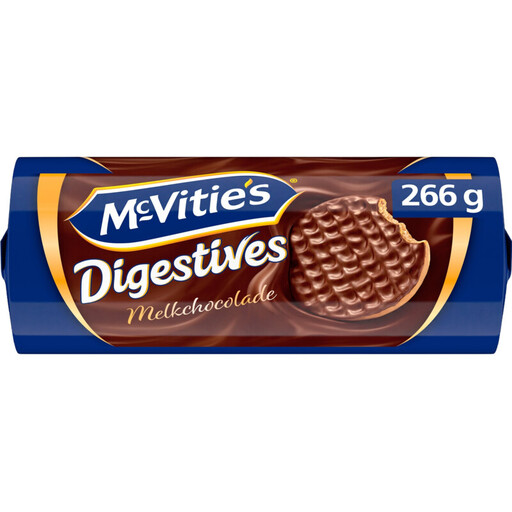 Image unavailable
McVitie's Digestives Milk Chocolate, 266 g
An option if you’d like to pack a milk chocolate biscuit as a little extra with lunch.
266 g pack. Check the current packaging for wheat, milk and soya, as well as any warnings about nuts. Use the portion weight on the pack to decide how many biscuits to take.
View on Joybuy
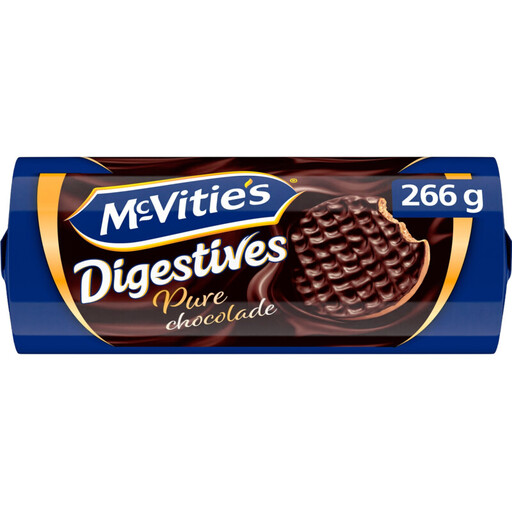 Image unavailable
McVitie's Digestives with Dark Chocolate, 266 g
An option if you’re looking for a digestive with dark chocolate to add to lunch.
266 g pack. Check the current packaging to see whether wheat or gluten, milk and soya are suitable for your child. Compare the portion weight on the pack before packing the biscuits.
View on Joybuy
Frequently asked questions
Can I pack a chocolate digestive for school?
It depends on the school or class rules. The Netherlands Nutrition Centre advises parents to check the food policy in the school handbook, on the website or in the app. If needed, ask the teacher before packing biscuits.
Are standard chocolate digestives gluten-free?
Don’t assume they are: the standard varieties from Albert Heijn, Jumbo and McVitie's reviewed here contain wheat or gluten. If gluten-free is essential, look for a product explicitly labelled gluten-free and check the other allergens on the packaging too.
Why should I read the label again next time I buy them?
Ingredients and allergen information can change, even when the product name stays the same. So always read the packaging on the pack you’re actually putting in your child’s lunchbox.
Can a digestive replace lunch?
No. Treat a chocolate digestive as a small addition at most. For a primary school lunch, the Netherlands Nutrition Centre recommends items such as vegetables or fruit and wholegrain products. The name ‘digestive’ doesn’t change the role a biscuit plays in lunch.


