Who is this choice relevant to?

Caterers serving an open coffee buffet

If you serve biscuits loose with coffee or tea, you need to make information about the allergens they contain available at the serving point. The Netherlands Food and Consumer Product Safety Authority also requires this for unpackaged products served by caterers.

Buyers catering for dietary requirements on the attendee list

If someone has told you they need gluten-free food, you’ll need a separate, appropriately labelled option. Check its other allergens too: for example, according to Jumbo, its gluten-free milk chocolate digestive contains milk, oats and soya, and may contain nuts.

Organisers planning several coffee breaks

If you’re serving biscuits at several breaks, consider the quantity in each pack, the number of portions you need and the storage instructions. This will help you work out how much to put out at once and how to store the rest.

What should you consider when buying?

First, work out which allergens and dietary requirements you need to cater for. Then choose a flavour and pack size to suit the number of attendees and breaks.

What to consider What to check before buying Who it matters to
Allergens and dietary requirements Read the current label for the exact product and decide how you’ll make allergen information available when serving biscuits loose. Check a gluten-free option for other allergens too. If someone has a dietary requirement, I want to be able to offer a suitable separate option rather than relying on the product name. This check is the top priority for around 31% of consumers.
Quantity and planning Compare the quantity in each pack with the number of portions and breaks planned; work out how much stock you’ll need to set aside for dietary requirements. For several breaks, I want to buy enough biscuits without being left with lots of opened packs. Around 25% of consumers give this planning the highest priority.
Flavour with coffee and tea Choose between milk and dark chocolate, and decide whether another type of biscuit could be an addition or whether you specifically need a digestive. For a mixed group, I want to serve a familiar biscuit without replacing a suitable dietary option with a different flavour. Flavour choice matters most to around 25% of consumers.
Serving and storage Check whether the pack is resealable and follow the storage instructions for opened packs. A resealable pack is not the same as individually wrapped portions. If I’m topping up at different times, I want to store the remaining biscuits properly. Around 19% of consumers put ease of serving first.

Common mistakes

  • Assuming the name ‘digestive’ means it’s suitable for a particular diet

    Jumbo lists gluten, milk, soya and wheat in its regular dark chocolate digestive. Its separate gluten-free milk chocolate version still contains milk, oats and soya, and may contain nuts.

    If someone has told you about a dietary requirement, choose a suitable separate product and check the allergen information on the current packaging for both products.

  • Counting packs instead of portions

    A larger pack and a separate dietary option may not provide the same number of usable portions. What counts as a portion on the label may also differ from what you want to serve during the break.

    Work out how many biscuits you’ll need of each type for every break, and keep the dietary option separate in your stock planning.

  • Putting out an open bowl without allergen information

    According to the Netherlands Food and Consumer Product Safety Authority, information about allergens in unpackaged food must be available wherever it is offered. You’ll also need to follow the storage instructions for opened packs.

    Keep the allergen information for the products you’ve received by the buffet and top up from stock that has been stored properly. For a separate dietary option, use its own bowl and serving utensil too.

  • Treating other chocolate biscuits as digestives

    Lotus Biscoff chocolate speculoos and individually wrapped Biscotto chocolate biscuits are different types of biscuit. Their flavour, ingredients and packaging won’t necessarily meet a request for a chocolate digestive.

    Before placing your order, decide whether you need a digestive or whether another chocolate biscuit could be served as an extra. Then check each exact product individually.

Brands and product ranges to consider

McVitie's

McVitie's makes chocolate digestives in milk and dark chocolate, and also offers a resealable Grab&Go milk chocolate version.

  • A classic digestive option if you specifically want to serve this type of biscuit with coffee.
  • A resealable pack doesn’t provide individually wrapped portions. Check the label for each version before choosing one for a dietary requirement.

Jumbo

Jumbo offers both a regular 300 g dark chocolate digestive and a separate 165 g gluten-free milk chocolate digestive.

  • The two product ranges let you plan separately for a regular option and one labelled gluten-free.
  • According to Jumbo, the gluten-free version contains milk, oats and soya, and may contain nuts; the regular dark chocolate version contains gluten, milk and soya, among other ingredients.

Albert Heijn

The range includes AH Digestive dark chocolate and a separate Schär Digestive choc gluten-free product.

  • These are different options to compare if you want a regular digestive and a product labelled gluten-free.
  • Albert Heijn notes that ingredient, nutrition and allergy information can change. For catering, use the information on the pack you receive or the latest supplier specification.

Lidl / Sondey

Lidl lists Sondey dark chocolate Digestives in a 300 g pack.

  • An option to consider if a dark chocolate digestive suits the way you plan to serve them.
  • Check the ingredients and allergens on the exact pack before planning to serve this version to attendees with dietary requirements or at an open buffet.

ALDI / Biscotto

ALDI lists 400 g packs of Biscotto Digestive Biscuits without chocolate, as well as separate chocolate biscuits wrapped in pairs.

  • The individually wrapped pairs of chocolate biscuits could work for portions laid out in advance if a different type of biscuit is acceptable.
  • The regular digestives and chocolate biscuits mentioned here don’t make up a single chocolate digestive. Check which product you’re actually ordering.

Lotus Biscoff

Lotus Biscoff chocolate speculoos is a different type of biscuit from a classic digestive.

  • A possible flavour addition if your biscuit selection isn’t limited to digestives.
  • Don’t use speculoos as a like-for-like replacement if you specifically need a chocolate digestive or a gluten-free option.

Verkade

Verkade describes Digestive Cream as grain biscuits with a chocolate- or vanilla-flavoured cream filling.

  • A different filled digestive option if its ingredients and portion format suit your buffet.
  • A cream filling isn’t the same as a biscuit with a chocolate coating. Check the exact version, packaging and allergen information.

Chocolate digestives for the coffee break

This Joybuy selection is a milk chocolate digestive for a regular coffee break. If someone has told you they need gluten-free food, plan a separate option that is appropriately labelled.
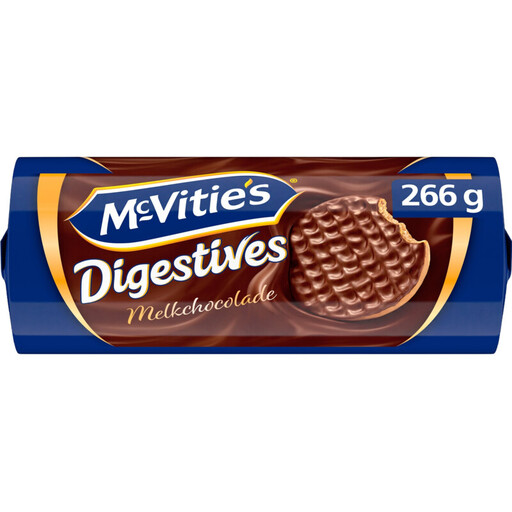
McVitie's Digestives Milk Chocolate, 266 g

McVitie's Digestives Milk Chocolate, 266 g

A good choice for a regular coffee break if you want to serve a chocolate digestive and make the allergen information on the pack you receive available when serving biscuits loose.

According to the Joybuy product information, store in a cool, dry place away from direct sunlight, heat and moisture. Check the current label before planning to serve the biscuits to anyone with dietary requirements or at a buffet.

View on Joybuy

Frequently asked questions

Do you need to provide allergen information for loose biscuits at a conference buffet?

Yes. Information about allergens in unpackaged food must be available wherever it is offered. According to the Netherlands Food and Consumer Product Safety Authority, this also applies to catering. Make sure the information matches the products actually being served at the buffet.

Is a chocolate digestive automatically suitable for someone eating gluten-free?

No. The name ‘digestive’ doesn’t mean a product is gluten-free. Jumbo lists gluten and wheat in its regular dark chocolate digestive. If someone has told you they need gluten-free food, choose a product labelled as such and check its label for other allergens too.

Can I copy allergen information straight from a website for the buffet?

For serving, use the information on the pack you receive or a current supplier specification. Albert Heijn warns that ingredient, nutrition and allergy information can change, so check that the information relates to the exact product supplied.

How should I store chocolate digestives between coffee breaks?

Follow the storage instructions on the pack you’ve chosen and seal opened packs properly. For the McVitie's pack mentioned above, Joybuy recommends storing it in a cool, dry place away from direct sunlight, heat and moisture.

Should I choose milk or dark chocolate?

Choose the flavour that suits what you’re planning to serve; neither is automatically better for every attendee. McVitie's describes its dark chocolate version as having a stronger flavour than the milk chocolate one. Check the allergens for each exact version, even if you’re offering both.
