
Households looking to stock up on biscuits for the week
For coffee, tea or other occasions throughout the week, the pack weight can help you decide how much to buy. Also check how to keep an opened pack properly sealed.


If you want to stock up on classic chocolate digestives for the week, choose biscuits with a chocolate coating and compare the pack weight, type of chocolate and ingredients of the option you’re considering. A filled biscuit or chocolate speculoos is a different type of biscuit; if you need to eat gluten-free, choose a product that’s explicitly labelled gluten-free and check for other allergens too.
For coffee, tea or other occasions throughout the week, the pack weight can help you decide how much to buy. Also check how to keep an opened pack properly sealed.
If you need gluten-free biscuits or have to avoid certain allergens, the label on the exact product comes before flavour or pack size. A standard digestive isn’t automatically gluten-free.
A biscuit with chocolate filling, chocolate speculoos or an assortment of chocolate biscuits offers variety, but it isn’t the same as a digestive with a chocolate coating.
First decide whether you want a classic digestive with a chocolate coating. Then compare the packaging and nutritional information of the options that suit your ingredient and allergen requirements.
| What to consider | What should you check? | Who is it important for? |
|---|---|---|
| Type of biscuit and chocolate coating | Check whether it’s a digestive with a chocolate coating and what type of chocolate it has; a filling or speculoos base is different. | If I specifically want the combination of a wheat biscuit and chocolate coating, a filled biscuit isn’t my first choice. For around 33% of consumers, that classic combination comes first. |
| Stocking up for the week | Compare the pack weight and, if stated on the packaging, the number of biscuits or portions. Also think about how you’ll store the pack once it’s open. | A pack needs to suit the occasions when my household eats biscuits, without leaving an opened supply unused for too long. Pack size is the first consideration for around 27% of consumers. |
| Allergens and gluten | Check the current label on the exact product, including the ingredients and any warnings about the possible presence of allergens. | If I need to avoid an allergen or eat gluten-free, the ingredients determine which biscuits I can consider in the first place. For around 20% of consumers, this check comes before other choices. |
| Nutritional information and portion size | Compare the nutritional information per 100 g and also check the stated portion size or the weight of an individual biscuit. | If I want to know what I’m having each time I eat, I need a useful portion size as well as the figures per 100 g. This comparison comes first for around 20% of consumers. |
Albert Heijn and Jumbo’s standard chocolate digestives list wheat and gluten. According to Jumbo, its separate gluten-free option also contains milk, oats and soya, and may contain nuts.
Check both the ingredients and any warnings about the possible presence of allergens on the pack you choose.
Verkade Digestive Chocolade Cream is a wheat biscuit with a chocolate-flavoured filling. Lotus Biscoff with chocolate has a speculoos base. Neither is the same type of biscuit as a classic chocolate digestive.
Decide first which biscuit base and type of chocolate you’re looking for; then compare products within that category.
A 300 g pack and a 165 g pack don’t contain the same amount of biscuits. The pack weight also doesn’t always tell you how many individual portions it contains.
Check the weight and the stated number of biscuits or portions. Store an opened pack in a dry place and seal it well, as the Voedingscentrum advises for chocolate biscuits.
Albert Heijn says that product information can change. This is particularly important when ingredients, allergens or nutritional values influence your choice.
Read the information on the pack you’re actually buying and check that your chosen option is available at your store.
These examples show why the product description matters: not every chocolate biscuit is a chocolate digestive, and products from the same brand can have different ingredients.
AH Digestive Puur is a classic chocolate digestive in a 300 g pack.
Jumbo lists both a standard digestive with dark chocolate in a 300 g pack and a separate gluten-free digestive with milk chocolate in a 165 g pack.
Verkade Digestive Chocolade Cream is a wheat biscuit with a chocolate-flavoured filling, not a digestive with a chocolate coating.
Lotus Biscoff with dark chocolate is speculoos with chocolate, not a digestive.
Lidl lists Sondey Digestives dark chocolate in a 300 g pack.
ALDI lists Biscotto Digestive Biscuits as well as separate assorted chocolate biscuits.
These two McVitie's options are digestives with a chocolate coating, in 266 g packs. Choose between milk chocolate and dark chocolate to suit your preference; for a week’s supply, also check the label and the number of biscuits in the pack.
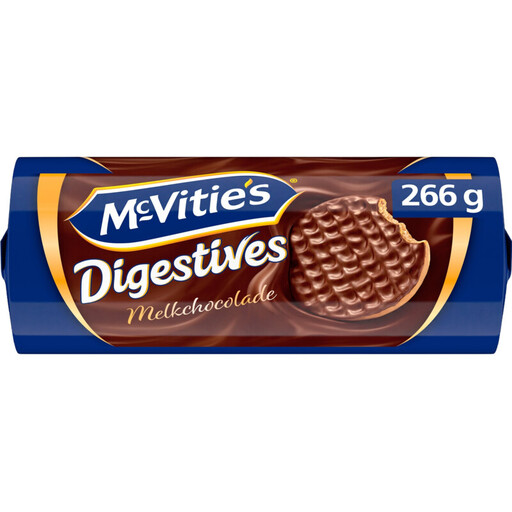 Image unavailable
For anyone looking for a classic digestive with a milk chocolate coating. The pack contains 266 g; check the number of biscuits on the packaging if you’re planning a week’s supply.
Read the current label if you need to avoid wheat, milk or soya.
Image unavailable
For anyone looking for the same type of biscuit with a dark chocolate coating. The pack contains 266 g; check the number of biscuits on the packaging to work out how many packs you’ll need for the week.
If you have allergen requirements, check the current label, particularly the information about wheat, milk and soya.
No, you can’t tell from the product name: Albert Heijn and Jumbo’s standard chocolate digestives list wheat and gluten. If you need to eat gluten-free, choose an option explicitly labelled gluten-free and check for other allergens too; Jumbo lists milk, oats and soya in its gluten-free option, which may also contain nuts.
Check the ingredients list on the packaging of the exact product and read any warnings about possible traces. The Netherlands Food and Consumer Product Safety Authority explains the mandatory declaration of allergens on food labels; an earlier online product description is no substitute for the current pack.
Store chocolate biscuits in a cool, dry, dark place and seal the pack well, as the Voedingscentrum advises. Also follow the storage instructions on the packaging and check the biscuits before eating them.
First compare the nutritional information per 100 g, then look at the amount per biscuit or stated portion. This helps you distinguish differences in portion size from differences in ingredients; use the figures on the current label for the option you choose.