
Parents making a crumb base
If your recipe calls for crushed biscuits, the biscuit’s texture, type of chocolate and quantity you need all matter. A cream-filled biscuit isn’t the same ingredient as a classic chocolate digestive.


For a recipe that calls for a biscuit crumb base or simple decoration, a classic chocolate digestive is an obvious choice. A cream-filled digestive has a different texture and isn’t a direct substitute. If you need to cater for a dietary requirement, check the allergens on the current packaging, and decide in advance how many biscuits to use when baking with young children.
If your recipe calls for crushed biscuits, the biscuit’s texture, type of chocolate and quantity you need all matter. A cream-filled biscuit isn’t the same ingredient as a classic chocolate digestive.
A standard chocolate digestive may contain wheat. Look for a variety explicitly labelled gluten-free, and check the packaging for other allergens too.
If young children are helping with the baking and will be eating biscuits too, it helps to decide in advance how many each child can have. The Netherlands Nutrition Centre recommends giving babies and toddlers biscuits occasionally rather than every day.
Start by checking for any allergens and considering how the biscuit will be used in your recipe. Then choose the type of chocolate and a pack with enough in it.
| What to consider | What to check | Who should pay particular attention? |
|---|---|---|
| Allergens and dietary requirements | Read the ingredients, highlighted allergens and any warnings on the packaging. If you choose a gluten-free variety, check for other allergens too. | If a child needs to avoid an ingredient, I want to know before baking whether this particular pack is suitable. Around 36% of consumers put dietary suitability first. |
| Texture in the recipe | Check whether the recipe calls for a classic biscuit with a chocolate coating or allows for a cream-filled biscuit. | For a crumb base, I don’t want to use a filled biscuit by mistake instead of a plain one. Around 29% of consumers put the recipe’s texture first. |
| Type of chocolate and treating the children | Choose milk or dark chocolate to suit the recipe, and decide how many biscuits will be part of the baking activity if young children are involved. | If the biscuits are also a treat, I want to choose a chocolate flavour that suits the recipe and keep the quantity small. This is the main consideration for around 21% of consumers. |
| Pack size | Compare the weight on the pack with the quantity of biscuits required by the recipe, and check the storage instructions in case you have any left over. | For a single afternoon of baking, I want enough biscuits without having too many left over. The quantity needed is the main consideration for around 14% of consumers. |
The name doesn’t tell you whether a biscuit aids digestion or is suitable for a particular diet.
Check the ingredients, allergens and nutritional information, and consider how it will work in your recipe.
Jumbo sells a digestive with milk chocolate labelled gluten-free. That label alone doesn’t tell you whether it contains other allergens your child needs to avoid.
Before using it, check the packaging of your chosen variety for all relevant allergens.
Albert Heijn notes that ingredient and allergen information may change when a product is updated.
Check the label on the pack you’re actually using just before you start baking.
The milk chocolate digestive is a classic wheat biscuit topped with chocolate.
The AH Digestive Milk variety reviewed is a classic chocolate digestive in a 300 g pack.
Jumbo lists classic chocolate digestives as well as a separate milk chocolate variety labelled gluten-free.
Verkade describes Digestive Cream as crumbly grain biscuits with a cream filling.
These two varieties work in recipes that call for a classic digestive topped with chocolate. Choose milk or dark chocolate to suit your recipe, and always check the packaging if you have dietary requirements.
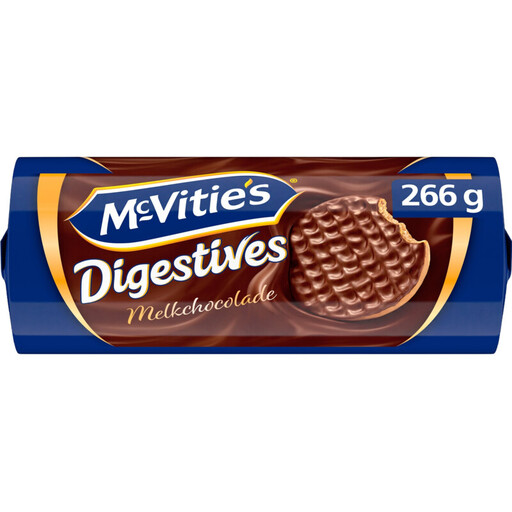 Image unavailable
An option for recipes that call for a classic wheat biscuit topped with milk chocolate.
Pack size: 266 g. If you have an allergy, check the label for wheat, milk, soya and any other relevant information. For a specific crumb base, you may want to try a small quantity first.
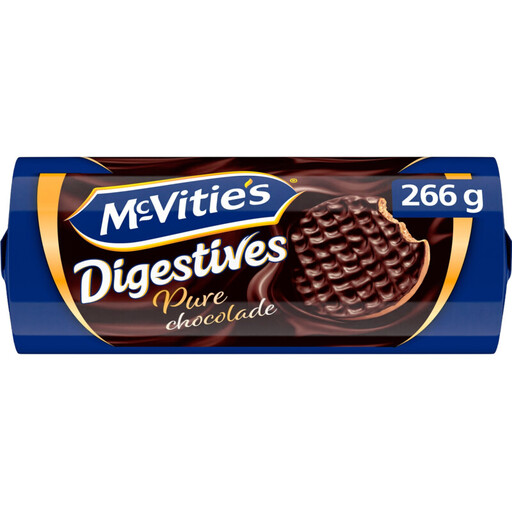 Image unavailable
An option if your recipe calls for a classic digestive topped with dark chocolate.
Pack size: 266 g. Don’t assume that ‘dark chocolate’ means the product is allergen-free: check the packaging if you have dietary requirements. For a specific crumb base, you may want to try a small quantity first.
Not without checking the ingredients: according to Jumbo, the McVitie's milk chocolate variety reviewed contains wheat. Choose a variety explicitly labelled gluten-free, and check its packaging for other allergens too.
Check the label on the pack you’re going to use. Albert Heijn warns that online product information may change; the Netherlands Food and Consumer Product Safety Authority explains how allergens are listed on labels.
Follow the storage instructions on the packaging of your chosen variety. For the McVitie's variety reviewed, Jumbo says to store the biscuits in a cool, dry place.
The Netherlands Nutrition Centre recommends giving babies and toddlers biscuits once a week rather than once a day. If you’re baking together, decide in advance how many biscuits each child can have.