
Students looking for a sweet lunch
They want to take chocolate crispbread with them or eat it in the canteen. By putting together their own combination, they can compare the grain base and chocolate separately on the labels.


If you want to choose the crispbread and chocolate for your lunch yourself, buy them separately. A ready-made chocolate-coated option takes less preparation, but before buying, check that the exact product is available and that you can review its ingredients, allergens and nutritional information.
They want to take chocolate crispbread with them or eat it in the canteen. By putting together their own combination, they can compare the grain base and chocolate separately on the labels.
They need information about both parts of the combination. According to the Netherlands Nutrition Centre, allergen information on the label is important if you have a food allergy. If you’re buying an unpackaged product from the canteen, ask for the information before you buy.
They want minimal preparation, but with a chocolate-coated option they need to check that the exact pack is available and provides enough product information to make a choice.
For a university lunch, the main difference is how much preparation is involved: with separate products, you can compare two labels, while a ready-made option depends on one specific pack.
Choose this when: You want to pick a crispbread base and a chocolate component yourself.
The trade-off: You put the lunch together yourself and check the information for both products.
Choose this when: You can find the exact product and check the packaging before buying.
The trade-off: There’s nothing to put together, but a product listing from another country doesn’t confirm that it’s available in the Netherlands or tell you what it contains.
| What to consider | What to check before buying | Who should consider this? |
|---|---|---|
| Convenience and availability | Check whether the exact chocolate-coated option is available, or choose separate products you can take with you. | If you want lunch you can eat straight away between lectures, look for a ready-to-go combination. For around 36% of consumers, convenience and availability would be the top priority. |
| The combination as a lunch | Compare the nutritional information of your chosen products per 100 g; if you’re buying them separately, check both tables. | If I want chocolate with my lunch, I want to know how the grain base and chocolate I’ve chosen fit together as part of my meal. For around 29% of consumers, this would be the main consideration. |
| Allergens | Read the allergen information for both components, or ask about it if you’re buying an unpackaged product from the canteen. | If you need to avoid certain ingredients, you’ll want to know exactly what’s in the combination before you buy. Around 21% of consumers are expected to make this their top priority. |
| Wholegrain base and fibre | Check the ingredients and compare the fibre listed per 100 g; don’t assume a product is wholegrain just because it’s crispbread. | When putting a lunch together myself, I’d choose a grain base first and add chocolate afterwards. For around 14% of consumers, the base would be the most important factor. |
A product with a similar name may be intended for sale in a different country; the listing doesn’t tell you which version is available here.
Before choosing a ready-made option, check the exact product name and the information on the packaging or with the retailer.
The product category doesn’t tell you which grains are used in a specific variety. According to the Netherlands Nutrition Centre, wholegrain cereal products differ in composition from products made with flour.
Read the ingredients for the variety you’ve chosen and compare the nutritional information per 100 g.
If you add chocolate separately to your crispbread, both products matter. With an unpackaged canteen product, you may not be able to check the packaging yourself.
Check both labels or ask the canteen for the allergen information before you buy.
The Netherlands Nutrition Centre identifies baker’s salt as a source of added iodine, but a product’s name won’t tell you whether a specific variety contains it.
Check the ingredients for that variety or ask the manufacturer if this affects your choice.
In one of its own recipes, Wasa shows how Multi Grain crispbread can be paired with coconut caramel and dark chocolate.
For its Normalgräddat, Leksands Knäckebröd lists ingredients including wholegrain rye, water, yeast and salt.
Ryvita presents crispbread as a base for a lunch with toppings and features different varieties on its British website.
These crispbread products provide a grain base for a lunch where you choose the chocolate separately. They aren’t chocolate-coated; remember to check the label on any chocolate you add.
 Image unavailable
A crispbread base for when you want to choose the chocolate for your lunch separately.
260 g pack. Check the ingredients, nutritional information and allergens for both the crispbread and your chosen chocolate.
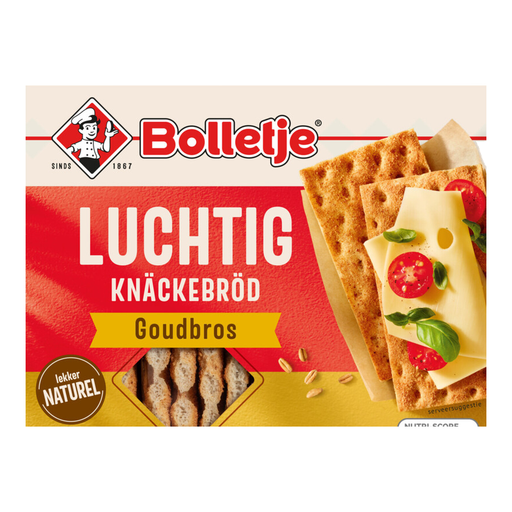 Image unavailable
A crispbread base for anyone who wants to put together a sweet lunch with chocolate chosen separately.
240 g pack. If wholegrain is important to your choice, check the ingredients on the packaging; remember to read the allergen information for both components too.
First, check whether you can buy the exact product, then read the ingredients, allergen information and nutritional information. A product listing from another country doesn’t confirm that the same version is available in the Netherlands.
Before you buy, ask the canteen for the product’s allergen information and, if you’re putting together your own combination, ask about both components. The Netherlands Food and Consumer Product Safety Authority distinguishes between prepacked products with a label and unpackaged products, for which the seller provides the information in another way.
Compare different products per 100 g. The Netherlands Nutrition Centre points out that manufacturers set their own portion sizes; if you’re pairing crispbread with separate chocolate, check the nutritional information for both products as well.
No, you can’t tell from the name crispbread. The Netherlands Nutrition Centre identifies baker’s salt as a source of added iodine; check the ingredients for the specific variety or ask the manufacturer.