
Chocolate lover who likes to choose their own portion
You fancy something crunchy with chocolate late in the evening, but would rather decide how much chocolate to add than have a fixed coating.


If you want to decide how much chocolate to have with a late-night snack, choose crispbread and add your own chocolate topping. If you’re looking for a ready-made chocolate-coated product, check that the specific variety really is crispbread with a chocolate coating. In either case, compare the nutritional information and read the allergen information for everything you eat.
You fancy something crunchy with chocolate late in the evening, but would rather decide how much chocolate to add than have a fixed coating.
You’re looking for a crispbread base and want to compare the fibre, sugars and fat on the label before choosing some chocolate to go with it.
Before buying, you want to check which grains and allergens are in both the crispbread and the chocolate, and whether there are any warnings about cross-contamination.
The main difference is practical: adding your own topping lets you control the amount of chocolate, while with a ready-made coating you need to assess the whole product.
When to choose it: If you want to decide how much chocolate to add or compare both ingredients separately.
The trade-off: You’ll need to choose and add the chocolate separately.
When to choose it: If you want a ready-made snack and the product information confirms that it’s chocolate-coated crispbread.
The trade-off: The amount of coating is fixed, so assess the nutritional value and allergens of the whole product.
| What to consider | What to check before buying | Who does this matter to? |
|---|---|---|
| Amount of chocolate | For a ready-made product, check what the coating is; if you’re adding your own topping, decide how much chocolate to use. | If I fancy something sweet late at night, I’d rather choose how much chocolate goes on my crispbread. This is a priority for around 40% of consumers. |
| Nutritional information | Compare fibre, sugars, saturated fat and salt per 100 g; if you’re adding your own topping, assess the chocolate too. | I want to choose a crunchy base and see what the chocolate adds to my snack. This comparison matters most to around 40% of consumers. |
| Allergens and type of grain | Read the ingredients and highlighted allergens for the specific varieties, including any warnings about cross-contamination. | Before combining chocolate and crispbread, I need to know whether the ingredients are suitable for me. This is the main consideration for around 20% of consumers. |
Plain crispbread and crispbread that you top with your own chocolate aren’t the same as a product that’s chocolate-coated before you buy it.
Before buying, check the exact product name, ingredients, nutritional information and allergens for the variety you want.
The terms wholegrain or high in fibre on the crispbread don’t tell you how much sugar or saturated fat is in the finished snack.
For a ready-made product, compare the nutritional values per 100 g. If you’re choosing your own chocolate, check the nutritional information for both ingredients; the Netherlands Nutrition Centre recommends comparing products per 100 g.
Ingredients vary between crispbread and chocolate varieties. The Netherlands Food and Consumer Product Safety Authority says that allergens, including cereals containing gluten, milk, nuts, soya and sesame, should be clearly listed in the ingredients information.
Read the labels on the specific products and look out for any warnings about cross-contamination.
Baker’s salt contains iodine, but according to the Netherlands Nutrition Centre, using baker’s salt isn’t compulsory. So the product category alone doesn’t tell you whether it’s used in your crispbread.
Check the ingredients on the packaging if you want to know whether baker’s salt has been used.
Jumbo and Albert Heijn list Wasa crispbread varieties that you can compare by grain type and ingredients.
Albert Heijn’s own-brand range includes wholegrain, golden and sunflower seed crispbread.
ALDI Netherlands describes a wholegrain variety and a sesame variety from Goud Gebakken.
Ryvita describes its Original Crispbread as containing rye and presents Fruit Crunch as a product to pair with chocolate.
These crispbread products are suitable for an evening snack where you choose the chocolate separately. They’re not presented here as chocolate-coated varieties.
 Image unavailable
A wholegrain crispbread base for adding your own chocolate to an evening snack.
If you have allergies, check the packaging for both the crispbread and your chosen chocolate, particularly for cereals containing gluten and sesame.
 Image unavailable
Rye crispbread makes a base for a late-night snack where you decide how much chocolate to add.
If you have allergies, read the label on the specific pack, including any warnings about milk and sesame.
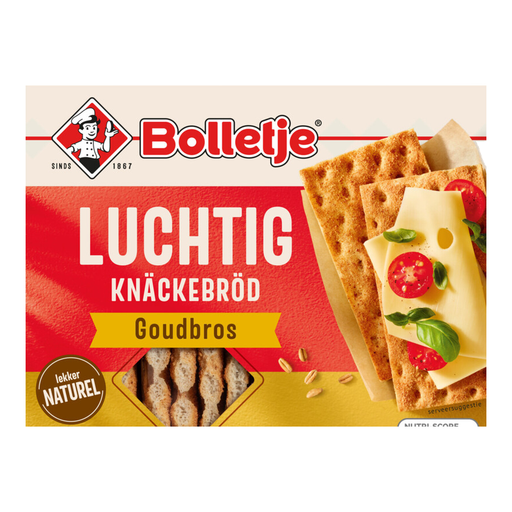 Image unavailable
A crispbread base for anyone who wants to choose their chocolate separately rather than have a fixed coating.
Check the nutritional information and, if you have allergies, the ingredients of both the crispbread and the chocolate. Don’t assume from the product name that the crispbread is wholegrain.
Check whether the product information for that specific variety describes crispbread with a chocolate coating. The crispbread ranges from Albert Heijn and Jumbo, and the ALDI product pages reviewed, show plain varieties. This doesn’t rule out other chocolate-coated products or limited editions.
Compare the nutritional values of similar products per 100 g, looking at fibre, sugars, saturated fat and salt. According to the Netherlands Nutrition Centre, comparing products per 100 g makes differences clearer than comparing portions alone. If you’re adding your own topping, you’ll also need to assess the chocolate.
Read the ingredients and highlighted allergens for both the crispbread and the chocolate. The Netherlands Food and Consumer Product Safety Authority lists cereals containing gluten, milk, nuts, peanuts, soya and sesame, among others. Which of these are relevant varies by product.
No, you can’t tell from the product category alone. The Netherlands Nutrition Centre explains that baker’s salt contains iodine, but its use isn’t compulsory. So check the ingredients for the specific crispbread.