
Cake decorators
If you want to arrange whole biscuits on top of or around a cake, check their shape and the description of the coating. When trying a new combination, add them to a cooled or sufficiently firm cake first.


Choose chocolate-coated biscuits according to how you plan to use them in your cake: keep them whole for a decorative finish, and if you’re making a no-bake base, first check how well the crushed biscuits set after chilling. To bake them into a batter, use a recipe designed for that type of biscuit or test a small batch first; the coating behaves differently from one product to another. Also check the exact coating description and allergen information on the packaging.
If you want to arrange whole biscuits on top of or around a cake, check their shape and the description of the coating. When trying a new combination, add them to a cooled or sufficiently firm cake first.
For a biscuit base, what happens after crushing, mixing and chilling matters most. An Albert Heijn Allerhande recipe uses finely crushed biscuits mixed with melted butter, but a coated biscuit may give a different result.
If you’re baking for guests with specific labelling requirements, check the packaging of your chosen biscuits before using them. The Netherlands Food and Consumer Product Safety Authority states that allergen information for prepacked foods must appear on the label.
First decide whether the biscuit will remain visible, be crushed or go in the oven. A recipe designed for the specific product or a test bake is especially important if you’re baking the biscuits into a batter: a biscuit that works as a decoration won’t necessarily give the same result in a batter.
| What to consider | What to check before buying | Who should consider this? |
|---|---|---|
| Decorative finish | Check whether the coating is chocolate or chocolate-flavoured icing, and whether the biscuit shape suits your decoration. | If I want recognisable whole biscuits on my cake, the finish needs to suit the way I plan to present them. For around 40% of consumers, this would be the main concern. |
| No-bake base | Check the biscuit, filling and coating; make a small test base to assess its texture after chilling. | If I’m making a fridge cake, I want the crushed biscuits to form a base that I can slice. That’s why the base would be the priority for around 30% of consumers. |
| Checking the label | Check the ingredients, declared allergens and any warnings on the current packaging. | If I’m baking for guests with specific requirements, I want to know what’s in the biscuit before using it. Around 30% of consumers would consider this their main concern. |
The Oreo variety described by Albert Heijn has icing with a milk chocolate flavour. You can’t assume that its coating will behave in the same way as another biscuit’s when chilled, heated or sliced.
Read the full product description and try a new combination on a small cake or a single portion first.
Albert Heijn Allerhande’s no-bake method uses digestive biscuits and melted butter. A coated or filled biscuit may have a different texture after chilling.
Make a small test base first and check whether it slices well after chilling.
A product’s ingredients and allergen information may change. If you’re baking for guests with specific requirements, you’ll need the information on the packaging of the product you use.
Check the label just before using the biscuits, and keep the packaging while you’re serving the cake.
The supermarket describes a specific coated biscuit and publishes recipes for biscuit bases. Compare the product and recipe separately, though.
The chocolate biscuits category offers different biscuit shapes to compare for use in cakes.
ALDI Netherlands describes Biscotto butter biscuits in dark, white and milk chocolate, giving you a choice of finishes to compare.
Lotus Bakeries describes Biscoff as a crunchy, caramelised biscuit that can also be used as an ingredient in cooking.
This milk chocolate biscuit is an option for adding whole as a decorative finish to a cooled cake. When trying it with a new cake, first see how the biscuit and coating hold up on your chosen finish. Don’t use it as the basis for a cake base or batter without testing it first.
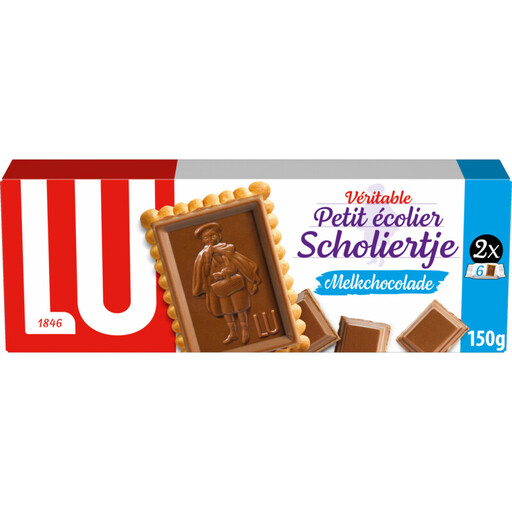 Image unavailable
For anyone wanting to use whole biscuits as cake decorations; add them to a cooled cake and try a new combination on a small scale first.
150 g pack. Check the ingredients and allergens on the current packaging before use.
It’s best to wait until the cake has cooled or set sufficiently. When trying a new combination, test one biscuit first: how a ready-made coating behaves depends on the product and the cake’s finish.
You can find out by making a small test base. Albert Heijn Allerhande describes a method using finely crushed biscuits and melted butter, which sets in the fridge, but the recipe uses digestive biscuits. You can’t assume a coated variety will set just as firmly.
Read the ingredients list, declared allergens, description of the coating and any storage or usage instructions. The Netherlands Food and Consumer Product Safety Authority states that allergen information for prepacked foods must appear on the label, so check the packaging of the biscuits you’re actually using.
Don’t assume so without checking the exact product description. Albert Heijn describes its Oreo Biscuits Coated with Milk Chocolate Flavour as biscuits with milk chocolate-flavoured icing. Check the ingredients if the type of coating matters for your cake.