
Convenience-seeker who enjoys milk drinks
You regularly make one or a few cappuccinos and want as few manual steps as possible when preparing the milk.


For one or a few chocolate cappuccinos, your choice mainly comes down to how much of the espresso and milk preparation you want to do yourself. A fully automatic machine involves less manual milk preparation, a portafilter machine leaves more steps to you, and a capsule machine uses a specific capsule system. Add the chocolate to the glass and make the cappuccino on top; don’t assume a machine can process chocolate. Check the milk function and cleaning steps for each model.
You regularly make one or a few cappuccinos and want as few manual steps as possible when preparing the milk.
You want to tailor the espresso, milk foam and chocolate in each cup to your own taste, and you’re happy to use a portafilter.
You make small quantities and want to decide whether a capsule system with a milk function suits the way you make coffee.
Best for: anyone who regularly wants to make one or a few cappuccinos from beans, with minimal manual milk preparation.
Bear in mind: an automatic milk system still needs cleaning; the steps vary by model.
Best for: anyone who wants to prepare the espresso and milk themselves and doesn’t mind the steps involved for each cup.
Bear in mind: you fill and clean the portafilter; milk can be frothed manually or, on some models, automatically.
Best for: anyone who wants to make individual cups using capsules and has consciously chosen a capsule system.
Bear in mind: you’re tied to the compatible capsule system for your coffee; also check how the milk system is cleaned.
| What to consider | What to look for | Who is this important for? |
|---|---|---|
| Milk preparation | Check whether the model has an automatic milk system, an automatic steam wand or a manual steam wand, and how to clean the milk components. | If I often make one or a few cappuccinos, I want to know how many steps are involved in frothing the milk. Around 33% of consumers prioritise milk preparation. |
| Chocolate and espresso by the cup | Check which espresso settings are available; add the chocolate to the glass unless the manual for the exact model allows another method. | If I want to decide how much chocolate to add and tailor the taste of each glass, I want to handle those steps separately from the machine. Around 27% of consumers prioritise control over the recipe. |
| Individual cups and coffee system | Check whether the machine can prepare milk itself, and whether you want to use coffee beans, ground coffee or a specific capsule system. | If I usually make one cup at a time, I want to choose a system with coffee that suits my preferences. Around 20% of consumers prioritise individual cups and choosing a coffee system. |
| Cleaning and running costs | Check the cleaning instructions for the exact milk system and compare the coffee you’ll continue to buy based on your own usage. | If I’m mainly concerned with cleaning and repeat purchases, I want to weigh up both. Around 20% of consumers prioritise maintenance and running costs. |
A machine that can make cappuccino isn’t automatically suitable for putting chocolate sauce or cocoa powder through its coffee, water or milk system.
Add the chocolate to the glass and make the cappuccino on top, as in De’Longhi’s recipe. Check the manual for the exact model before trying a different method.
Milk controls can vary by model. For example, Philips describes the EP3349/70 as having LatteGo, while the Philips EP3329/70 has a steam wand according to Consumentenbond. Sage’s Bambino Plus has an automatic steam wand, while the standard Bambino has a manual steam wand.
Compare the full model code and check the milk and cleaning functions of the version you’re considering.
A manufacturer’s commercial warranty is separate from the seller’s responsibility under statutory consumer law. The Netherlands Authority for Consumers and Markets explains that the seller is responsible.
Keep your proof of purchase and contact the seller if you need to make a claim under your statutory rights.
The EP3349/70 and EP3329/70 have different milk systems, so don’t treat them as the same model.
The Bambino range includes portafilter machines with different milk controls on the Plus and standard Bambino models.
The Original capsule system includes models with and without a milk function; the Creatista Plus is a model with automatic milk preparation.
The Dedica range includes portafilter models with different ways of frothing milk.
This selection includes portafilter machines, a capsule machine and a fully automatic machine for making espresso and milk drinks in small quantities.
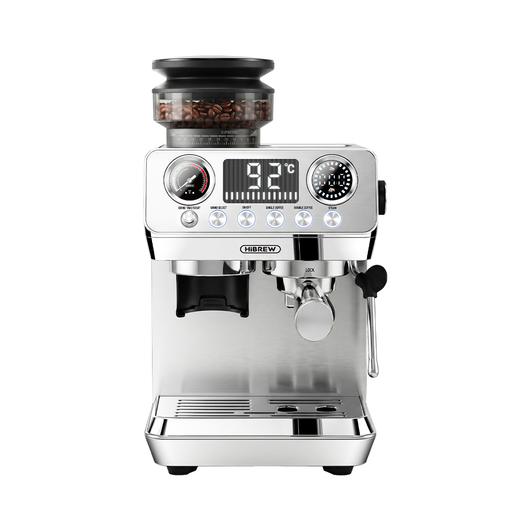 Image unavailable
Ideal if you want to prepare your own espresso and milk foam, and adjust the settings for each cup.
The product name lists adjustable temperature and coffee quantity, 44 grind settings, adjustable grind size and pre-infusion.
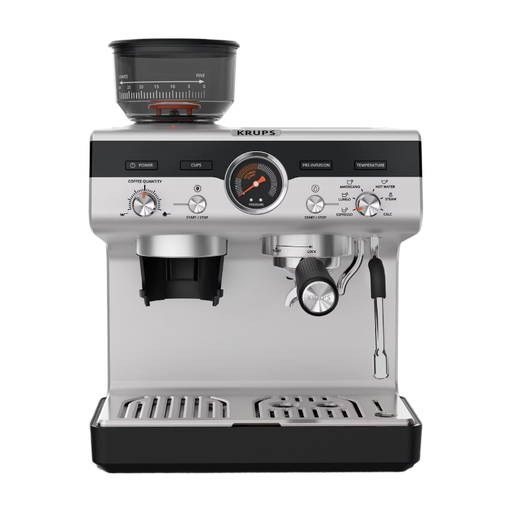 Image unavailable
Ideal if you want to make your own espresso and milk foam for each cup using a portafilter machine.
The product name lists a built-in grinder, a 250 g bean hopper and 30 grind settings.
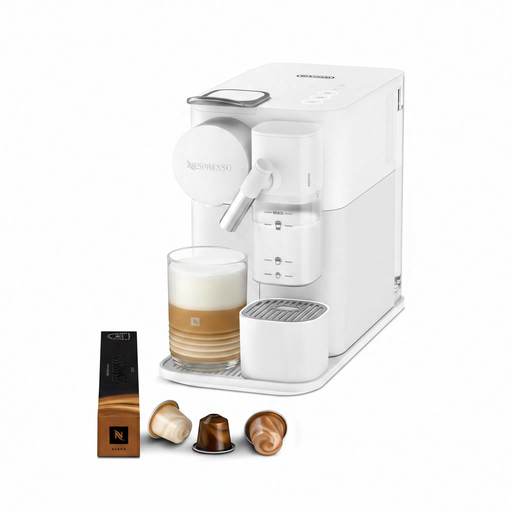 Image unavailable
Ideal if you want to make individual cups with a capsule machine and integrated milk system.
This model is designed for Nespresso Original capsules.
 Image unavailable
Ideal if you’re looking for a fully automatic machine with automatic milk preparation for cappuccino.
The product name lists a LatteCrema milk frother and a bean-swapping system. The milk container needs to be filled and connected for milk drinks.
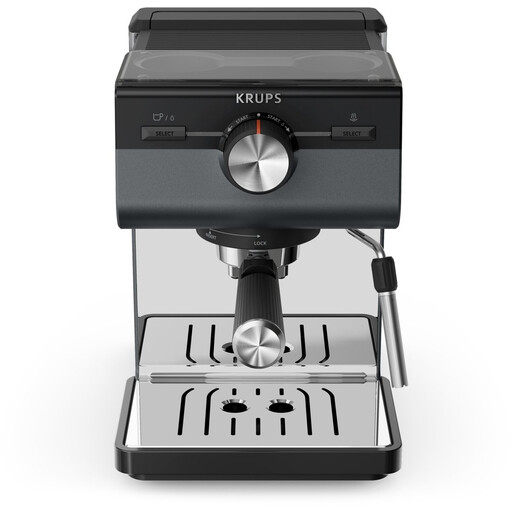 Image unavailable
Ideal if you want to use a portafilter machine with a steam wand to make espresso and milk foam for each cup.
The product name lists a portafilter and milk frother. Clean the steam wand immediately after use to remove any milk residue.
No. In the De’Longhi recipe mentioned, the chocolate sauce goes into the glass first, and the cappuccino is made afterwards. That recipe doesn’t say that chocolate is suitable for another model’s coffee, water or milk system; check your machine’s manual for guidance.
Put semi-skimmed milk back in a 4 °C fridge promptly after use. According to Voedingscentrum, an opened carton of semi-skimmed milk keeps for one week in the fridge; follow the storage advice for other milk products.
Compare the coffee you’ll continue to buy for your chosen system, and how much cleaning the specific milk component requires. Base your choice on how many cups you make and the coffee you actually want to use.
Contact the seller if you need to make a claim under your statutory rights. The Netherlands Authority for Consumers and Markets explains that the seller is responsible under statutory consumer law; a manufacturer’s commercial warranty is separate.