Who are these machines suitable for?

Quick cappuccino maker

You want to make espresso and frothed milk with minimal fuss after a trip to the market. The Consumers’ Association describes different ways to prepare coffee, while Philips and Nespresso each explain a different way to add milk.

Chocolate and milk experimenter

You like experimenting with chocolate and milk, so you’ll want to look beyond the cappuccino button and check which ingredients are permitted and how to clean the milk system you choose. Philips and Nespresso provide instructions specific to each model.

Home barista

You enjoy grinding beans, making espresso and frothing milk as part of the process, and don’t mind the extra steps. The Consumers’ Association covers traditional espresso machines, among other types, while Sage explains how to froth milk manually with the Barista Express.

What should you look for when choosing?

Bean-to-cup machine with automatic milk function

Best if: you want to make coffee and frothed milk with as few separate steps as possible.

The trade-off: the milk system still needs to be cleaned according to the manual, and chocolate is not automatically a permitted addition.

Bean-to-cup machine with manual milk frother

Best if: you want the machine to make your coffee automatically, but prefer to froth the milk yourself.

The trade-off: preparing the milk remains a separate step.

Traditional espresso machine with steam wand

Best if: you want to control the grind, espresso and milk preparation yourself.

The trade-off: you prepare the espresso and milk yourself rather than relying on an automatic milk drink.

Pod machine with milk frother

Best if: you want to make espresso with pods and don’t mind preparing the milk separately.

The trade-off: check which pods fit and whether the manual allows you to use chocolate in the milk frother.

What to consider What to look for when buying Which consumers is this important for?
Milk and chocolate Check the exact milk function and manual; treat chocolate as a separate step unless the manufacturer confirms it can be used in that model. If I want to combine milk and chocolate my own way, I need to know what the milk system can handle. Around 29% of consumers prioritise being able to prepare milk and chocolate as they like.
Speed and number of steps Check whether the milk is prepared automatically too, or whether the button only starts the coffee-making process. When I get home, I want to make my drink in as few separate steps as possible. Around 29% of consumers prioritise speed and convenience.
Control over preparation Check whether you can control the grind, espresso and milk yourself, or whether the machine prepares pre-set drinks. If I want to prepare my own espresso and frothed milk, a manual approach is a better fit for me. Around 21% of consumers prioritise control over preparation.
Ongoing supplies Check which pods, cleaning products and maintenance items are recommended for your chosen model. I want to know in advance which consumables and maintenance steps will be part of my routine. Around 21% of consumers focus on ongoing supplies and maintenance.

Avoiding common buying mistakes

  • Assuming a cappuccino button means there’s a chocolate function

    A cappuccino function doesn’t automatically tell you whether chocolate can be used in the milk system. Nespresso’s instructions for chocolate apply to the Barista Recipe Maker, not the Aeroccino 3 supplied with the CitiZ & Milk.

    Check the manual for the exact model before adding chocolate to a milk container or frother. Otherwise, expect to prepare the chocolate separately.

    Chocolate may require a separate preparation step if the milk system isn’t designed for it.

  • Assuming all bean-to-cup machines froth milk automatically

    According to De’Longhi, the Magnifica S ECAM22.110.B has a traditional milk frother, so frothing the milk is a separate step. Philips describes the EP2333/40 as having automatic LatteGo milk preparation.

    Check whether the exact model prepares milk automatically or whether you need to froth it yourself.

    Manual frothing means an extra step in the preparation process.

Brands worth considering

Philips

The 2300 Series EP2333/40 offers a bean-to-cup option with LatteGo milk preparation.

  • Philips describes LatteGo on this model as a removable, two-part system with no tubes.
  • The model information doesn’t confirm that chocolate can be used in LatteGo, so check the manual.

De’Longhi

The Magnifica S ECAM22.110.B combines automatic coffee-making with a traditional milk frother.

  • De’Longhi specifies a traditional milk frother for this particular model.
  • Frothing the milk remains a separate step; this doesn’t necessarily apply to every Magnifica model.

Sage

The Barista Express BES875 is designed for making espresso yourself, with an integrated grinder and portafilter.

  • Sage lists 16 grind settings and manual microfoam preparation for this model.
  • You prepare the espresso and milk yourself, which involves more steps than making an automatic milk drink.

Nespresso

Nespresso’s CitiZ & Milk combines Original pods with an Aeroccino 3 for preparing milk.

  • The pod machine and milk frother offer separate ways to prepare espresso and frothed milk.
  • Nespresso’s chocolate recipe is for the Barista Recipe Maker and doesn’t confirm that chocolate can be used in the Aeroccino 3.

Krups

The Evidence One EA895N is a bean-to-cup option with pre-set coffee and milk drinks.

  • Krups lists 12 recipes and model-specific maintenance information for this machine.
  • Check the exact version and which milk components it includes.

Cappuccino machines at Joybuy

This selection includes espresso machines for cappuccino, from models with automatic milk preparation to those where you froth the milk yourself.
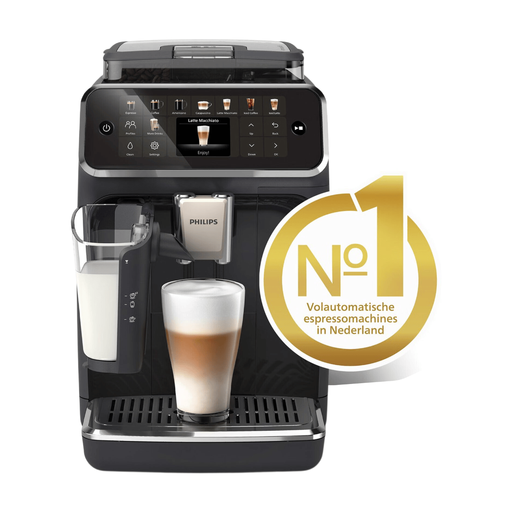
Philips EP5541/50 LatteGo Series 5500 bean-to-cup machine

Philips EP5541/50 LatteGo Series 5500

Ideal if you want to make espresso and cappuccino with automatic milk preparation.

The product name lists 20 drinks, a ceramic grinder, 12 grind settings, AquaClean and a 1,8 l water tank.

View at Joybuy

De’Longhi Rivelia EXAM440.55.G in Pebble Grey

De’Longhi Rivelia EXAM440.55.G, Pebble Grey

Ideal if you’re looking for a bean-to-cup espresso machine with automatic milk preparation.

The product name lists a LatteCrema milk frother and a bean-swapping system.

View at Joybuy

De’Longhi Magnifica Evo ECAM290.61.SB

De’Longhi Magnifica Evo ECAM290.61.SB

Ideal if you’re looking for a bean-to-cup espresso machine with automatic milk preparation.

The product name lists a milk frother and a touchscreen.

View at Joybuy
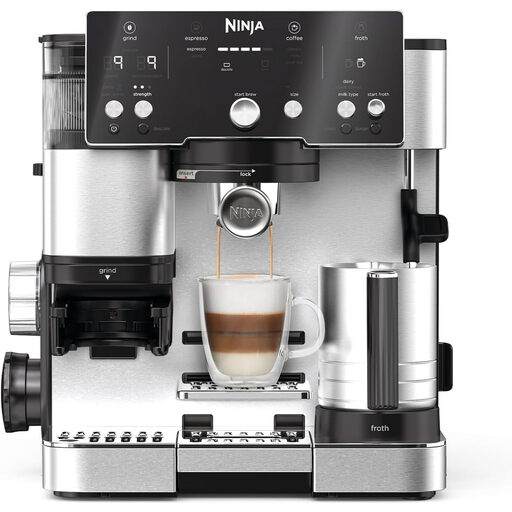
Ninja ES501EU Luxe Café 2-in-1 espresso machine

Ninja ES501EU Luxe Café 2-in-1

Ideal if you want an integrated grinder and milk frother, but are also happy to prepare espresso with a portafilter.

The product name lists two frothing settings. Preparing espresso involves using and tamping the portafilter.

View at Joybuy
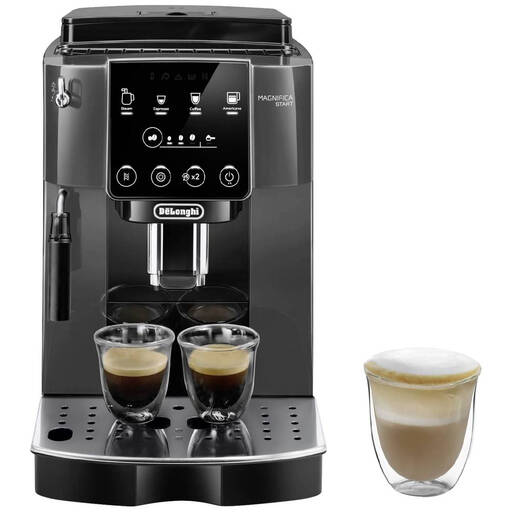
De’Longhi Magnifica Start ECAM220.22.GB in grey and black

De’Longhi Magnifica Start ECAM220.22.GB, grey and black

Ideal if you’re looking for an espresso machine with a manual milk-preparation step.

Milk is frothed using a manual steam wand, which is an extra step in addition to making the coffee.

View at Joybuy

Frequently asked questions

Does a machine need a chocolate programme to make a chocolate cappuccino?

No, but check how to prepare chocolate safely with your chosen machine. Nespresso’s instructions for chocolate apply specifically to the Barista Recipe Maker; don’t assume they apply to an Aeroccino 3 or built-in milk system without checking the manual.

What should you check before first use and when cleaning?

Follow the manual for your exact model when setting it up, handling the milk components and descaling. For the EP2333/40, Philips says the two-part LatteGo system has no tubes and can be cleaned under the tap or in the dishwasher; this doesn’t necessarily apply to other systems.

What if the machine breaks sooner than you could reasonably expect?

According to ACM ConsuWijzer, statutory rights apply alongside any manufacturer’s guarantee. If a product is faulty despite being used normally, the retailer is responsible for providing an appropriate solution at no cost; there isn’t simply one fixed statutory two-year guarantee period for all machines.

What safety and product rules apply to an electric espresso machine in the Netherlands?

The Dutch government states that electrical appliances placed on the market must comply with the applicable European rules. For equipment covered by the relevant requirements, the manufacturer is responsible for the CE marking and an EU declaration of conformity; a CE marking says nothing about the taste of the coffee or whether the machine is suitable for chocolate.

Can you always return a machine bought online within 14 days?

No, there are exceptions. ACM ConsuWijzer says that online purchases often come with a cooling-off period of up to 14 days after delivery; check the terms that apply to your purchase, and don’t confuse the cooling-off period with your statutory rights if the product is faulty.
