
Home baker following a specific cake recipe
You want to be able to select the oven setting specified and keep an eye on how your chocolate cake is baking. Heel Holland Bakt recommends following the setting given in the recipe.


Choose an oven that your cake tin will actually fit in and that has the setting specified in your recipe: the capacity in litres alone won’t tell you whether your tin will fit. A freestanding model suits a kitchen without a suitable built-in housing; a built-in oven is an option if you already have the space. With a combination microwave oven, check the oven settings and shelf space of the specific model.
You want to be able to select the oven setting specified and keep an eye on how your chocolate cake is baking. Heel Holland Bakt recommends following the setting given in the recipe.
You want to know whether your cake tin will fit and whether you can bake cakes one after another or on several levels. The Consumers’ Association recommends checking the internal dimensions and the space available for your oven dish.
You’re looking for a place for a freestanding oven and want to allow for the required clearance and electrical connection. Follow the instructions for your chosen model and the advice from the Netherlands Fire Service.
Start with the space available in your kitchen and the dimensions of your cake tin. Then choose oven settings and capacity to suit your recipe and the number of cakes you plan to bake.
A good fit if: you don’t have suitable built-in housing and can make room on your worktop. Measure both your cake tin and the available space.
Bear in mind: the model’s placement and ventilation requirements; the capacity in litres doesn’t guarantee that your tin will fit.
A good fit if: your kitchen has suitable housing and an electrical connection. Check the housing as well as the usable internal space for your tins.
Bear in mind: installation and your kitchen’s dimensions. A manufacturer’s claim about baking on several levels doesn’t prove that your chocolate cake will turn out a particular way.
A good fit if: you also need a microwave function, and the oven settings and capacity of the exact model suit your recipe and cake tin.
Bear in mind: the Consumers’ Association points out that a combination microwave oven may not have bottom heat or several shelf positions. So the word ‘combination’ alone doesn’t tell you enough about its baking capabilities.
| Factor to consider | What should you check? | Who is this important for? |
|---|---|---|
| Baking results | Check which setting and temperature your recipe calls for, and whether the oven offers conventional heat and/or fan cooking. Fan cooking can dry out baked goods more quickly, so follow the instructions in your recipe. | If I’m following a specific recipe, I want to be able to select the recommended setting and keep a close eye on the cake. Around 33% of consumers prioritise control over baking results. |
| Cake tin and quantity | Measure your tin and check the internal dimensions and usable shelf space. Also decide whether you’ll bake one cake, plan several batches or want to use several tins at once. | For a coffee morning with several guests, I want to know whether my tin will fit and how many batches I’ll need to bake. For around 27% of consumers, having enough space for their tin and quantity is a priority. |
| Placement and connection | For a built-in oven, check the housing and connection; for a freestanding model, check the clearance around it and the model instructions. The Netherlands Fire Service recommends plugging high-power appliances directly into a socket. | If my kitchen doesn’t have suitable built-in housing, I need to find a safe place and connection for a freestanding model. Placement and connection are the main considerations for around 20% of consumers. |
| Features and additional requirements | Compare the features you really need, the included baking tray and wire shelf, and any installation requirements. Check warranty terms separately from your statutory rights. | For a single baking session, I don’t want to pay unnecessarily for features I won’t use, and I want to know which accessories or installation I’ll need. Around 20% of consumers prioritise essential features and overall costs. |
The stated capacity doesn’t tell you whether a particular cake tin will fit in the oven. The Consumers’ Association recommends checking the internal dimensions.
Measure your cake tin and compare it with the internal dimensions and available shelf space before choosing a model.
If your tin doesn’t fit, you may need to use a different tin or bake in extra batches.
A combination microwave oven may not have bottom heat or several shelf positions, as the Consumers’ Association points out. This can matter if your recipe calls for a particular setting and position.
Compare the oven settings and usable space of the exact model with your recipe and cake tin.
A model may need extra clearance around it for ventilation. For the Inventum OV457B, the manufacturer specifies 10 cm of clearance all around; the Netherlands Fire Service recommends plugging high-power appliances directly into a socket.
Before buying, check the placement instructions and electrical connection requirements for your chosen model.
Freestanding ovens; the OV457B is an example for anyone looking for an alternative to a built-in oven.
Freestanding ovens; the TEO3000B is a model with a stated capacity of 30 litres.
Freestanding ovens for baking and toasting; the TO 2058 is a model with a stated capacity of 42 litres.
Built-in ovens; the HBA534BB3 is an example for a kitchen with suitable housing.
These Joybuy products cover freestanding ovens, built-in models and combination appliances. For your recipe, always check the space for your cake tin and the oven settings available.
 No image available
A freestanding worktop oven to consider if you’re looking for a fan oven with several shelf positions.
The product name lists a 35-litre capacity, a four-level baking rack and a thermometer.
 No image available
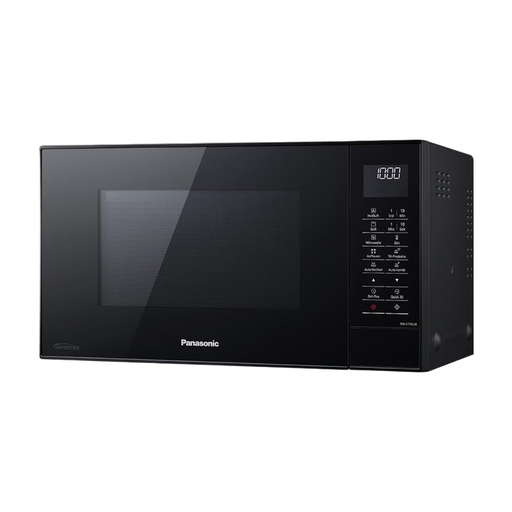
A combination microwave oven to consider if you want a microwave function as well as an oven.
The product name lists a 27-litre capacity, 1000 W microwave power, a grill, convection and inverter technology. Check that the oven settings and space for your tin suit your recipe.
 No image available
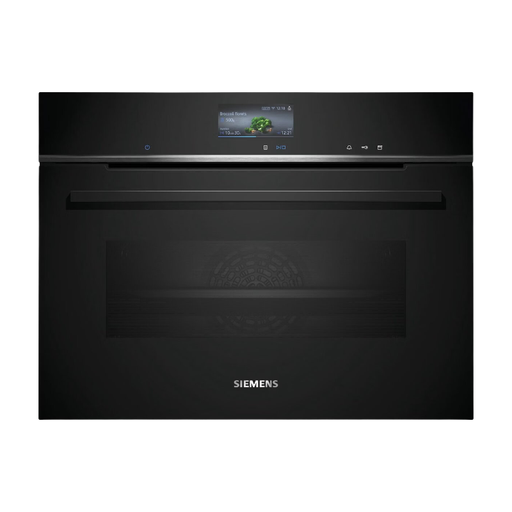
A built-in model to consider if your kitchen has suitable housing and you’re looking for a fan oven.
The product name lists a 47-litre capacity, a steam oven and 4D fan cooking. Check the housing and which features and baking space suit your recipe.
 No image available
A built-in oven to consider if you have suitable housing and want to be able to use conventional heat.
The product name lists a 66-litre capacity and five programmes. The product description mentions conventional heat, 3D fan cooking and baking on up to three levels. Check the housing and internal space for your cake tin.
 No image available
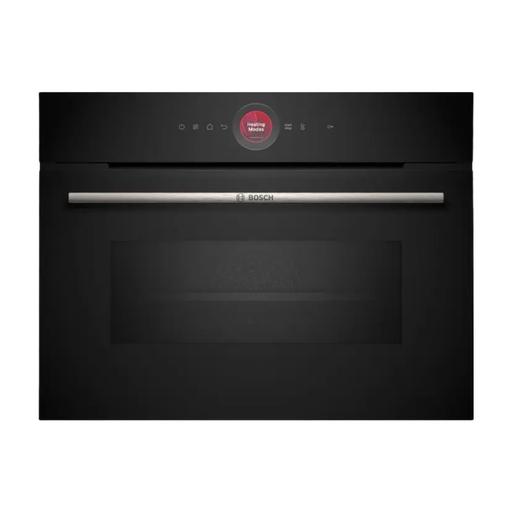
A built-in combination oven to consider if you want both an oven and a microwave function and have suitable housing.
The product name lists a 45-litre capacity, 900 W microwave power and a microwave function. The product description mentions convection cooking and grilling. Check the exact oven settings and space for your cake tin.
Not necessarily. According to the Consumers’ Association, some models may not have bottom heat or several shelf positions. Check the features and space of the exact model before choosing.
Where possible, follow the oven setting in your recipe. Heel Holland Bakt suggests reducing the temperature by 20% when switching from conventional heat to fan cooking; Bosch gives 20 °C lower as a practical rule of thumb. These are different guidelines, so take your recipe and oven into account and check the baking results.
Follow the instructions for your chosen model. Inventum specifies 10 cm of clearance all around the OV457B; don’t assume this measurement applies to other ovens without checking. Also check the cleaning instructions and allow hot parts to cool down safely.
If the product is faulty, contact the seller about your statutory rights. According to the Dutch government, there is no fixed statutory guarantee period in the Netherlands; a manufacturer’s guarantee is in addition to your rights.
This depends, among other things, on whether you sell food and how often you do so. The NVWA requires registration if you sell food several times a year. Establish whether the event involves a sale and whether it will happen repeatedly; if you sell food, rules on safe preparation and allergen information also apply.