What should you look for when choosing?
Start by asking whether sugar-free is a strict requirement. If it isn’t, decide whether your main priority is avoiding sweeteners or comparing pack sizes and portions for the whole family.
| What to consider | What to check before buying | Especially relevant for |
|---|
| Truly sugar-free |
Check the ‘of which sugars’ figure per 100 g. Under European Union rules, a solid food must contain no more than 0.5 g of sugars per 100 g to carry a sugar-free claim. |
If sugar-free is a firm requirement for my family, I don’t want to rely on ‘no added sugars’ alone. Around 42% of consumers put this strict sugar limit first. |
| Added sugars and sweeteners |
Check both the added-sugars claim and the ingredients list; for sweeteners, look out for ingredients such as maltitol. |
We’re happy with naturally occurring sugars, but don’t want added sugars or sweeteners in our breakfast cereals. For around 33% of consumers, this choice of ingredients is the main priority. |
| Pack size and ingredients |
Compare the pack size and number of portions. Check the allergen information and any usage warnings. |
With several people eating breakfast, I want to know how long a pack will last and whether the ingredients suit everyone. This is the first consideration for around 25% of consumers. |
Chocolate breakfast cereals on Joybuy
These products are worth considering if you’re looking for chocolate cruesli or muesli with no added sugars, or want to compare the pack size and nutrition information of individual packs with a multipack. The sugar content stated for the varieties discussed is above the EU threshold for a sugar-free claim; check the current packaging for each product before you choose.
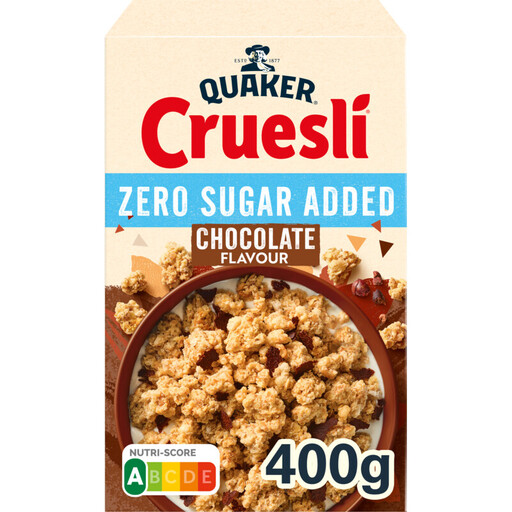 Image unavailable
Quaker Cruesli Choco Zero Sugar, 400 g
For anyone looking to avoid added sugars and sweeteners, but who doesn’t need to eat strictly sugar-free. Albert Heijn’s product information lists no added sugars or sweeteners for this Quaker cruesli; Jumbo lists 3.4 g of sugars per 100 g for the 400 g pack. Check the allergen information for milk, oats, wheat or nuts.
View on Joybuy
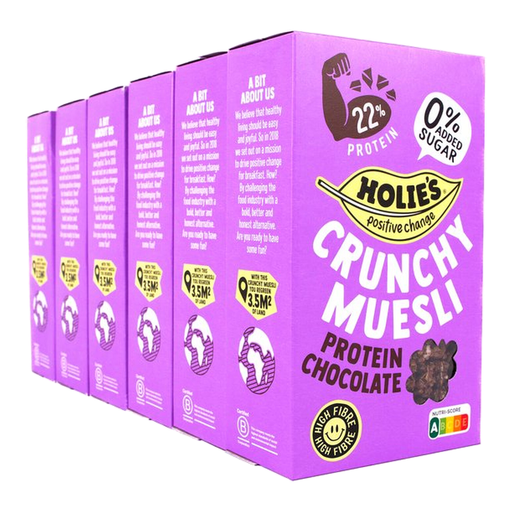 Image unavailable
Holie's Crunchy Muesli Protein Chocolate, 6 × 400 g
A multipack to compare if several people eat the same chocolate muesli. The product name specifies six 400 g packs; Joybuy lists 2.1 g of sugars, 21 g of fibre and 22 g of protein per 100 g for this Protein Chocolate variety. This means the muesli is not sugar-free. Check the ingredients and allergens on the multipack packaging.
View on Joybuy
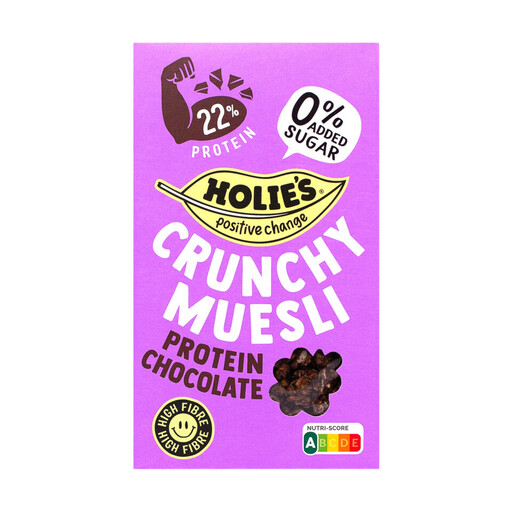 Image unavailable
Holie's Crunchy Muesli Protein Chocolate, 400 g
The individual 400 g pack is an alternative to the multipack if you’d like to assess the ingredients and portions first. Joybuy lists 2.1 g of sugars, 21 g of fibre and 22 g of protein per 100 g for this variety. Its sugar content is above the sugar-free threshold; check the current allergen information too.
View on Joybuy
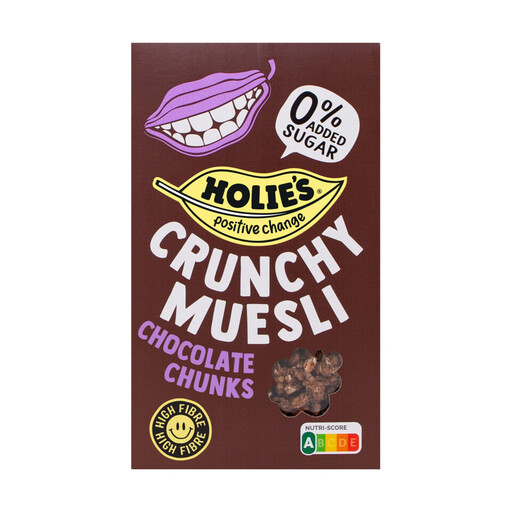 Image unavailable
Holie's Crunchy Muesli Chocolate Chunks, 400 g
An individual 400 g pack of chocolate muesli for anyone considering this variety too. Assess it separately from Protein Chocolate: check the ‘of which sugars’ figure per 100 g, ingredients and allergens on the exact pack before choosing.
View on Joybuy
Frequently asked questions
Does ‘0% added sugar’ mean the same as sugar-free?
No. Under European Union rules, a solid food can only carry a sugar-free claim if it contains no more than 0.5 g of sugars per 100 g. No added sugars doesn’t rule out naturally occurring sugars, so check the ‘of which sugars’ figure in the nutrition information too.
Are the chocolate breakfast cereals compared here sugar-free?
None of the three individual varieties compared meets the EU threshold of no more than 0.5 g of sugars per 100 g for solid foods. Albert Heijn lists 0.6 g of sugars per 100 g for its crunchy muesli, Jumbo lists 3.4 g for Quaker Cruesli Zero Sugar Added Chocolate, and Joybuy lists 2.1 g for Holie's Crunchy Muesli Protein Chocolate.
Which chocolate breakfast cereals can I look at if I don’t want sweeteners?
According to Albert Heijn, Quaker Cruesli Zero Sugar Added Chocolate contains no added sugars or sweeteners; the product information for Holie's Crunchy Muesli Protein Chocolate also lists no sweeteners. By contrast, AH Crunchy muesli chocolate 0% added sugar contains maltitol. Check the ingredients on the exact pack you’re buying.
Why does maltitol matter in the AH muesli?
Maltitol is a sweetener, so it isn’t suitable if you want to avoid sweeteners. Albert Heijn also warns that AH Crunchy muesli chocolate 0% added sugar may have a laxative effect if consumed in excess.
Should I check the packaging if I’ve already read the nutrition information online?
Yes. Before buying, check the sugar content per 100 g, ingredients and allergens on the exact pack. That way, you can assess the variety you’ll actually be taking home, especially if a sugar limit or particular ingredient is important to your household.


