
Vandaag of morgen in huis

Kwaliteit gegarandeerd

Welkomstaanbiedingen ontgrendelen: GRATIS bezorging | Tot 80% korting | Gratis 30 dagen JoyPlus-proefperiode
Download de app
Chocolate breakfast cereals come in many forms, from chocolate cornflakes and filled pillows to chocolate granola, chocolate muesli and high-protein options. Packaging often features claims such as ‘no added sugar’, ‘high in fibre’ or ‘wholegrain’. They sound clear, but products can vary considerably.
If you focus only on the chocolate flavour or eye-catching packaging, you could end up choosing a product that doesn’t suit your everyday needs. These tips will help you compare your options more carefully.
A product with 0% added sugar may still contain naturally occurring sugars. Always check the nutrition table, especially the ‘of which sugars’ line. For example, Quaker Cruesli Choco Zero Sugar lists 3.4 grams of sugar per 100 grams. According to the product information, it contains no added sugars or sweeteners, but it isn’t sugar-free.
Other products may list sugar, glucose syrup, date syrup or a similar ingredient. So check both the ingredients and the nutritional information.
A high fibre content may appeal if you’re looking for a filling breakfast. But it doesn’t tell you how much sugar, fat or energy the product contains. For example, a granola may be high in fibre thanks to chicory root fibre, but also relatively high in energy due to oil, nuts or seeds.
Compare the values per 100 grams to make a fair comparison between chocolate granola, crunchy breakfast cereal and crunchy muesli.
Chocolate breakfast cereals often contain wheat, oats, milk, soya, peanuts or nuts. What’s more, ‘gluten-free granola’ doesn’t automatically mean the product is free from all allergens. According to its product information, Holie's Granola Glutenfree Peanut Chocolate contains gluten-free wholegrain oats, as well as peanuts, and carries a warning that it may contain traces of various nuts and soya.
If you have an allergy, always check the current packaging. Product information on a webshop can help you narrow down your options, but the label is the final authority.
Don’t go by the word ‘chocolate’ alone. A product with chocolate flakes, filling or coating may contain more sugar than a granola made with cocoa powder. According to the listed nutritional information, Kellogg’s Chocos contains 22 grams of sugars per 100 grams, while Holie's Crunchy Muesli Chocolate Chunks lists 2.1 grams per 100 grams.
The difference comes down to the recipe. Sugar appears high on the ingredients list for Kellogg’s Chocos. Holie's version lists ingredients including wholegrain oats, chicory root fibre and cocoa mass. If you prefer to avoid sweeteners, check whether the product contains any.
High-protein breakfast cereals are a separate category for active people or anyone looking to increase their protein intake. Holie's Crunchy Muesli Protein Chocolate lists 22 grams of protein and 21 grams of fibre per 100 grams. Its ingredients include wheat protein and wheat gluten, so it isn’t suitable for anyone who needs to avoid gluten.
If you’re mainly looking for high-fibre breakfast cereals, you could also consider Holie's Crunchy Loops Choco Crisp. This version lists 26 grams of fibre and 22 grams of protein per 100 grams. However, it also contains wheat and peanuts. A high content doesn’t automatically make a product right for you: consider your own diet and, if needed, start with a smaller portion.
Don’t compare prices by the box alone; check the price per 100 grams too. A multipack can be handy for a family or for everyday use, while a 300 to 400 gram pack may make more sense if you want to try a flavour first.
Think about the texture too. Crunchy breakfast cereals and granola usually stay crisp for longer if you add them just before eating. Once opened, keep the pack tightly sealed in a dry place, away from heat and moisture. Follow the storage advice and best-before date on the packaging.
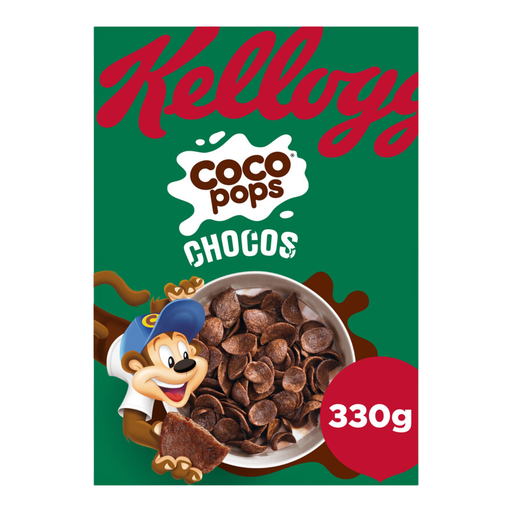
Why it suits this profile: A familiar choice for families who enjoy classic chocolate breakfast cereal with milk. The 330 gram pack is a manageable size for a first purchase.
The nutritional information and ingredients are clearly listed, so you can take the sugar content of 22 grams per 100 grams into account before choosing.
Wheat flakes with a chocolate flavour, 10 grams of protein and 6 grams of fibre per 100 grams. The product information also lists added vitamins and iron.
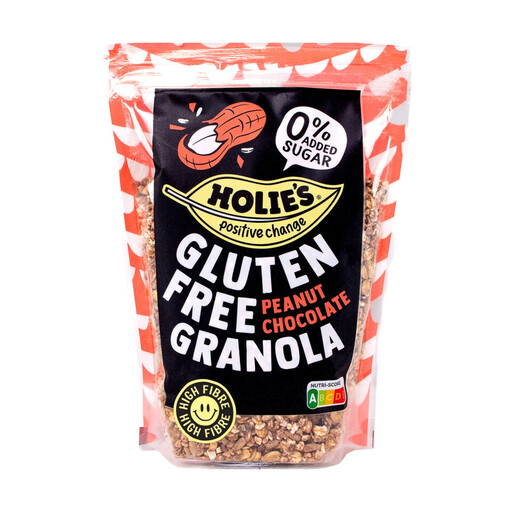
Why it suits this profile: A good fit if you like a satisfying crunch with cocoa and peanuts, and a recipe with no added sugar according to the product description.
The table lists 4 grams of sugars, 14 grams of fibre and 15 grams of protein per 100 grams. Peanuts and oats are also identified as allergens.
Gluten-free wholegrain oats, sunflower seeds and 100% peanut butter according to the ingredients list. If you have allergies, always check the packaging.
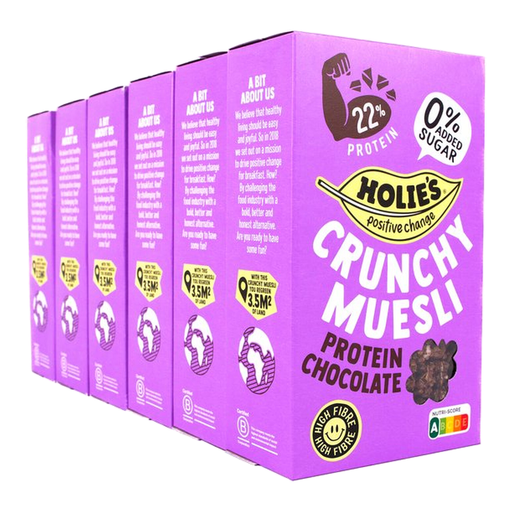
Why it suits this profile: The six-pack is a practical choice for households or active people who regularly enjoy a high-protein breakfast cereal.
The protein and fibre content is clearly stated: 22 and 21 grams per 100 grams respectively. The ingredients also make it clear that wheat protein and wheat gluten are present.
According to the product details, it contains 22 grams of protein, 21 grams of fibre and 2.1 grams of sugars per 100 grams. The pack contains 6 x 400 grams.
We’ve put together a complete, up-to-date list of products that meet these strict selection criteria and current European safety regulations.
It depends on the recipe. In the product details listed, Holie's Crunchy Muesli Chocolate Chunks and Holie's Crunchy Muesli Protein Chocolate both contain 2.1 grams of sugars per 100 grams. Quaker Cruesli Choco Zero Sugar lists 3.4 grams. Always check the current packaging, as recipes can change.
Not all varieties are. Kellogg’s Chocos, Kellogg’s Special K Dark Choco and many mueslis contain wheat, barley or other gluten-containing grains. Holie's Granola Glutenfree Peanut Chocolate is described as gluten-free, but it does contain oats and peanuts. If you have coeliac disease or an allergy, the official labelling on the packaging is what matters.
Store the pack in a cool, dry place and keep it tightly sealed. This helps it stay crisp. Use a clean, dry spoon and check the best-before information. An opened multipack is especially handy if you use the product regularly and have enough storage space.
