
Vandaag of morgen in huis

Kwaliteit gegarandeerd

Welkomstaanbiedingen ontgrendelen: GRATIS bezorging | Tot 80% korting | Gratis 30 dagen JoyPlus-proefperiode
Download de app
Chocolate breakfast cereals are popular with families, fans of a sweet breakfast and anyone who wants to get something on the table quickly. Yet products on the shelf or online often look more alike than they really are. A chocolate muesli, for example, can be high in fibre, while another product is mostly sugar and syrup. Terms like “no added sugar”, “wholegrain” and “high in protein” also don’t tell the full story.
As a Joybuy Product Recommendation Officer, I filter the most important product information so you can compare marketing claims with verifiable data on the label.
A product with 0% added sugar can still contain naturally occurring sugars. So always check the nutritional values per 100 g. For example, Quaker Cruesli Choco Zero Sugar states 3.4 g of sugars per 100 g, even though no added sugars or sweeteners are listed. That’s quite different from a completely sugar-free breakfast cereal.
Also look out for ingredients such as glucose syrup, date syrup, agave syrup, honey or rice syrup. These can increase the sweet taste and the sugar content.
Check which grain is at the top of the ingredients list and what percentage of wholegrain ingredients is present. Wholegrain breakfast cereals don’t automatically offer the same nutritional values: the fibre content, sugar content and amount of fat can vary widely.
A product with chocolate flakes or a filling may also contain less fibre than the packaging first suggests. So compare the values per 100 g rather than relying only on claims on the front.
A high-protein breakfast cereal can be appealing for active consumers, but look at the actual protein content. Holie's Crunchy Muesli Protein Chocolate contains 22 g of protein per 100 g according to the product information. That’s verifiable and clearer than just the word “Protein” on the pack.
With gluten-free granola, the allergen list is at least as important as the front of the pack. A product may contain gluten-free oats but still mention peanuts or traces of nuts. If you have coeliac disease or an allergy, it’s wise to check the actual packaging rather than relying solely on the online product title.
Compare at least these values:
A portion is smaller than 100 g, but the serving size on the pack can vary. Weigh the amount you normally put in a bowl once. That way you avoid a large portion unknowingly containing more calories, sugar or fat.
Ingredients are listed in descending order by weight. If sugar or syrup appears early in the list, it makes up a relatively large part of the product. Also look at the chocolate composition: some products use cocoa powder, others contain real chocolate chunks.
Common allergens in this category include:
Chocolate sprinkles are a different product type from breakfast cereals. They work well as a topping on bread or yoghurt, but generally have a higher sugar content and lower fibre and protein content than a wholegrain muesli.
A pack of 300 to 450 g is practical for trying a flavour first. Multipacks of six or eight can be more convenient for a large household, but they’re only good value if you’ll use the product before its best-before date.
Store opened breakfast cereals in a cool, dry place and seal the pack tightly. This keeps crunchy muesli and chocolate cornflakes crisp for longer. Always check the best-before information and don’t use any product in damaged packaging.
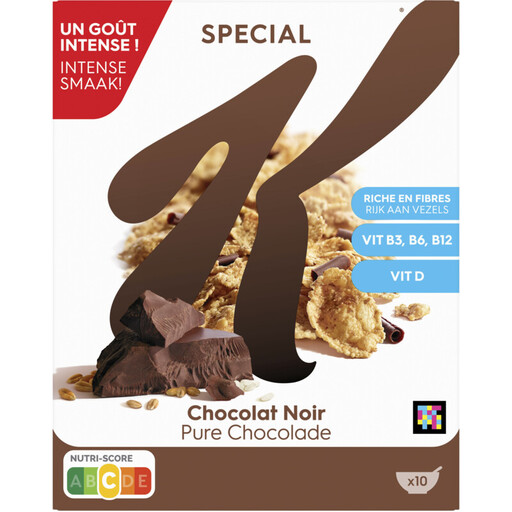
Why this fits the profile: A compact pack to try chocolate breakfast cereal with three grains and dark chocolate curls.
The product information states 17 g of sugars and 6 g of fibre per 100 g, so you can assess the balance rather than relying only on the packaging.
Three grains, 8.2 g of protein and added vitamins and minerals according to the product description. Contains wheat, barley, gluten and milk.
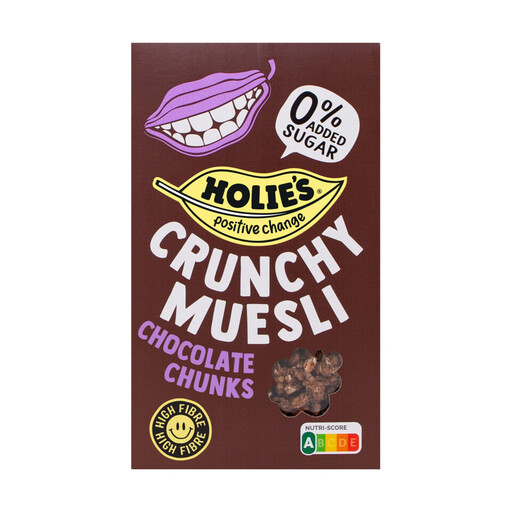
Why this fits the profile: Suits anyone looking for a satisfying crunch, wholegrain ingredients and a low stated sugar content.
The nutritional values state 2.1 g of sugars and 22 g of fibre per 100 g. “0% added sugar” is backed up with concrete figures.
46% wholegrain oats, 11 g of protein and 0.01 g of salt per 100 g. Contains oats, spelt and wheat.
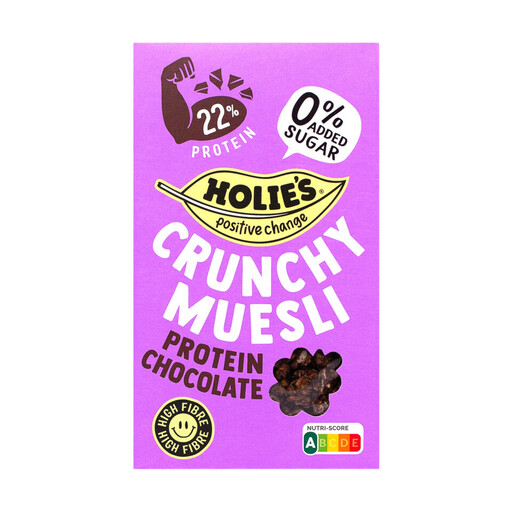
Why this fits the profile: An option for anyone who wants to be mindful of protein at breakfast while enjoying a crunchy texture.
The protein content is clearly stated: 22 g per 100 g. So you don’t have to rely only on the name “Protein”.
22 g of protein, 21 g of fibre and 2.1 g of sugars per 100 g. Contains oats, wheat and wheat gluten.
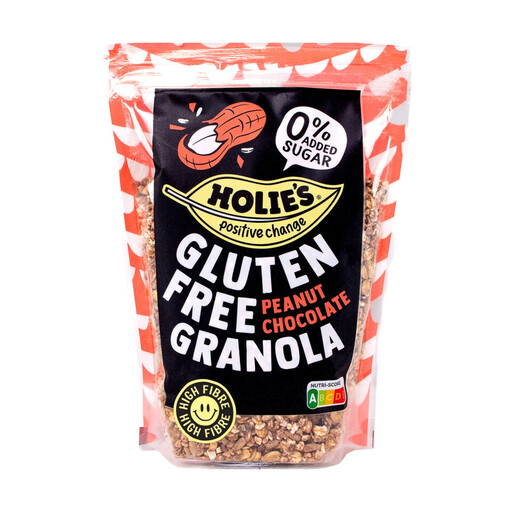
Why this fits the profile: Aimed at consumers looking for gluten-free granola who can also enjoy peanuts.
The ingredients list explicitly mentions gluten-free wholegrain oats. Always check the actual packaging and warnings for traces, though.
15 g of protein, 14 g of fibre and 4 g of sugars per 100 g. Contains oats and peanuts; may contain traces of nuts and soya.
We’ve put together a full, up-to-date list of products that fully meet these strict selection criteria and comply with current European safety regulations.
That depends on the composition and your portion size. Compare sugar, fibre, protein and energy per 100 g. You can combine chocolate muesli with yoghurt, milk, fruit or nuts, but also look at the total nutritional value of the meal.
Muesli usually consists of flakes, grains, seeds or dried fruit. Chocolate granola is often toasted and contains oil, which gives it a crunchy texture. Chocolate cornflakes are generally lighter and are often made from maize or wheat. The exact differences are shown in the ingredients list and nutritional information table.
Store breakfast cereals in a dry, cool place away from direct sunlight. Seal the bag or box tightly. Crunchy muesli and granola in particular lose their crispness when moisture gets in. Check the best-before date and the information on the pack before use.
