Who should consider these points?

Parents who want to keep an occasional treat in check

You’re looking for something to share on a special occasion, not as a daily snack, and want to decide in advance how much to give your toddler. This is in line with the Netherlands Nutrition Centre’s advice not to give biscuits to babies and toddlers every day.

Parents who want to send something in to nursery or school

You want to check the allergen information on the latest packaging against what matters for your child and the group. Ask the setting about its rules for snacks brought in or shared with others, too.

Households planning to share a pack over several occasions

You’re comparing the number of biscuits in each individual pack, how many you serve at a time and the storage instructions for anything left over. An individual packet isn’t necessarily a suitable portion for a toddler.

What should you look for when choosing?

First decide whether you’re looking for a regular snack or an occasional treat. Only then compare the portion, allergens and pack size for an occasional treat.

What to consider What to check before buying Who it matters most to
Snack occasion and portion Decide in advance how much you’ll serve, and check the nutrition information per portion and per 100 g. If I’m looking for something for a regular snack, I want to know first whether biscuits are suitable. Around 50% of consumers would consider their snack routine and portion size first.
Allergens and setting rules Read the latest label and ask the nursery or school about its rules for bringing in and sharing food. If I’m sending biscuits in for a group, I want to take account of any allergies and the rules at the setting. Around 30% of consumers would put these checks first.
Sharing and storage Compare the number of biscuits in each individual pack and the storage instructions once opened. If I’m planning several separate occasions for sharing, I want to hand them out without putting the whole pack on the table each time. Around 20% of consumers would focus mainly on how the biscuits are portioned and stored.

Common mistakes

  • Using a large pack as a daily snack for a toddler

    Having plenty in the cupboard makes it easy to serve biscuits repeatedly. The Netherlands Nutrition Centre instead recommends choosing snacks for babies and toddlers mainly from the Dutch Wheel of Five, and suggests having biscuits about once a week rather than every day.

    Save chocolate biscuits for an occasional treat at most, and set aside a small amount in advance.

  • Assuming all chocolate biscuits contain the same allergens

    Ingredients and allergens vary between products and varieties. So even if you know the brand, you still need to check the packaging.

    Check the latest label when you buy, and ask the nursery or school before sharing biscuits with other children.

  • Assuming one individual packet is a toddler-sized portion

    An individual packet may contain several biscuits. For example, Albert Heijn lists three biscuits per snack pack for one Lotus Biscoff variety; that doesn’t determine how many you should serve a toddler.

    Count the biscuits in the packet and decide on the amount in advance. Store any leftovers according to the label.

  • Relying only on online product information

    Ingredient information can change. Lidl also says it doesn’t provide an online list of ingredients, allergens and nutritional values for food products.

    Check the physical packaging before planning to give biscuits to a child or group.

Brands to compare

Verkade

One example to compare a smaller consumer pack with a multipack.

  • Albert Heijn lists Verkade Tops chocolate in a 100 g pack, with 14 portions of 7,1 g.
  • The listed allergens apply to this variety, not all Verkade biscuits. Check the latest label when you buy.

Lotus Biscoff

Worth comparing if you’re choosing between individual packets and one larger pack that needs to be opened.

  • For its Belgian chocolate variety, Albert Heijn lists six snack packs, each containing three biscuits.
  • Three biscuits per snack pack don’t automatically make a toddler-sized portion; check the allergens for the variety you choose, too.

Jumbo

A supermarket own-brand to compare pack sizes and portion information across products.

  • Jumbo lists its Granenbiscuits Melkchocolade in a 292 g pack with nine portions.
  • Check the ingredients and allergen information for the exact variety you’re buying, not another Jumbo biscuit.

Sondey

A Lidl own-brand option for comparing the size of a supermarket product.

  • Lidl lists Sondey Choco biscuits melk in a 125 g pack.
  • Lidl says it doesn’t provide a complete online list of ingredients, allergens and nutritional values for food products. Check the packaging in store instead.

Biscotto

An ALDI own-brand option for comparing individually wrapped biscuits with other pack formats.

  • ALDI describes its Biscotto Chocoladekoekjes as 20 biscuits in a 250 g pack, individually wrapped in pairs.
  • The two-biscuit wrapping doesn’t determine the right portion for a toddler. Check the ingredients and allergens for the specific product.

Chocolate biscuits for an occasional sharing moment on Joybuy

This selection features chocolate biscuits for an occasional sharing moment. Decide for yourself how much to give a toddler before sharing the pack.
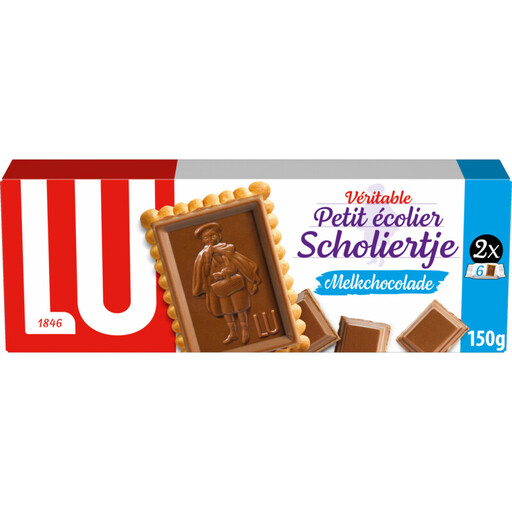
Lu Scholiertje Milk Chocolate Biscuits, 150 g

Lu Scholiertje Milk Chocolate Biscuits 150 g

For an occasional sharing moment, you can decide in advance how many biscuits to serve. Check the nutrition information and allergens on the latest packaging, and follow the storage instructions for any leftovers.

View at Joybuy

Frequently asked questions

Are chocolate biscuits suitable as a daily snack for a toddler?

Not as a regular choice. The Netherlands Nutrition Centre recommends offering babies and toddlers snacks mainly from the Dutch Wheel of Five, such as fruit, vegetables or wholemeal bread, and suggests having biscuits about once a week rather than every day.

Is one individual packet a suitable portion of biscuits for a toddler?

Not necessarily: an individual packet may contain several biscuits. For an occasional treat, decide on a small amount in advance and check the portion size and nutrition information on the packaging of the product you’ve chosen.

Where can I check the allergens in chocolate biscuits?

Check the ingredients and allergen information on the latest packaging for the specific variety. The Netherlands Food and Consumer Product Safety Authority explains that allergens must be listed on the labels of prepacked foods. Don’t assume that a biscuit has the same ingredients as another product from the same brand.

Can I rely on an online shop’s product description for allergen information?

Check the packaging of the product you actually buy as well. Albert Heijn points out that product information can change, while Lidl doesn’t provide an online list of ingredients and allergens for food products.

What should I keep in mind when a toddler is eating a biscuit?

Make sure your child is sitting calmly while eating, and stay nearby. These are general tips from the Netherlands Nutrition Centre to help prevent choking while eating, whatever biscuit you’ve chosen.
