
Vandaag of morgen in huis

Kwaliteit gegarandeerd

Welkomstaanbiedingen ontgrendelen: GRATIS bezorging | Tot 80% korting | Gratis 30 dagen JoyPlus-proefperiode
Download de app
A pack of chocolate biscuits might seem simple to choose. Yet biscuit sticks, wafers and chocolate biscuits vary greatly in size, composition and ease of use. Whether you're looking for a snack for the lunchbox, something to share, or a stash for home, an attractive packet can easily lead you astray.
As Joybuy's Product Recommendation Officer, I filter product information on verifiable points. This helps you see more quickly which chocolate snacks suit your situation and avoids a purchase that ends up sitting at home.
A family pack may look appealing, but always check the net weight, the number of portions and the best-before date. A large pack is practical for a family, but less suitable if you only want a small sweet snack now and then. Individual packs can also be more convenient for work, school or a party.
Biscuits with chocolate can be a biscuit with a coating, a wafer with a filling, or a bar with caramel. So always look at the ingredients list. Pay attention to the position of sugar, vegetable fats, milk solids and cocoa. The order tells you which ingredients are relatively most present.
Nutritional values per 100g are also useful for comparing products fairly. A small portion pack can be handy, while a larger bar or biscuit more easily contains multiple portions.
Many chocolate biscuits contain wheat, milk and soya. Some products also mention egg, nuts, barley or possible traces of other allergens. Always check the current packaging, especially with Japanese snacks, Korean snacks and other Asian snacks. Product compositions and labels can change.
For on-the-go, packs of around 32 to 55g are manageable. Think of a portion of biscuit sticks or a small wafer. For sharing, multipacks and bags of 200 to 400g make more sense. Individual wrappers help with taking and storing, but don't automatically give a lower price per 100g.
Choose based on the occasion:
With warm storage, watch the chocolate coating. According to product information from various brands, chocolate can soften at high temperatures and develop a slight bloom after cooling. This is a physical change in the fat, but it can affect the appearance and sometimes the texture.
Where possible, compare energy, sugars, saturated fats and salt per 100g. The figures vary per product. For example, the product information for Lu Mikado Milk Chocolate Biscuit Sticks states 477 kcal and 34g sugar per 100g. Twix Milk Chocolate states 492 kcal and 48g sugar per 100g. These values are not a quality judgement, but they help you make an informed choice.
Also check:
The packaging remains the leading source for current ingredients, allergens and the best-before date.
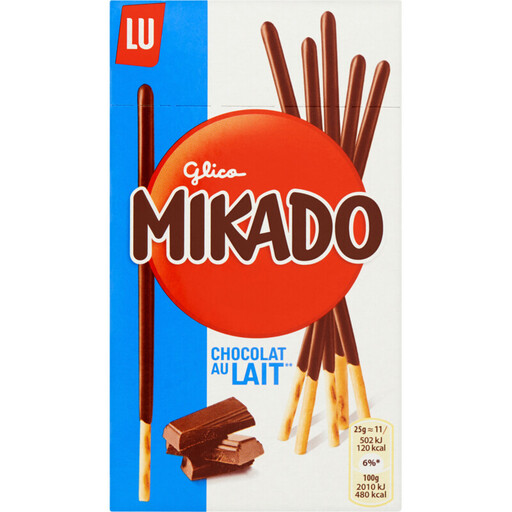
Why this fits the profile: A straightforward pack of thin biscuit sticks with milk chocolate, suitable for a first try of chocolate-coated biscuit sticks or a small sharing moment.
The net weight and packaging format are clearly stated: 75g, divided into 3 x 11 biscuits. Do check the allergens on the label: wheat, milk and soya.
Thin, crunchy shape; according to the product description, also usable for decorating desserts.
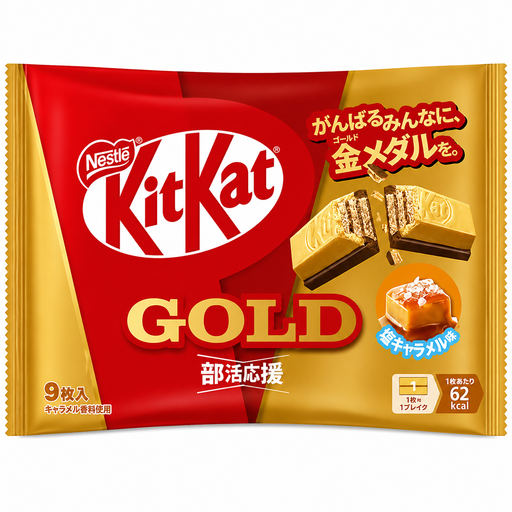
Why this fits the profile: A choice for those seeking a layered wafer, milk chocolate and a sweet-salty caramel profile, with nine individual pieces for sharing.
The number of pieces is clearly stated. Check the allergens before purchase: wheat, milk and soya; the product information also mentions a shared production line with egg, almond and sesame.
Nine portions; each piece approximately 11.6g and, according to the product information, around 62 kcal.
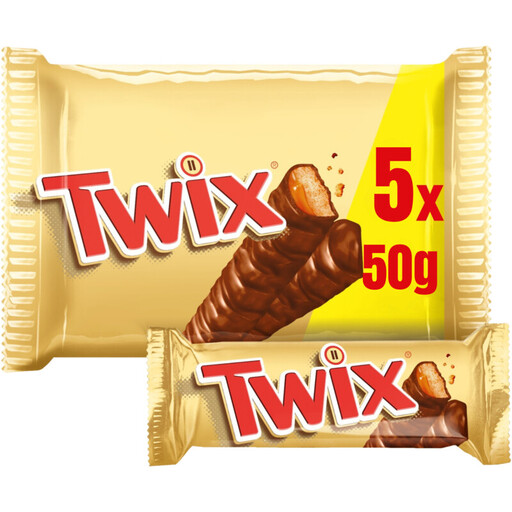
Why this fits the profile: A multipack for families, the store cupboard or a sharing moment. The combination of biscuit, caramel and milk chocolate differs from ordinary chocolate biscuits.
The pack contains five individually wrapped bars. This makes the size for sharing clearer than with a loose large biscuit pack. Watch out for wheat, milk, soya and possible nuts.
250g total weight; individual wrapping; clear combination of biscuit, caramel and milk chocolate.
We've put together a full, up-to-date list of products that fully meet these strict selection criteria and current European safety regulations.
Store chocolate biscuits according to the label in a cool, dry place, out of direct sunlight and away from heat sources. Seal the pack well after opening to limit moisture and loss of crunchiness. Do not use a damaged pack.
For a party, chocolate wafers and biscuit sticks are easy to share. For a lunchbox, small, individually wrapped portions are practical. Some varieties, such as Mikado, can also be used as dessert decoration according to the product description. Always check the allergen information and recommended portion size for children.
Small packs and individually wrapped snacks are usually the most practical. Pay attention to the net weight, the pack closure and allergens such as wheat, milk, soya and possibly egg or nuts. Biscuit sticks and small wafers generally take up little space.
That depends on the best-before date, packaging and storage. After opening, moisture can change the texture more quickly. So seal the pack well and store it dry. The date on the pack remains the key guide.
Not always. Compare the price per 100g and look at the number of portions. Japanese snacks and Korean snacks are often sold in smaller packs, which can make the price per pack seem low. A multipack or family pack can work out better per 100g, but is less suitable if you don't want to store a lot at once.
