
Vandaag of morgen in huis

Kwaliteit gegarandeerd

Welkomstaanbiedingen ontgrendelen: GRATIS bezorging | Tot 80% korting | Gratis 30 dagen JoyPlus-proefperiode
Download de app
Chinese vegetarian snacks are popular among vegetarians, vegans and fans of Asian snacks looking for something savoury, spicy and ready to eat. Many products have a chewy or meat-like texture, often thanks to konjac, wheat gluten or soya protein.
Yet packaging can sometimes look more alike than the ingredient lists suggest. If you only focus on words like “high protein”, “low calorie” or “authentic flavour”, you could end up buying a snack that doesn’t suit your diet, is too salty, or simply has the wrong texture.
A snack can be vegetarian but still contain milk, egg, honey or other ingredients. Sauces and flavour blends can also contain allergens. Always check the full ingredients list and allergen information on the packaging. Pay particular attention to soya, wheat, gluten, sesame and milk.
With some products, the description clearly suggests plant-based ingredients, but only the label on the actual packaging gives the most up-to-date information. If you follow a strict vegan diet, it’s wise not to rely solely on the product name.
The taste of spicy vegetarian snacks can vary a great deal. Chilli gives an immediate kick, while Sichuan pepper tends to create a tingling or numbing sensation in the mouth. Sesame paste makes the flavour rounder and creamier, whereas cumin or barbecue spices give a drier, roasted profile.
A product labelled “mala” is therefore not the same as a snack with just chilli powder. Look at ingredients such as Sichuan pepper, chilli oil, garlic, ginger, cumin and sesame paste to get a better idea of what to expect.
Vegetarian meat, vegetarian beef snack and vegetarian tripe are names that describe the shape and eating experience, not the nutritional composition. Konjac often provides an elastic or crunchy-chewy bite, while wheat gluten and soya protein usually feel firmer and more fibrous.
So compare the nutritional values per 100 grams. Across the range, energy, fat, protein and salt levels vary considerably. A small individual portion can be convenient, but several packets in a row obviously add up.
For a vegetarian or vegan snack, the first ingredients are what matter. Konjac flour is often used for konjac snacks with a springy texture. Wheat gluten gives a dense, chewy structure and is common in vegetarian beef snacks. Soya protein is used for hand-torn bars, rolls and steak-like snacks.
Also check whether wheat or soya is present in the seasonings. A snack may be based on konjac, but still contain soya oil, soya sauce or a spice blend that includes wheat.
Look beyond just calories. Among the selected products, the protein content ranges from around 1.3 to 28 grams per 100 grams. Salt also varies significantly: some konjac products sit at around 2.5 to 3.2 grams of salt per 100 grams, while other snacks are higher or lower.
Use the table mainly to compare products with one another. A lower energy value doesn’t automatically mean a snack is better for you in every way.
Individual sachets are handy for on the go, at the office, or for sharing. A box with 18 or 20 portions can be good value if you regularly eat ready-to-eat snacks. Do check the net weight: a 360-gram pack may consist of many small portions, while an 80 or 100-gram bag contains one larger portion.
Unopened products should generally be stored in a cool, dry place, away from sunlight and moisture. After opening, make sure to seal the inner packaging properly. Products such as 7FRESH Crispy Konjac and Edible Fungus should be refrigerated after opening, according to the product information.

Why this suits the profile: The pack contains around 28 individual portions. That makes it a practical introduction to konjac snacks, and ideal for sharing or taking with you.
The product information lists konjac as the base and clearly states soya and wheat as allergens. This lets you assess the texture and composition in advance.
252 grams total, individual sachets and 114 kcal per 100 grams according to the product information.
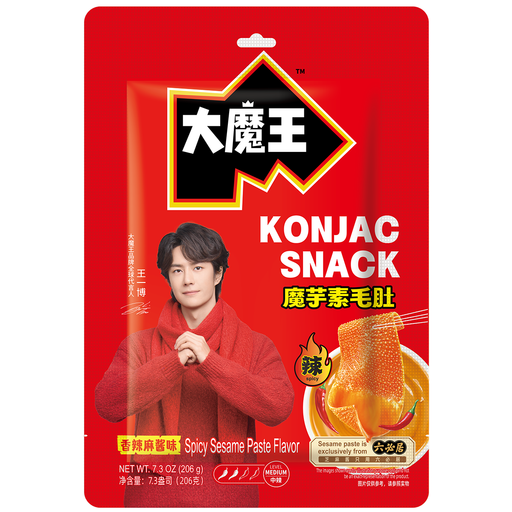
Why this suits the profile: The combination of sesame paste, chilli oil and Sichuan pepper appeals to those who enjoy layered flavours rather than just a straightforward kick.
The flavour profile isn’t simply described as spicy: the ingredients mention sesame paste, chilli and Sichuan pepper. Sesame, soya and wheat are listed as allergens.
206 grams, ready to eat and 134 kcal per 100 grams according to the product information.
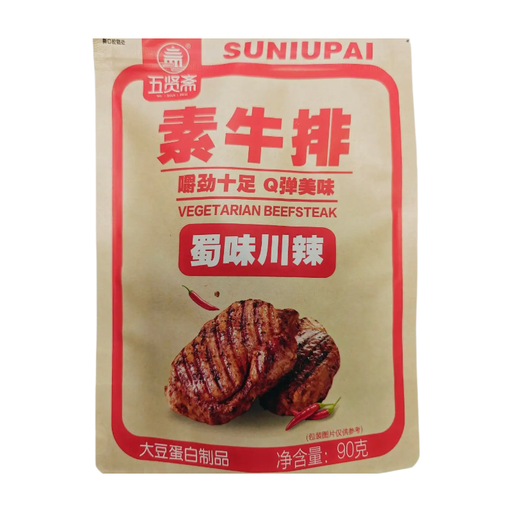
Why this suits the profile: This snack is made with puffed soya and gluten products and has a firm, steak-like texture for those who particularly want a meaty bite.
The base is clearly described as soya protein, soya and gluten. This avoids confusion between a konjac snack with a light bite and a firmer vegetarian meat product.
28 grams of protein per 100 grams according to the product information; contains soya and gluten and is ready to eat.
We’ve put together a full, up-to-date list of products that fully meet these strict selection criteria and comply with current European safety regulations.
Some products are completely plant-based, but that doesn’t automatically apply to every vegetarian snack. Check the ingredients and allergens on the packaging. Also look out for flavourings, soya sauce and any milk or wheat components. The term “vegetarian” alone isn’t enough if you follow a strict vegan diet.
According to the product information, unopened konjac snacks should usually be stored in a cool, dry place, away from direct sunlight and moisture. After opening, individual sachets should be kept sealed, and an opened product should generally be consumed quickly. Always follow the instructions on the packaging.
Choose products with chilli oil, chilli pepper and Sichuan pepper if you’re after a pronounced Sichuan profile. For a more direct hit, snacks with fresh chilli or hot chicken-style seasoning make more sense. If you prefer less heat, start with a sesame paste or barbecue variety. When in doubt, check the ingredients list and try a small portion first.
