
Vandaag of morgen in huis

Kwaliteit gegarandeerd

Welkomstaanbiedingen ontgrendelen: GRATIS bezorging | Tot 80% korting | Gratis 30 dagen JoyPlus-proefperiode
Download de app
Chinese tomato noodles are popular with students, busy professionals and families who want to prepare a hot meal quickly. The combination of sweet-and-sour tomato, herbs and beef flavour is different from standard chicken or spicy instant noodles. However, not every pack is the same.
Pay particular attention to three common pitfalls:
Check the soup ingredients on the label. A product containing tomato purée, tomato sauce or tomato powder may have a different flavour profile from one that relies mainly on flavourings and flavour enhancers.
According to the product information, Hefu’s tomato soup contains 40% tomato purée within the soup component. Lamianfan Tomato Tonkotsu Ramen lists tomato purée in the soup sachet and combines it with a pork bone broth-style flavour. This does not automatically mean that a product will suit every taste preference, but it does provide a verifiable reference point when comparing products.
If you are looking for a pronounced sweet-and-sour profile, tomato and beef noodles may be worth considering. For a creamier, more savoury character, tomato ramen with a tonkotsu or pork bone-style broth is a better match.
The noodles largely determine the preparation method and bite.
Always check whether the pack instructs you to cook in a pan or simply soak in boiling water. This helps prevent limp noodles or a meal that has not been heated sufficiently.
A 5-pack is useful for stocking up, but individual serving sizes vary. Examples in the range include 98 grams, 112 grams, 127 grams and 131 grams per pack. So do not compare total weight alone.
Also look out for:
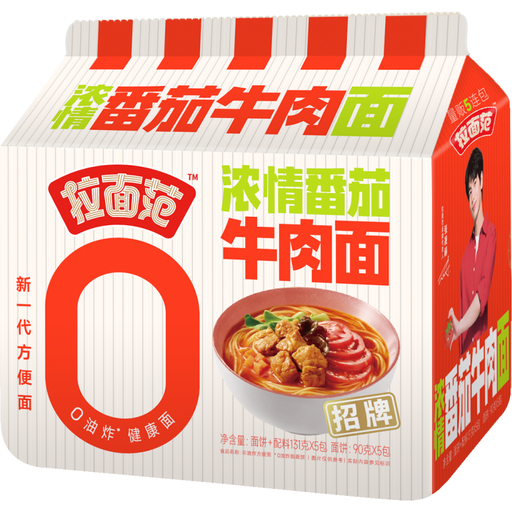
Why it suits this profile: A straightforward 5-pack for anyone trying Chinese tomato noodles for the first time and wanting several portions at home.
The pack contains a noodle block, soup, seasoning and vegetable sachets. The product information lists tomato purée in the soup component and gives a preparation time of approximately 3 minutes.
131 grams per serving, five individual packs and vegetable ingredients including carrot, sweetcorn and mushroom.
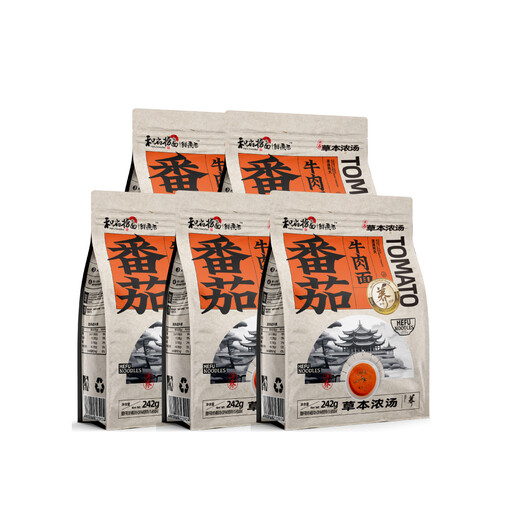
Why it suits this profile: Ideal for anyone who values semi-dry noodles, a separate beef component and a more substantial meal.
The product information states that the soup component contains 40% tomato purée and that the braised beef component contains at least 75% meat. The soup and beef are heated separately.
Five 242-gram portions, Australian wheat flour in the noodles according to the label, and a preparation time of approximately 3–5 minutes.
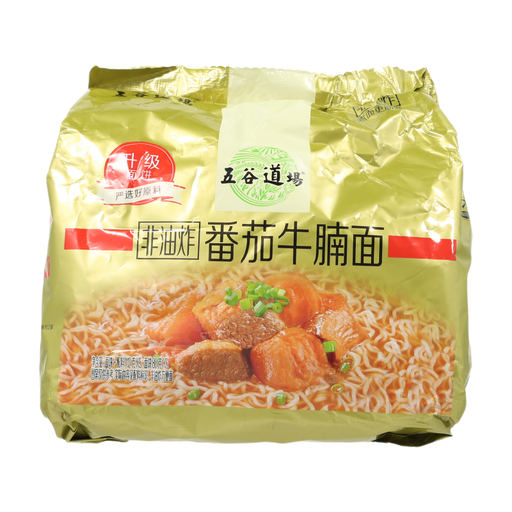
Why it suits this profile: A good choice for shoppers specifically looking for non-fried noodles with tomato and beef flavour in five individual portions.
The label states that the noodles are non-fried and lists separate sachets for tomato and beef flavour, seasoning and vegetables. This makes the composition clearer in advance than a general flavour description alone.
112 grams per sachet, five portions and a preparation time of approximately 3 minutes in a pan.
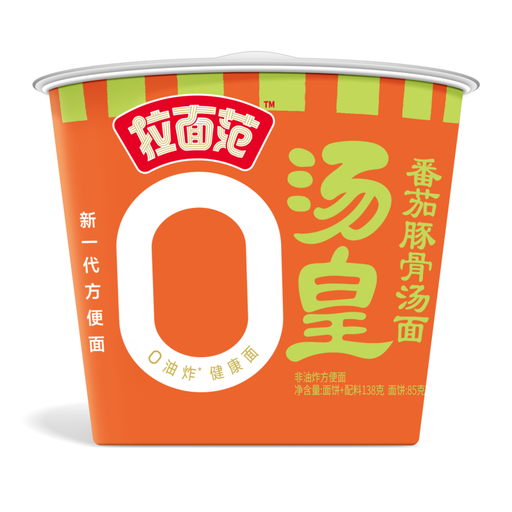
Why it suits this profile: A practical option when you do not want to use a pan or bowl and only have boiling water available.
The product information lists non-fried noodles, a tomato-tonkotsu soup sachet and clear preparation instructions: add water up to the fill line and wait for approximately 3 minutes.
Cup packaging, 138 grams of contents and separate soup, savoury topping and vegetable sachets. The label also lists sweetener E955.
Follow the preparation instructions on the packaging. For a pan-cooked variety, you generally boil the noodles for around 3 minutes and add the sauce at the right stage. Semi-dry Hefu noodles often require 3–5 minutes of boiling before draining.
For a cup variety, the amount of water is important. Too much water makes the soup bland, while too little creates a highly concentrated flavour. Start by adding the stated amount, then add extra water if necessary.
You can enhance a quick Asian meal with pak choi, a boiled egg, spring onion or bean sprouts. Add fresh ingredients right at the end so the noodles do not continue cooking for longer than necessary.
We have put together a complete, up-to-date list of products that fully meet these strict selection criteria and the applicable European safety regulations.
It varies by product. Some varieties contain chilli, garlic or pepper, while others are mainly sweet-and-sour and savoury. Check the ingredients list and add your own chilli oil if you prefer more heat.
The best-before date is shown on the packaging. Store dry and semi-dry products according to the stated storage advice, usually in a cool, dry place away from direct sunlight. Once opened or prepared, consume the meal immediately.
A 5-pack of noodles is practical for several meals. Choose a 5-pack with five individual portions if you want to stock up. For a household where everyone has different tastes, a selection including tomato and beef, tomato tonkotsu ramen and neutral tomato flavours can offer greater flexibility.
