
Vandaag of morgen in huis

Kwaliteit gegarandeerd

Welkomstaanbiedingen ontgrendelen: GRATIS bezorging | Tot 80% korting | Gratis 30 dagen JoyPlus-proefperiode
Download de app
When you buy Chinese spicy snacks online, you’ll find plenty of choice: from mala snacks and Sichuan snacks to spicy tofu, gluten bars and konjac snacks. However, eye-catching packaging tells you little about the flavour, ingredients or whether a product suits your diet. With these practical selection tips, you can avoid a disappointing purchase and find a snack that’s right for relaxing at home, enjoying on the go, serving at a party or fuelling a long gaming session.
One snack may be mainly flavoured with chilli, while another uses Sichuan pepper. Chilli provides heat, whereas Sichuan pepper creates the familiar tingling or numbing mala effect. Products containing both ingredients are often described as snacks with chilli and Sichuan pepper, but the proportions vary from recipe to recipe.
That’s why it’s important to check the ingredients list. If chilli appears near the beginning, the emphasis is usually on heat. If Sichuan pepper, green pepper or tengjiao are listed, you can expect a more aromatic, tingling flavour profile.
Many vegetarian meat snacks, spicy tofu snacks and gluten snacks are made with wheat gluten or contain soy sauce with wheat. A product can therefore be plant-based and still contain gluten. If you have allergies or intolerances, also check for soya, sesame, mustard and sulphites.
For example, wheat gluten provides a firm, fibrous texture, while tofu and soya protein can be softer or more elastic. The term “vegetarian meat” refers to the texture and seasoning, not to a product that is free from allergens.
A Chinese snack box containing individually wrapped portions is convenient for sharing, but compare the net weight rather than just the number of packets. Also check the nutritional information per 100 grams. The salt content can vary considerably between seasoned snacks. Sweeteners, flavour enhancers or preservatives may also be part of the recipe.
Choose according to the intensity you’re after:
Brands may make flavour or preparation claims on their packaging. Treat these as information provided by the brand, not as a universal guarantee. According to a brand’s own research, for example, a particular preparation method may result in less oil or a specific texture; the ingredients list and nutrition table remain the verifiable source of information.
The texture has a major influence on whether a snack is right for you:
Use the figures per 100 grams as a consistent basis for comparison. At a minimum, check energy, fat, carbohydrates, protein and salt. A small packet may be relatively heavily seasoned, while a larger multipack can make portion control easier.
Also check:
The products below are ready to eat and come from China, but differ clearly in their base ingredients, pack sizes, textures and nutritional values.
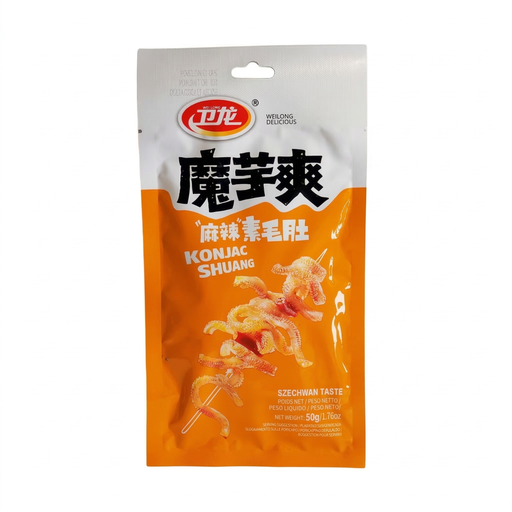
Why it suits this profile: A small pack for discovering mala flavour and konjac’s chewy texture without committing to a large multipack.
The product information states 50 grams, 84 kcal and 2.8 grams of salt per 100 grams. This makes the portion size and nutritional values clear in advance.
Konjac as the base, chilli and Sichuan pepper for flavour, ready to eat and easy to take with you.
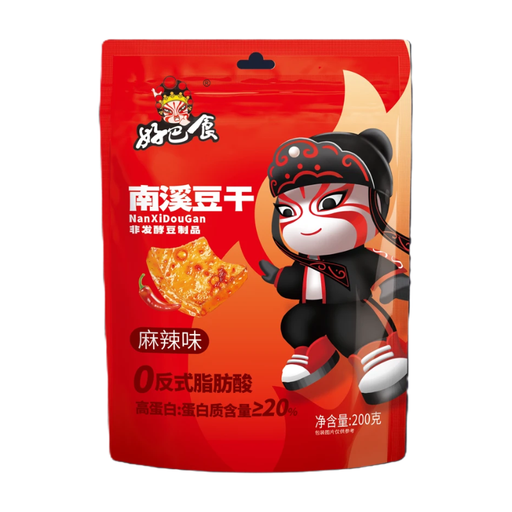
Why it suits this profile: The firm tofu texture and distinctive Sichuan seasoning are ideal for consumers looking for more than just heat.
The ingredients specifically list soya, wheat, chilli and Sichuan pepper. This means the allergens can be checked in advance.
20 grams of protein per 100 grams, a net weight of 200 grams and a chewy tofu texture.
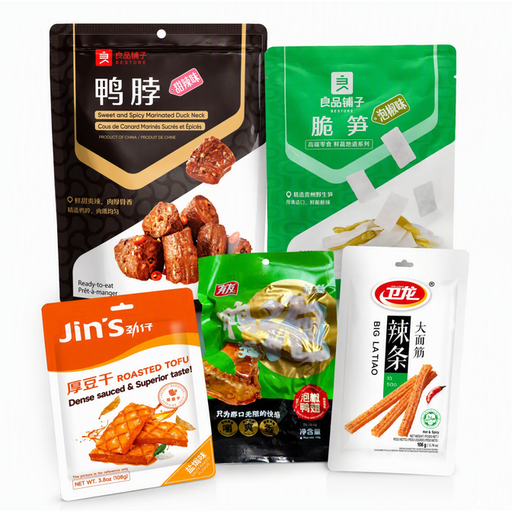
Why it suits this profile: Ideal for parties, sharing or keeping a selection of snacks at home. The set contains five different varieties, including tofu, bamboo shoots and spicy gluten.
The contents and allergens for each item are described. However, check each individual product before serving the set.
810 grams in total, individually wrapped snacks and variety for several people.
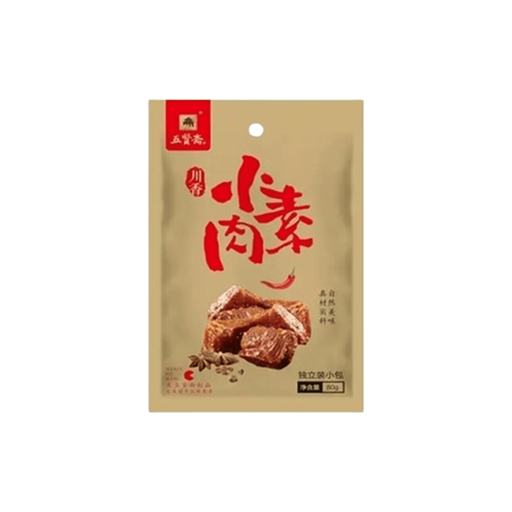
Why it suits this profile: This snack is made with wheat gluten and soya, with a dense, chewy texture seasoned with chilli and Sichuan pepper.
The product details state 24.8 grams of protein per 100 grams, while also listing wheat and soya as allergens. In this case, plant-based does not mean gluten-free.
24.8 grams of protein per 100 grams, a net weight of 80 grams and distinctive Sichuan seasoning.
We’ve put together a complete, up-to-date list of products that fully meet these strict selection criteria and the applicable European safety regulations.
Some are, but always check the ingredients. Wei Long products labelled “chicken flavour” or “beef flavour” may contain artificial flavourings, while other snacks are made with wheat gluten, tofu or soya. Also check for milk, eggs or animal-derived flavourings if you follow a strictly plant-based diet.
Unopened snacks should generally be stored in a cool, dry place away from direct sunlight. Instructions vary after opening: some individually wrapped portions can be eaten straight away, while larger opened bags may need to be refrigerated. Follow the instructions on the packaging and consume opened products promptly.
Compare the nutritional information per 100 grams. The Weilong konjac variety lists 84 kcal per 100 grams, while the HAO BA SHI konjac variety lists 68 kcal per 100 grams. Based on the stated energy values, this makes them lower in calories than many gluten, tofu and bean snacks. However, pay attention to the salt content and portion size; one nutritional value does not determine the overall nutritional profile.
