
Vandaag of morgen in huis

Kwaliteit gegarandeerd

Welkomstaanbiedingen ontgrendelen: GRATIS bezorging | Tot 80% korting | Gratis 30 dagen JoyPlus-proefperiode
Download de app
Buying Chinese snacks in the Netherlands can offer a surprisingly wide choice: from spicy snacks with a Sichuan flavour to konjac snacks, tofu snacks, kelp snacks and individually wrapped soy snacks. The difference isn't just about taste. Ingredients, allergens, salt content, portion size and storage instructions all determine whether a product suits your snacking occasion.
If you only rely on words like "low-calorie", "authentic" or "plant-based", you could end up choosing a snack that doesn't quite meet your expectations. With these checkpoints, you can compare Chinese snacks online based on concrete product information.
On packaging, nutritional values are usually given per 100g. However, an individual packet can be much smaller or larger. A product with 84 kcal per 100g isn't automatically a light choice if you eat several portions. So also look at the net weight and the number of packets.
For example: the WEILONG Konjac Snack Spicy Flavor contains 84 kcal per 100g according to the product information and comes in a 50g pack. The Jinzai Jingmen Konjac Hot & Spicy Sesame Flavor contains 20 packets of 18g, with 196 kcal per 100g. The portion breakdown makes the snacking occasion clearer, but the total pack still weighs 360g.
Spicy snacks can vary greatly. Chilli mainly provides heat, while Sichuan pepper can add a tingling, numbing sensation to the flavour. The term mala usually refers to that combination of heat and a tingling Sichuan profile.
So check the ingredients. Look for chilli, Sichuan pepper, tengjiao, garlic, ginger, sesame or cumin. A snack with a hotpot flavour won't necessarily taste the same as a snack with a BBQ or sesame paste flavour.
Many Chinese snacks are based on konjac, soy, wheat gluten or seaweed. This makes them suitable for vegetarians or flexitarians, but soy, sesame, peanuts and gluten can still be present. Always check the allergen information on the product page and packaging.
Also pay attention to differences between product claims and ingredients. A product can be plant-based, yet still contain a lot of salt, oil or flavour enhancers. So use the term "plant-based snacks" as a first filter, then look at the full composition.
The ingredients list is in descending order of quantity. With a kelp snack, it's useful to check how much kelp is actually present. Wei Long Fengchi Kelp states 76% kelp, for example. The snack also contains soy and mustard as allergens.
With tofu snacks, soy snacks and vegetarian snacks, soy and wheat are common. For sesame flavours, such as the Yan Jin Pu Zi MOWON Konjac Snack Sesame Paste Flavour, soy, sesame and wheat are listed. If you have an allergy or intolerance, don't rely solely on the product name.
For a fair comparison, look at at least energy, fat, sugar, protein and salt per 100g. Chinese snacks with a strong flavour often contain plenty of spices, soy sauce or pickled ingredients. As a result, the salt content can vary considerably.
Wei Long Fengchi Kelp states 38 kcal per 100g, but also 8.23g of salt per 100g. This is a good example of why you shouldn't look only at calories. The Jin Zai anchovy snack lists 306 kcal and 6.55g of salt per 100g, while the product also states 26.8g of protein.
Individual snack packs are practical for a lunchbox, office, train journey or sharing snacks. They also help keep the portion per snacking occasion clear. Do check the total weight and the amount of packaging material.
After opening, check the storage instructions. Many products should be kept cool and dry and consumed quickly after opening. Some konjac and gluten snacks need to be refrigerated after opening. The best-before date is on the packaging; check it upon receipt.

Why it fits this profile: A compact introduction to konjac and Sichuan pepper, without having to buy a large multipack straight away. The snack is ready to eat and contains 50g.
The portion is clearly defined and the product information states 68 kcal per 100g. Do check for soy, sulphites and the salt content of 3.1g per 100g.
50g, ready to eat, with green Sichuan pepper, chilli, garlic and ginger in the ingredients list.
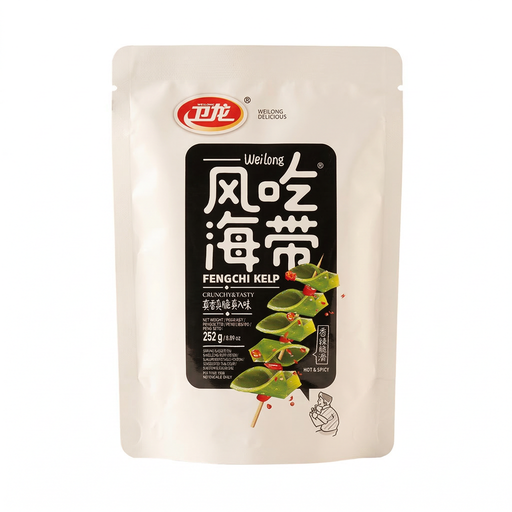
Why it fits this profile: Ideal for those who want to compare ingredient percentages and a large pack size. The product states 76% kelp and contains 28 portions.
The amount of kelp is clearly stated. Don't be misled by the 38 kcal per 100g alone: the stated salt content is 8.23g per 100g.
252g, 28 packs, 76% kelp and a hot-and-sour flavour with chilli, Sichuan pepper and pickled ginger.
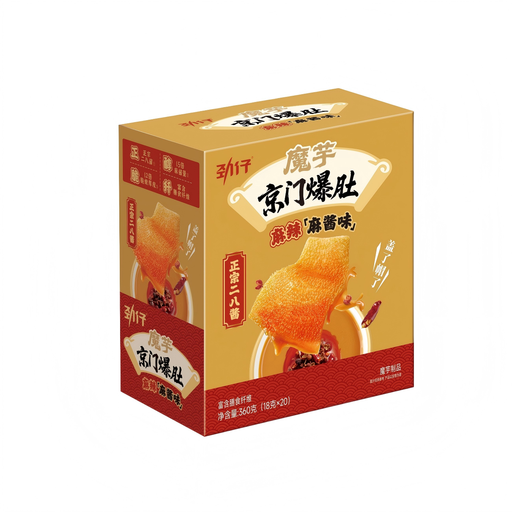
Why it fits this profile: The 20 packets of 18g are handy for the office, lunchboxes, film nights or multiple snacking occasions. The flavour combines sesame paste, peanut, chilli and Sichuan pepper.
The packaging makes the portion size clear, rather than just showing the value per 100g. Check the allergens beforehand: soy, peanut and sesame are listed.
20 individual pouches, 18g each, 71.37% konjac embryo and 196 kcal per 100g according to the product information.
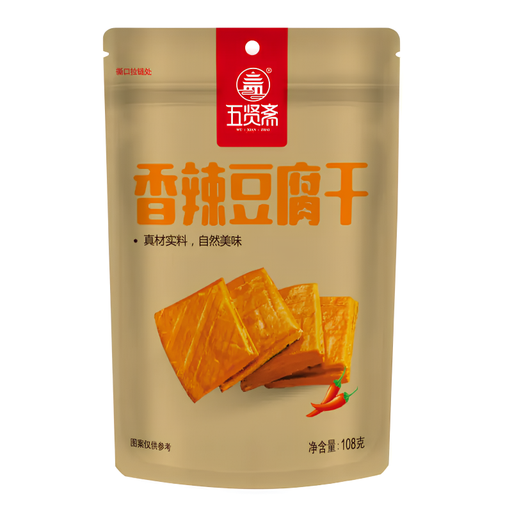
Why it fits this profile: This soy snack offers a firm, chewy texture and a direct spicy kick. The pack contains 7 to 8 individual portions.
The product information explicitly mentions soy and wheat. This allows you to distinguish the plant-based composition from allergen-free food.
108g, 15g protein per 100g, individually vacuum-packed and ready to eat.
We've put together a full, up-to-date list of products that fully meet these strict selection criteria and comply with current European safety regulations.
That varies by product. Konjac, tofu, soy and some kelp snacks are vegetarian or plant-based based on the listed ingredients. Always check the full ingredients list. A snack with a vegetarian name can still contain allergens such as soy, sesame or wheat.
Store unopened products in a cool, dry place away from direct sunlight, according to the product information. After opening, some snacks need to be consumed quickly or kept refrigerated. Follow the instructions on the packaging and check the best-before date upon receipt.
Compare kcal per 100g and per portion. Also look at salt, fat, sugar and the total net weight. A low energy value doesn't automatically make a snack suitable for every preference. The ingredients and portion size together give a more complete picture.
