
Vandaag of morgen in huis

Kwaliteit gegarandeerd

Welkomstaanbiedingen ontgrendelen: GRATIS bezorging | Tot 80% korting | Gratis 30 dagen JoyPlus-proefperiode
Download de app
Looking to buy Chinese snacks for a movie night, gaming session, on the go or alongside a drink? You will quickly come across terms such as “authentic Sichuan flavour”, “plant-based” and “ready-to-eat”. These descriptions do not always tell you exactly what you are buying. Texture, allergens, shelf life and salt content can vary significantly from one product to another.
As a Joybuy Product Recommendation Officer, I filter the most important information from product descriptions so you can make a more informed choice between spicy Chinese snacks, tofu, konjac, wheat gluten and traditional Chinese meat snacks.
Many vegetarian snacks are made with soy, wheat gluten or sesame. This includes snacks based on tofu, konjac and “vegetarian meat”. If you have an allergy or intolerance, always check the complete ingredients list.
Pay particular attention to:
A product described as plant-based is therefore not automatically suitable for every diet.
“Spicy”, “mala” and “Sichuan-style” can refer to very different taste experiences. Alongside chilli heat, Sichuan pepper creates a tingling or numbing sensation. As a result, a snack with a generous amount of seasoning can taste intense without being purely hot.
Check the ingredients list carefully. If chilli appears near the beginning, its proportion is generally more significant than when it is listed towards the end. This is not an exact spiciness scale, but it can help you assess marketing language more accurately.
A box containing individual portions is convenient for sharing or taking with you. Even so, it is worth comparing the net weight per pack. For example, a 360-gram box may contain twenty 18-gram portions, while a 360-gram bag contains twelve portions. Also check the shelf life after opening and the recommended storage conditions.
The base ingredient has a major impact on how a snack feels when eaten:
Do not rely solely on the product name; check the ingredients list as well. For example, Wei Long Konjac Crunchy Snack lists 6% konjac flour. The term “konjac” therefore does not mean that the product is made entirely from konjac.
Spicy and savoury snacks can contain relatively high levels of salt. Compare the nutritional information per 100 grams, rather than looking only at the values per bag. In the product data provided, salt levels range from approximately 2.2 grams to 6.5 grams per 100 grams.
Also look at:
Nutritional information is intended to help you compare products. It is not personalised dietary advice.
Many of these ready-to-eat snacks can be eaten straight from the pack. However, always check:
For products containing meat, such as duck wings, the instructions after opening are often stricter than for dry snacks. Always refer to the current packaging for the use-by date and handling instructions.
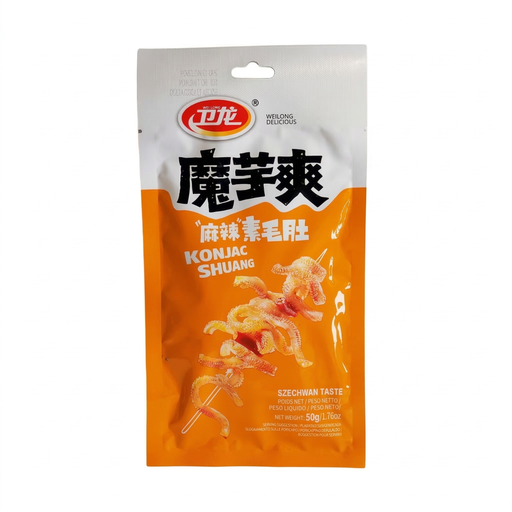
Why This Fits Their Persona: The small pack is ideal if you are trying konjac snacks for the first time or want a convenient portion for the journey.
The product information specifies a 50-gram net weight and direct consumption. This means you do not have to commit to a large box before discovering whether you like the texture.
Ready-to-eat, compact packaging and, according to the product information, 84 kcal per 100 grams.
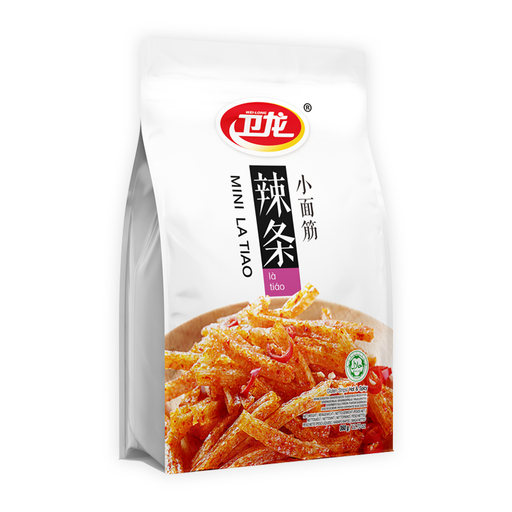
Why This Fits Their Persona: The twelve individual portions are ideal for an evening with friends, gaming or sharing over drinks.
The description clearly lists chilli, Sichuan pepper, cumin and mustard, giving you a better idea of the flavour profile in advance.
360 grams total weight, twelve packs and a chewy wheat-gluten texture.
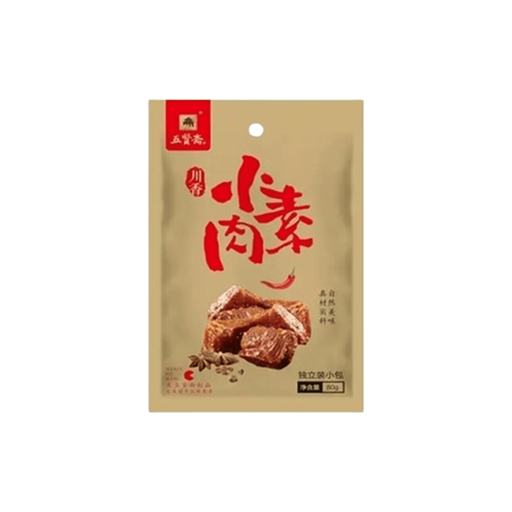
Why This Fits Their Persona: This wheat-gluten snack is designed for anyone looking to try a savoury, substantial meat alternative.
The ingredients clearly identify wheat gluten and soy, preventing “vegetarian meat” from being mistakenly viewed as an allergen-free option.
According to the product information, it contains 24.8 grams of protein per 100 grams and can be eaten straight from the pack.
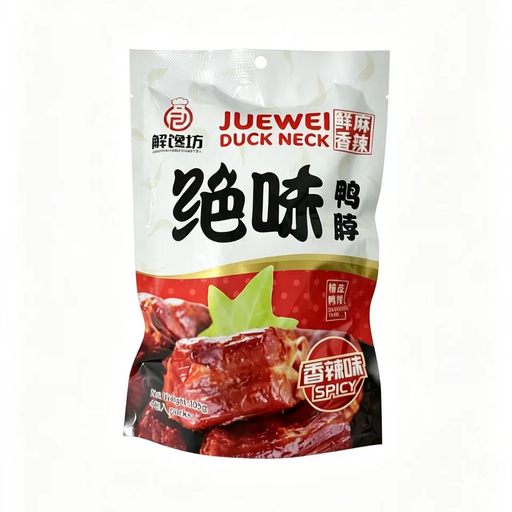
Why This Fits Their Persona: A compact snack for anyone seeking Chinese meat snacks with a firm texture and Sichuan seasoning.
The product information specifies 95% duck neck and identifies allergens such as wheat and soy, making the composition easier to assess.
105 grams, ready-to-eat and, according to the product information, 27 grams of protein per 100 grams.
Browse a current selection of spicy Chinese snacks in a range of portion sizes, textures and ingredient profiles.
Tofu snacks, konjac snacks and products made with wheat gluten are potential options. Always check the ingredients list. Some products contain soy, wheat or sesame and may therefore be unsuitable for people with certain allergies. “Vegetarian meat” refers to a product category and does not automatically indicate anything about allergens or nutritional value.
Dry snacks should generally be stored in a cool, dry place and sealed securely. Meat products may need to be refrigerated after opening and consumed within a limited period. Follow the instructions on the packaging, as storage times vary by product.
Individually packaged snacks are the easiest to take with you. Consider the Wei Long Konjac Snack with several small portions, or a single pack such as the 50-gram konjac snack. Before setting off, check that the packaging is undamaged and avoid prolonged exposure to heat.
