
Vandaag of morgen in huis

Kwaliteit gegarandeerd

Welkomstaanbiedingen ontgrendelen: GRATIS bezorging | Tot 80% korting | Gratis 30 dagen JoyPlus-proefperiode
Download de app
Want to buy Chinese snacks for home, on the go or for a party? You’ll soon come across a wide range of mochi, spicy noodles, tofu snacks, nuts and frozen desserts. Product photos and terms such as “authentic” do not always tell you exactly what you’ll receive.
That’s why it’s important to look out for three common pitfalls:
The checks below will help you compare Asian snacks more effectively and avoid buying something that does not suit your taste, cupboard or intended occasion.
Don’t just look at the flavour name; check the ingredients list too. Many Chinese sweets and savoury snacks contain wheat, soya, milk, sesame, peanuts and nuts. This applies, for example, to tofu snacks, seasoned wheat sticks and sesame fillings.
Also pay attention to where an ingredient appears in the list. Ingredients are generally listed in descending order by quantity. A product with a fruit filling of at least 45% tells you something different from a snack where a flavouring makes up only a small part of the composition.
For sweet products, look for:
Packaging for products containing sweeteners may include a warning that excessive consumption can have a laxative effect. Follow the information on the label.
Ready-to-eat Chinese snacks are convenient for the office, travelling or a film night. Tofu strips, konjac snacks, seasoned wheat sticks and candied hawthorn can be eaten straight from the packaging.
Frozen Chinese desserts require more preparation. Three-colour taro balls and glutinous rice balls with peanuts and sesame must be cooked in boiling water. They are ready when they float to the surface, after which you should cook them for a little longer. Always check the preparation instructions and use a freezer at -18 °C or colder when this is specified on the product.
A product called “mochi” is not automatically the same as a chilled or frozen dessert. Some mochi pastries can be stored in a cool, dry place and eaten straight away. Other varieties are intended to be used as an ingredient in a dessert.
The nutritional table helps you compare products on a like-for-like basis. Pay particular attention to salt, sugar, fat and energy. A spicy snack may contain a relatively large amount of salt per 100 grams, while nuts and seeds are often high in energy because of their fat content.
Examples from the range:
This does not automatically make a product suitable or unsuitable. It does, however, help you make a choice that fits your own eating habits.
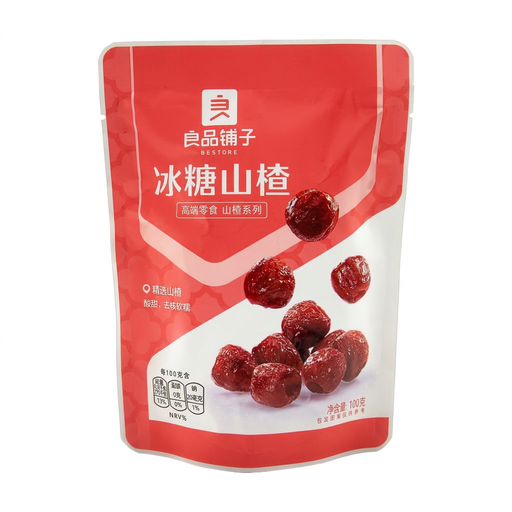
Why it suits this profile: A small 100-gram pack offers an easy introduction to Chinese sweets with a sweet-and-sour flavour. The product is ready to eat and can also be served with tea.
The ingredient ratio states 67.73% hawthorn, and the product weight is clearly shown. This makes it easier to judge the flavour and quantity in advance.
Ready to eat, compact packaging and 299 kcal per 100 grams according to the product information.
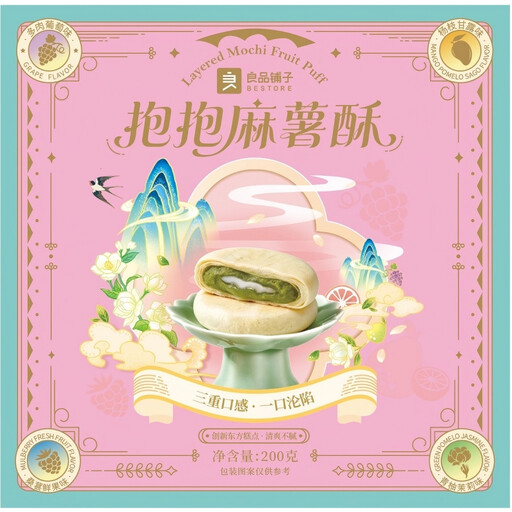
Why it suits this profile: The box contains four 50-gram flavours: mango pomelo sago, pomelo jasmine, grape and mulberry. It is ideal for serving with tea or when you want to offer several different flavours.
The packaging states the portions, flavours, allergens and nutritional values for each flavour. It also clearly states that the product is ready to eat.
Four individually wrapped pastries, a fruit filling of at least 45% per variety and storage instructions for a cool, dry place.

Why it suits this profile: This spicy Chinese snack consists of 20 individual 18-gram portions. That makes it practical for sharing, taking with you or enjoying over several snack breaks.
The packaging clearly states the number of portions and the main allergens. The nutritional information also lists 3.2 grams of salt per 100 grams.
20 individually wrapped snacks, ready to eat and made with konjac flour, tapioca starch, chilli and Sichuan pepper.
If you want to buy mochi, you can choose between mochi pastries with a longer shelf life and varieties containing matcha or red bean. For BAMBOO HOUSE Matcha Mochi, check in particular for sesame and the amount of glutinous rice flour.
For a dessert at home, taro balls and glutinous rice balls are more suitable. Fresh ASIA’s three-colour taro balls contain sweet potato, purple sweet potato and taro. You can use them in sweet soup, tofu pudding or shaved ice. CHINATOWN rice balls contain peanuts and sesame and are frozen. They are therefore not a ready-to-eat snack: thorough cooking is essential.
For savoury Asian snacks, tofu strips, seasoned seeds and spicy skewers are practical options. When choosing Youyou chicken feet, note the high salt content of 4.60 grams per 100 grams and the egg and sulphite allergens. With Chinese nuts and seeds, such as macadamia nuts and pumpkin seeds, serving size, nut allergens and resealability are important considerations.
Mochi, candied hawthorn, brown sugar dough twists or barley cakes are a good match for tea. Always check the best-before date on the packaging and store the product according to the stated conditions.
We’ve put together a complete, up-to-date list of products that fully meet these strict selection criteria and the applicable European safety regulations.
Look for “ready to eat” or “ready-to-eat” in the product information. Tofu strips, konjac snacks, spicy wheat sticks, candied hawthorn and jelly snacks can generally be eaten straight from the packaging. Frozen desserts usually need to be cooked.
Mochi and pastries with a longer shelf life should usually be stored in a cool, dry place away from direct sunlight. Taro balls and glutinous rice balls should be kept in the freezer at the stated temperature. Once thawed, frozen products must not be refrozen. Always follow the label for the specific product.
Yes, several small packs work well for sharing. For example, choose a mix of sweet mochi, Chinese sweets, nuts and seeds, along with a few spicy snacks. Check the allergens beforehand and keep snacks containing lots of chilli or salt separate, so guests can choose for themselves.
