
Vandaag of morgen in huis

Kwaliteit gegarandeerd

Welkomstaanbiedingen ontgrendelen: GRATIS bezorging | Tot 80% korting | Gratis 30 dagen JoyPlus-proefperiode
Download de app
Buying a bottle of Chinese sauce seems simple, until you discover that many products are intended for entirely different uses. Sweet chilli sauce, for example, works well as a dip, but does not give a stir-fry the same depth of flavour as oyster sauce or black bean sauce. Pack sizes can also be misleadingly small when you need several portions for a hotpot.
This guide will help you compare Chinese sauces based on flavour, use, ingredients, allergens and ease of storage. That way, you can avoid leaving a sauce unused at the back of the fridge.
Terms such as Asian sauces, chilli sauce or stir-fry sauce do not always tell you enough about how a product should be used. Pay particular attention to the product category:
Chinese seasonings are often concentrated, so the nutritional information on the packaging is important. For example, the 255 g Lee Kum Kee Panda Oyster Sauce lists 29.5 g of salt per 100 g. Haidilao Hotpot Seasoning Hot and Sour Flavour lists 11.2 g of salt per 100 g. Use products like these as seasonings and add only a little extra salt at first while cooking.
Fat content can also vary considerably. According to the product information, a clear, oil-based hotpot base may contain significantly more fat than a water-based sauce. If you are preparing several dishes, it is worth taking the portion size and intended use into account.
Many Chinese sauces contain soya and wheat. Sesame, peanuts, molluscs and mustard are also common. Always check the current ingredients list on the label, particularly if you have food allergies.
Storage advice varies from one product to another after opening. Some sauces need to be refrigerated, such as black bean sauce and certain chilli sauces. Other products can be stored in a cool, dry place according to the packaging. Also check the best-before date, and do not use a jar if the packaging is damaged.
Decide what you need the sauce for:
Not every sauce is ready to eat. A hotpot base, for example, needs to be dissolved in water and brought to the boil. Haidilao Hotpot Seasoning Hot and Sour Flavour 125 g is intended for approximately 500 to 600 ml of water and must be cooked.
According to the description, other products are ready to use as seasonings, but are added to a dish that still needs further cooking. With char siu sauce, the sauce serves as both a marinade and a glaze. For 500 g of pork, the product information recommends approximately 70 to 100 g of sauce, followed by roasting, grilling or cooking in an air fryer.
A small pack is convenient for a one-person household or for trying a flavour for the first time. A larger jar makes more sense if you cook regularly or prepare food for several people. Also look out for:
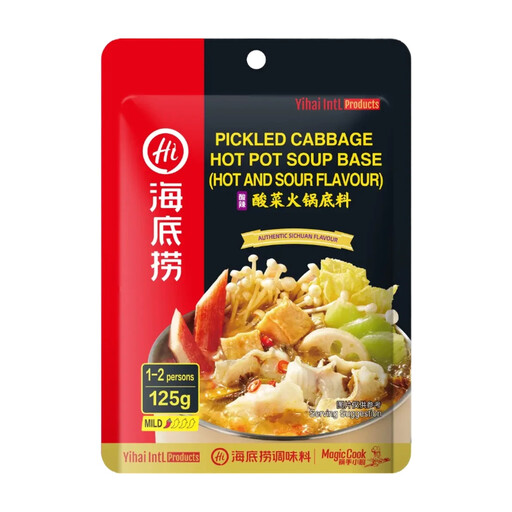
Why it suits this profile: The individual portion pack is practical for a small pan or a meal for one or two people. You do not need to open a larger bag.
The preparation instructions clearly state the amount of water required, making preparation more predictable than measuring out individual seasonings yourself.
125 g per pack; suitable as a hotpot base and for fish or noodles; preparation volume of approximately 500–600 ml.
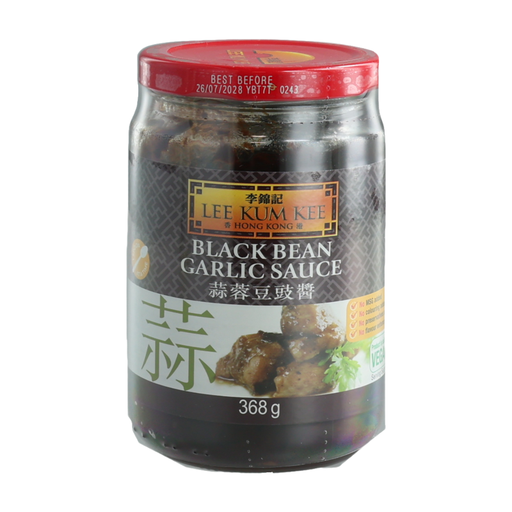
Why it suits this profile: This sauce combines fermented black beans with garlic, making it suitable for a range of Chinese dishes.
The product information lists specific uses such as stir-frying, marinating and steamed dishes, rather than giving one vague all-in-one application.
368 g contents; black beans and garlic in one sauce; contains soya and wheat, so check the allergens beforehand.
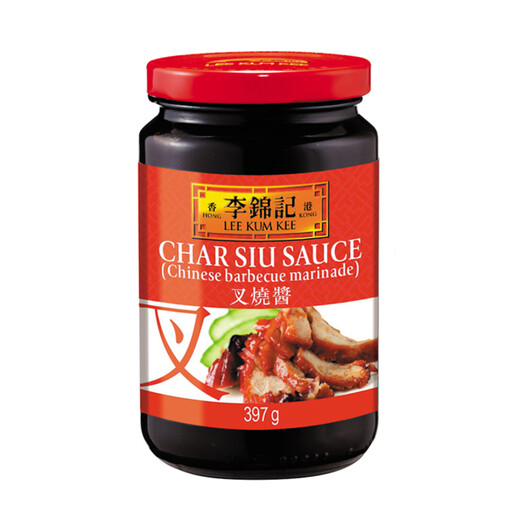
Why it suits this profile: If you regularly marinate or grill meat, or use an air fryer, this sauce is specifically formulated for marinades and glazing.
The product description gives a specific ratio of 70–100 g of sauce per 500 g of pork and lists several preparation methods.
397 g contents; suitable for marinating and glazing; contains soya and wheat; refrigerate after opening.
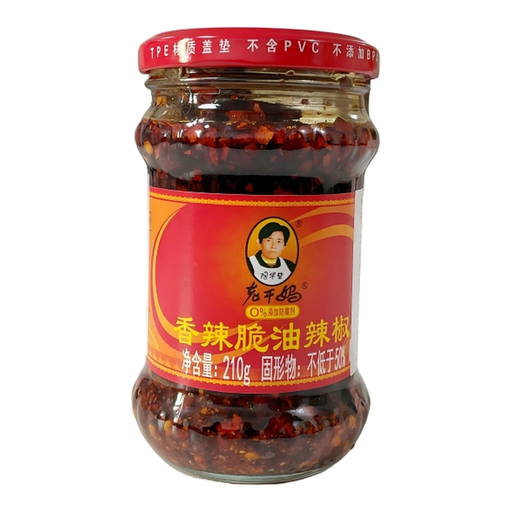
Why it suits this profile: The combination of oil, chilli pieces, peanuts and black beans works well with noodles, rice, dumplings and hotpot dips.
The product information lists the specific ingredients and allergens, so you know the sauce is not made solely from oil and chilli.
210 g contents; ready to use; according to the product information, contains 20% chilli powder, 8% peanuts and 6% soya.
Store unopened bottles and jars according to the label: usually in a cool, dry place away from direct sunlight. Seal the packaging properly after use. Refrigerate a product after opening when instructed to do so. With concentrated sauces, start with a small amount and taste before adding more. This is particularly useful with oyster sauce, bean paste and chilli oil.
Keeping an open jar for longer is not automatically more economical. If you use a sauce infrequently, a smaller pack may be more practical. For families, keen cooks or small catering businesses, a size of 368 to 907 g may be more convenient, provided the sauce is used regularly.
We have compiled a complete, up-to-date list of products that fully meet these strict selection criteria and the applicable European safety regulations.
Oyster sauce, black bean sauce and soybean sauce are practical choices. Oyster sauce adds a sweet, savoury flavour, while black bean sauce has a stronger, fermented taste. Add the sauce during or towards the end of stir-frying, and adjust the amount to suit the other salty ingredients.
Hoisin sauce is thick, sweet and savoury, and is made partly from fermented soya beans. Sweet chilli sauce is generally thinner or smoother, combining sweetness with mild to moderate heat. Hoisin works well with marinades, Peking duck and stir-fries, while sweet chilli sauce is often used as a dip or glaze.
This depends on the sauce and the label. Some products need to be refrigerated after opening, while others can be kept tightly sealed in a cool, dry place. Always check the best-before date, storage instructions, and the smell, colour and texture before using an opened sauce.
