
Vandaag of morgen in huis

Kwaliteit gegarandeerd

Welkomstaanbiedingen ontgrendelen: GRATIS bezorging | Tot 80% korting | Gratis 30 dagen JoyPlus-proefperiode
Download de app
Chinese red date snacks are available as soft dried fruit, crispy slices, sesame balls and tea. This may make comparison seem straightforward, but the differences in ingredients, texture, serving size and intended use can be significant. Focusing only on the packaging or terms such as “natural” may lead you to choose a product that is less suitable for everyday use.
This buying guide from the Joybuy Product Recommendation Officer helps you distinguish marketing language from verifiable product information. You will learn what to look for when choosing red dates, which options are suitable for tea and desserts, and which Chinese snacks are practical for taking on the go.
Red dates naturally contain high levels of carbohydrates and sugars. Processed snacks may also contain added sugar, honey, maltose syrup or palm oil. Always check the ingredients list and nutritional values per 100 grams.
For example, Haoxiangni Red Date Black Sesame Balls contains black sesame, red dates, maltose syrup and honey according to the product information. One serving of approximately 21 grams contains 6.3 grams of sugar. The statement “without preservatives or artificial colourings” in the product description therefore does not mean that the product is sugar-free.
Crispy red dates and dried red dates can be appealing thanks to their light texture. However, check how they are prepared and how much fat they contain. According to the label, Haoxiangni Crispy Red Dates 210g consists of 80% winter jujube and 20% palm oil. It is ready to eat, but contains 18.2 grams of fat and 463 kcal per 100 grams.
A product whose ingredients list contains only red dates has a different composition from a snack made with oil, sugar or syrup. “Crispy” therefore primarily describes the texture—not necessarily the nutritional profile.
Pitted red dates are more convenient for tea, porridge, desserts and cooking. However, the product name may sometimes differ from the details shown on the packaging. Check that terms such as “pitted”, “pitless” or “without pits” are also reflected in the ingredients and usage information.
With whole red dates containing pits, you should allow for some additional preparation. This is particularly relevant if you plan to use them daily in date tea or hot dishes.
Ingredients are listed in descending order by weight. A percentage makes comparisons more meaningful. For example, Sweet Wheat and Jujube Tea 72g contains at least 82% red dates and at least 11% liquorice according to the product information. The product also contains wheat and is therefore unsuitable for people who need to avoid gluten.
When choosing red date and sesame snacks, watch for allergens such as sesame, soy, peanuts, tree nuts, milk and wheat. The black sesame balls contain sesame and may, according to the packaging, contain traces of soy, wheat, peanuts, tree nuts and milk.
A large bag is not always the best value if you are still discovering which flavour and texture you prefer. A small 35-gram pack, such as Be&Cheery Crispy Sweet Winter Jujube, is practical for a first purchase or for taking on the go. For regular use, larger packs may be more suitable, for example 280, 390, 500 or 900 grams.
Individually wrapped portions make serving and transport easier. However, check how much additional packaging this involves and whether the portion sizes match your needs.
Store dried products in a cool, dry place away from direct sunlight. Seal opened packaging securely. For crispy products, an airtight container can help limit moisture absorption.
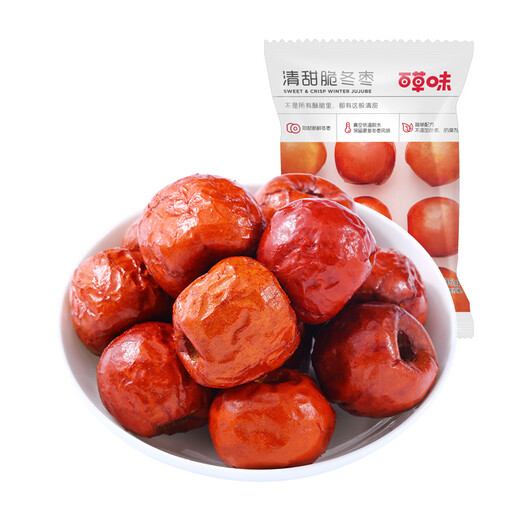
Why it suits you: A small pack for discovering crispy jujubes without committing to a large supply.
At 35 grams, the pack lets you assess the flavour and crisp texture on a small scale first.
At least 80% winter jujube, with palm oil; ready to eat.
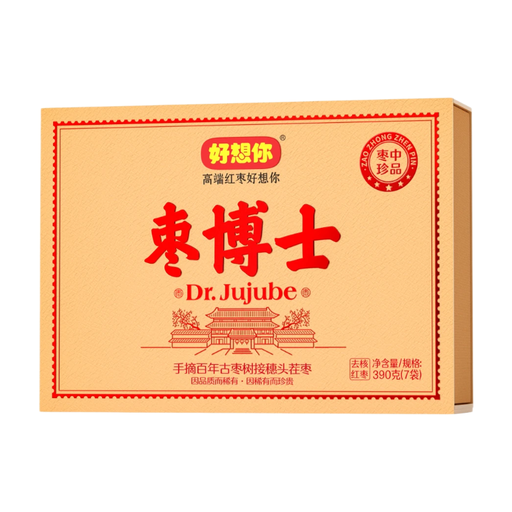
Why it suits you: Ideal for anyone looking to use soft, pitted red dates as a snack or as an ingredient in tea and desserts.
The product information states that the dates are pitted; check the packaging before use as well.
390 grams, ready to eat and listed as containing only jujube.
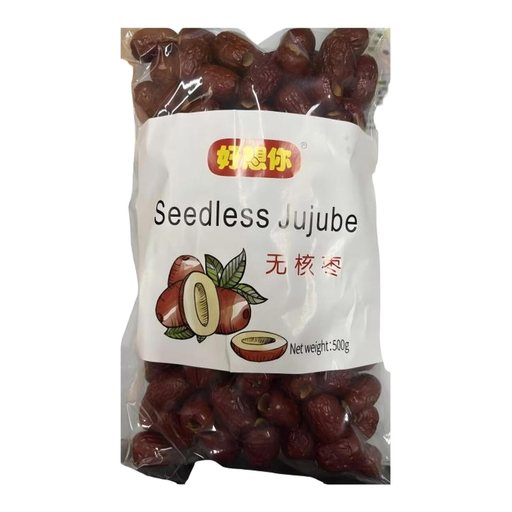
Why it suits you: A larger pack for people who regularly add red dates to tea, soup, porridge or desserts.
The “pitted” designation simplifies preparation compared with whole dates containing pits, but always verify the packaging yourself.
500 grams, 100% red dates according to the product information, and suitable for a range of uses.
If you are looking for a more intense snack, consider Haoxiangni Black Sesame Crispy Jujube 108g. This combination of red dates, sesame, sugar and palm oil has a crispy texture and comes in individual portions. For a soft snack with nuts, Hao Xiang Ni Red Small Pie lists 60% red dates and 20% walnuts.
For a hot drink, Sweet Wheat and Jujube Tea is a practical choice. The tea is caffeine-free according to the product description, but it does contain wheat and liquorice. Prepare it according to the instructions using 200 to 250 ml of boiling water and steep for 5 to 10 minutes.
Browse our current range of Chinese red dates and compare ingredients, pack sizes, textures and uses to find the right option for your needs.
Yes. Soft and pitted red dates are listed as suitable for tea. You can cut larger dates open if necessary to help release more of their flavour and aroma. With ready-made tea, check for additional ingredients such as liquorice and wheat.
Store them in a cool, dry place away from direct sunlight. Reseal the bag securely after opening. Crispy varieties may soften when they absorb moisture. Always follow the storage instructions on the packaging and check the best-before date.
For occasional snacking, 35 to 108 grams is a manageable size. If you use red dates for tea and desserts, packs of 280 to 500 grams may be more suitable. A 900-gram pack with individual sachets is practical when portion control and portability matter. Also check the ingredients, allergens and nutritional values per 100 grams.
