
Same-day & Next-day Delivery

Quality Guaranteed

Unlock Your Welcome Offers: FREE Delivery | Up to 80% OFF | Free 30-day JoyPlus trial
Download the APP
When you buy Chinese pork products online, you often focus on the photo, the flavour description and the discount. That’s understandable, but it’s not enough. An attractive packet tells you very little about the amount of pork, the cooking method or the allergens. Frozen products can also be inconvenient if you don’t have space at -18 °C.
With this practical selection guide, you’ll see what to look for in Asian pork products, such as Chinese pork dumplings, pork dumplings, xiao long bao, bao buns, Chinese sausage and ready-to-eat pork snacks.
Terms like “generously filled”, “traditional” or “premium” don’t give you measurable information. So look at the quantitative ingredient declaration. For example, the Freshasia Pork & Sweetcorn Dumplings state 23% pork and 11% sweetcorn. The Pork & Chive Dumplings contain 25% pork and 15% chives.
A thin wrapper or a large packet doesn’t automatically mean there’s more meat inside. Compare the percentage of pork per 100 grams and also check the portion size.
Not every product is ready to eat straight away. Many frozen dumplings, pork balls and bao buns need to be fully heated. A xiao long bao also contains hot liquid after steaming. Other products, such as pork floss or braised pork trotter, are ready to eat according to the product information.
Always check:
Many Chinese pork snacks contain wheat, soya and sesame. Some varieties also contain egg, milk, shellfish or sulphites. For example, the Freshasia Xiao Long Bao contains wheat, soya, prawn and sesame. The pork, shiitake and black fungus variety also contains dried prawn.
Check the actual packaging if you have a food allergy or intolerance. Product information can change. For frozen products, -18 °C or colder is a common storage instruction. Once defrosted, the product must not be refrozen according to the information provided.
With Chinese dumplings, the ratio of filling to wrapper strongly determines how the product is used. A 600g packet is practical for a family or multiple portions. Smaller packets, such as 300g, are better suited as a snack, starter or part of a meal with other dishes.
Also compare the flavour direction:
For a quick meal, dumplings that can go straight from the freezer are handy. Different varieties can be boiled, steamed or pan-fried. Boiling usually takes about 6 to 8 minutes; always follow the packet instructions.
Xiao long bao and bao buns are typically steamed. The Freshasia Soup-Filled Xiao Long Bao with Pork Filling (300g) has a steaming time of 8 to 10 minutes according to the product information. The FRESH ASIA Juicy Pork Buns (450g) also need to be thoroughly steamed.
Got an air fryer? Then the Wu Fang Zhai pork mooncakes are another option. These are cooked from frozen in the air fryer or oven. Check that your appliance matches the stated temperature and time.
Nutritional values help you compare products objectively. Pay particular attention to energy, fat, saturated fat, protein and salt per 100 grams. A dried Chinese sausage, for example, can be high in energy, fat and salt. The Laweiju dried sausage with Sichuan pepper states 430 kcal, 35g fat and 2.5g salt per 100g.
That makes such a sausage more suitable as a small snack or flavour enhancer than as a large main portion. Pork floss can be used as a topping on rice, noodles, congee or bread rolls. Use the amount yourself as portion control.
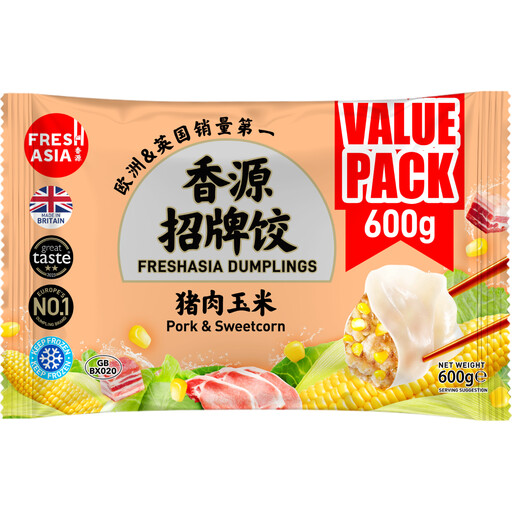
Why this fits the profile: The 600g packet is suitable for multiple portions and the dumplings can be boiled, steamed or pan-fried.
The product states 23% pork and 11% sweetcorn, so you can assess the filling based on verifiable information.
600g, suitable for three cooking methods and storage in the freezer at -18 °C or colder.
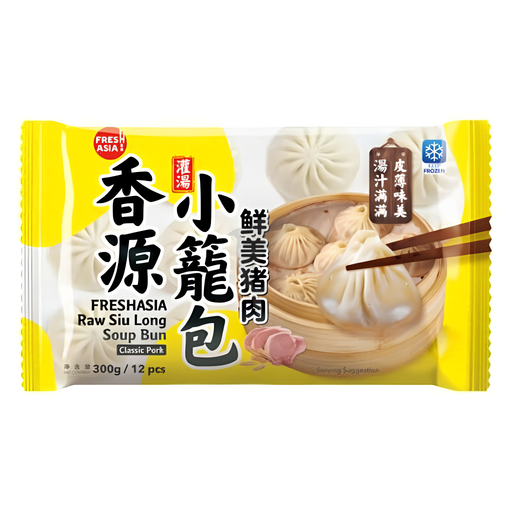
Why this fits the profile: This xiao long bao is for anyone looking for a steamed dumpling with a thin wrapper and soup filling.
The ingredients list states 30% pork and indicates allergens such as wheat, soya, prawn and sesame.
Steam from frozen in 8-10 minutes; 300g is suitable as a starter or light meal.
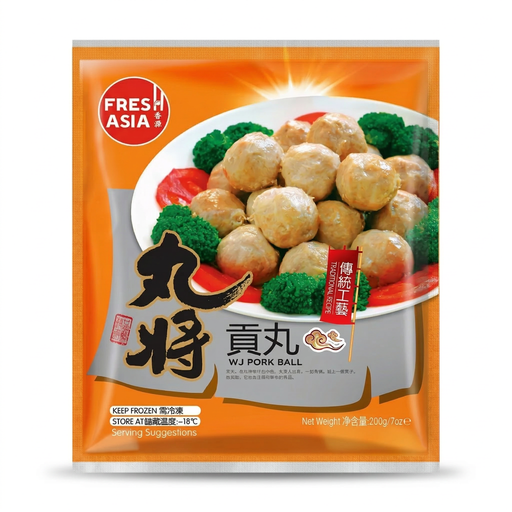
Why this fits the profile: These pork balls are handy for hotpot, soup, stews and stir-fries.
The cooking instructions clearly state that the product must be heated and should not be eaten raw.
200g, frozen and suitable for multiple dishes; the packaging lists soya and wheat as allergens.
We’ve put together a full, up-to-date list of products that fully meet these strict selection criteria and comply with current European safety regulations.
Follow the instructions on the packet. Many dumplings can be cooked straight from the freezer. Boil them for 6 to 8 minutes, until they float to the surface and are fully cooked through. Steaming usually takes 8 to 10 minutes. Do not eat raw filling and check that the centre is piping hot.
Xiao long bao are soup dumplings with a thin wrapper and liquid inside the filling. They are steamed and can be very hot after cooking. Ordinary pork dumplings are often boiled, steamed or pan-fried and usually don’t have a liquid soup filling.
First check whether the product is frozen, chilled or shelf-stable. Store frozen products at -18 °C or colder. Shelf-stable dried sausage should be kept cool, dry and out of direct sunlight according to the packaging. Different instructions may apply after opening. Always check the packaging and do not refreeze a defrosted product.
