
Vandaag of morgen in huis

Kwaliteit gegarandeerd

Welkomstaanbiedingen ontgrendelen: GRATIS bezorging | Tot 80% korting | Gratis 30 dagen JoyPlus-proefperiode
Download de app
Chinese plum snacks often combine sweet, sour and salty flavours, sometimes with a spicy or mildly hot note. That makes them appealing to fans of traditional Chinese snacks, but also difficult to compare online. A product called preserved plum, ume plums or dried plums can differ considerably in texture, sugar content, salt content and packaging.
So don’t focus only on the photo or words such as “traditional” and “natural”. The ingredients list and nutrition table provide a clearer picture. Below, you’ll learn about common pitfalls, which specifications to check and which Chinese plum snacks are suited to different situations.
Plum snacks are often low in fat, but that tells you little about their sugar or salt content. For example, UME HOUSE Green-Style Ume Plums 130g contains 57.6 grams of sugar and 2.3 grams of salt per 100 grams. Jiabao Preserved Plum 65g lists 42 grams of sugar and 8.5 grams of salt per 100 grams.
If you’re looking for a snack with less sugar, you therefore need to check the full nutrition table. A low-fat or sugar-free claim doesn’t replace checking the ingredients. Sugar-free varieties may, for example, contain sweeteners.
Chinese salted plums, pickled plums and sweet-and-sour plums are often sold with traditional flavour profiles. However, alongside plums, sugar and salt, they may also contain liquorice, flavourings, preservatives, food acids and several sweeteners.
Pay particular attention to whether sulphites are listed. Products containing E223 or other sulphites will generally include an allergen warning. With aspartame, look for the wording “contains a source of phenylalanine”. This is relevant, for example, for Jiajianzheng Prune 120G.
A 280- or 500-gram pack may seem good value, but it’s mainly suitable if you’re sharing or regularly eating plum snacks. Small bags and individually wrapped portions are more practical for taking on the go or eating at work. Also check whether the plums are pitted. 7FRESH Pitted Prunes 430g explicitly states that the plums are pitted; this isn’t always specified for other products.
The basic choice is simple:
Be aware that “ume plums” doesn’t always refer to exactly the same type of product as Japanese umeboshi when used by online shops. Check the ingredients and preparation method on the label.
At a minimum, compare these points:
The information on the product page is a useful guide. When buying, also check the packaging, as the ingredients, shelf life and mandatory labelling can vary between product batches.
For a short break or travelling, 60- to 90-gram bags are easy to manage. A 120- to 200-gram pack works better for sharing or enjoying over several snack breaks. A large bag or bucket containing 430 to 500 grams is suitable for families, offices or anyone who wants to stock up.
Store dried and pickled plums according to the instructions on the packaging: usually in a cool, dry place away from direct sunlight. Once opened, reseal the pack properly to help prevent drying out and loss of quality.
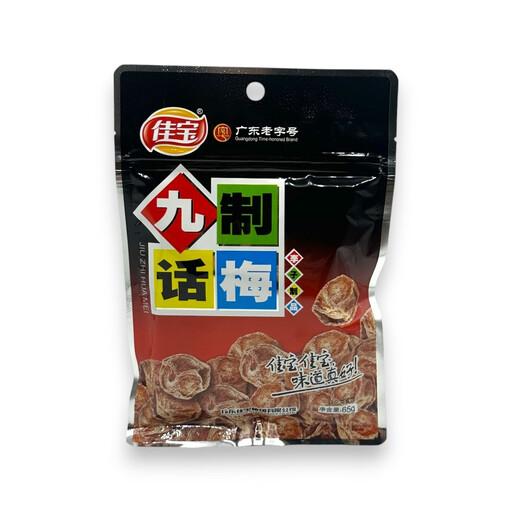
Why it suits this profile: A compact 65-gram pack for trying a classic sweet-and-sour plum snack without committing to a large pack.
The modest size helps minimise waste. However, check the listed 42 grams of sugar and 8.5 grams of salt per 100 grams.
65g pack; plum with sugar, salt and liquorice; ready to eat.
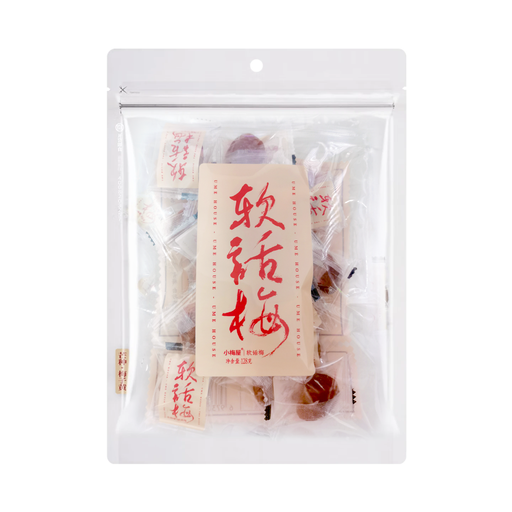
Why it suits this profile: For anyone looking for several layers of flavour and a soft, chewy texture in an individually wrapped snack.
The product information explicitly lists sweeteners and 9.4 grams of salt per 100 grams, so you don’t have to rely on the flavour description alone.
128g; individually wrapped; several sweet-and-sour, salty and herbal flavour notes.
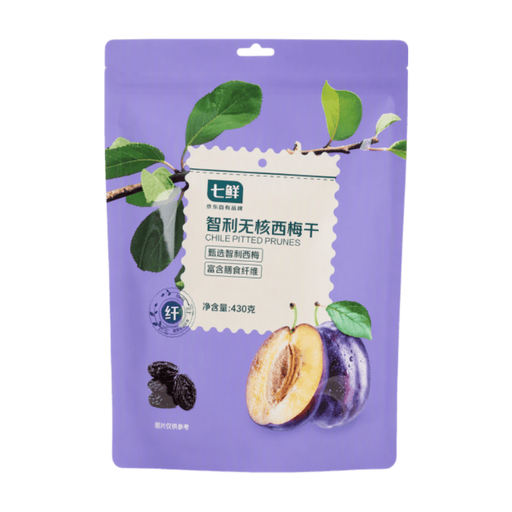
Why it suits this profile: A large pack for regular snacking, sharing or adding to yoghurt, porridge and baked goods.
The product name explicitly states “pitted”, so there’s no need to guess whether the plums have been stoned.
430g; pitted; 0 grams of fat and 0 grams of salt according to the stated nutritional values.
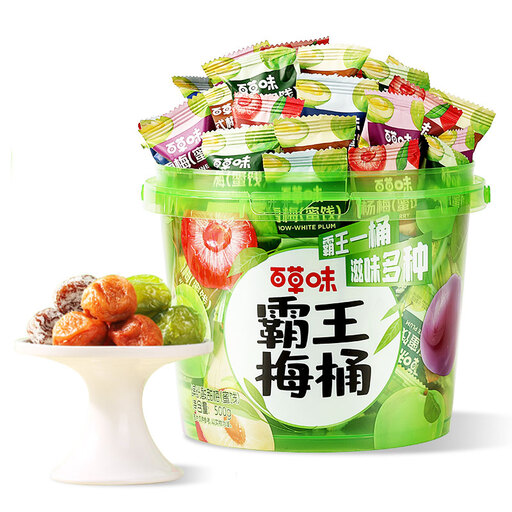
Why it suits this profile: The bucket contains 70 individual packs and five plum varieties, making it practical for sharing or enjoying over several snack breaks.
The contents are clearly divided into multiple portions. However, check the extensive ingredients list, which includes sweeteners and sulphites.
500g; 70 individual sachets; a combination of five types of plum.
We’ve compiled a complete, up-to-date list of products that fully meet these strict selection criteria and the applicable European safety regulations.
Not always. Some products are mainly dried fruit, while others are pickled or preserved with sugar, salt, liquorice, herbs and food acids. So read the ingredients list and check whether the packaging uses “dried plum”, “preserved plum” or a similar description.
There are varieties with no added sugar or with sweeteners. Jiajianzheng Prune 120G, for example, lists sweeteners instead of sugar and does not provide a sugar value. This doesn’t mean that the product is free from sweeteners. Also check the warnings for aspartame and phenylalanine.
Store the pack in a cool, dry place away from direct sunlight and seal it properly. Individually wrapped plums are more convenient when you’re taking small portions with you. Always follow the storage and best-before information on the label.
