
Vandaag of morgen in huis

Kwaliteit gegarandeerd

Welkomstaanbiedingen ontgrendelen: GRATIS bezorging | Tot 80% korting | Gratis 30 dagen JoyPlus-proefperiode
Download de app
If you’re looking for vegetarian meat-alternative snacks, you often want more than just a plant-based product. Your snack should taste savoury, have a firm or chewy texture and be ready to eat without any preparation. Chinese and Sichuan snacks often add chilli, Sichuan pepper, five-spice or mala seasoning.
However, it can be tricky to make sense of packaging information. A product labelled “beef flavour” isn’t automatically vegetarian, a high-protein snack may contain a relatively high amount of salt, and “vegan” claims aren’t always clearly substantiated. Use these practical checks to compare vegetarian snacks, vegan snacks and other ready-to-eat meat alternatives more easily.
Names such as vegetarian beef, vegetarian beef jerky or “spicy chicken flavour” usually refer to the taste or shape, not to animal-derived ingredients. Always check the ingredients list. Many Chinese meat alternatives are made from soya protein, wheat gluten, konjac or a combination of these.
Check the allergens too. Soya, wheat and sesame are common. A product made with wheat gluten, for example, isn’t suitable for a gluten-free diet, even if it’s plant-based.
A soya protein snack or seitan snack can contain around 20 grams of protein or more per 100 grams. This makes it an interesting option if you’re looking for a savoury snack between meals. However, salt levels can vary considerably.
In the product information for the options available, salt ranges from around 2.2 to 6.75 grams per 100 grams. So don’t just look at the protein content: compare salt, fat and portion size too.
“Mala” usually means a combination of heat and the lightly numbing aroma of Sichuan pepper. It’s not the same as a regular chilli flavour. A spicy vegetarian snack can also be soft, fibrous, crunchy or particularly chewy.
If you’re after a chewy texture, soya, wheat gluten or konjac are often good options. Lotus root, on the other hand, tends to have a crisp bite. Look for terms such as “chewy”, “crispy”, “hand-shredded” or “meat-like texture” in the product description.
Use protein content as a point of comparison, not as your only reason to buy. Taste, allergens and salt content also determine whether a snack suits your diet.
Check the allergens highlighted in bold on the label. In this product category, soya, wheat/gluten and sesame are particularly relevant. A product can be plant-based but still be unsuitable for someone avoiding gluten or soya.
For vegan snacks, also check whether the packaging explicitly says “vegan”. Product information may describe a snack as plant-based or vegetarian, but that doesn’t automatically mean it has a certified vegan claim.
Most of the ready-to-eat vegetarian snacks in this selection weigh between 60 and 140 grams. A smaller pack is handy for eating on the go or trying a new flavour. Individually wrapped portions are useful for a lunchbox, at work or when travelling.
Check the storage instructions: some products need to be refrigerated after opening, while others should be eaten soon after opening. Don’t buy a pack that’s swollen, leaking or damaged. Check the use-by date on the packaging, as it can vary between batches.
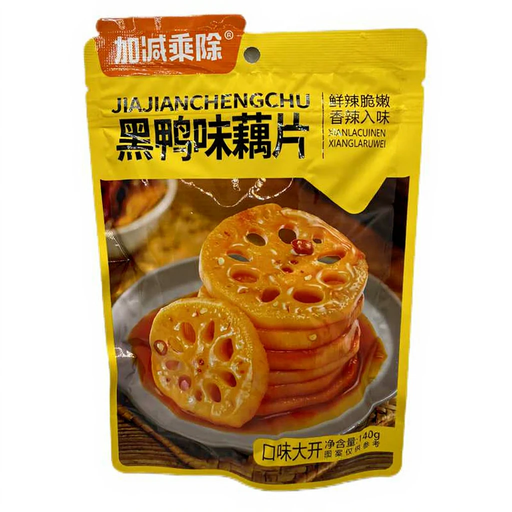
Why it suits this profile: An easy-going choice if you’d like to try Chinese snacks without immediately opting for a chewy meat alternative. The lotus root is ready to eat and, according to the product description, has a crunchy texture and a savoury, spicy flavour.
The product information lists lotus root as the main ingredient and gives nutritional values of 0.6 grams of protein and 4.4 grams of salt per 100 grams. So it’s clear that this is a flavourful snack, not a high-protein meat alternative.
Crunchy texture, 140 grams per pack and ready to eat as a snack, side dish or starter. Contains sulphites; check the label if you have an allergy.
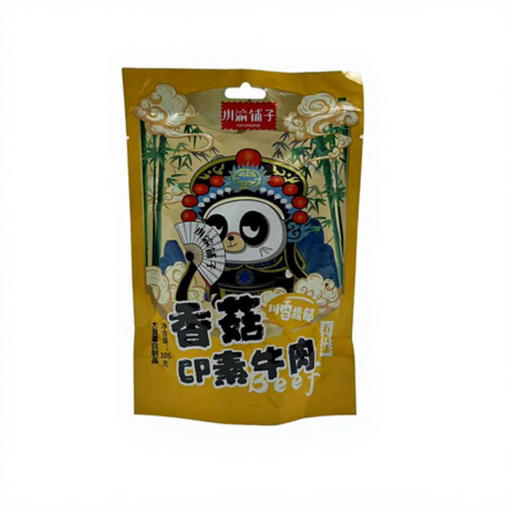
Why it suits this profile: A good choice if you’re after a more complex umami flavour. The product description lists soya protein, shiitake, soya sauce, sesame and five-spice.
The product information lists specific ingredients and nutritional values: 25.5 grams of protein and 1.61 grams of salt per 100 grams. Do check for soya and sesame.
25.5 grams of protein per 100 grams, shiitake as part of the recipe and a five-spice flavour profile. According to the product information, the snack is ready to eat.
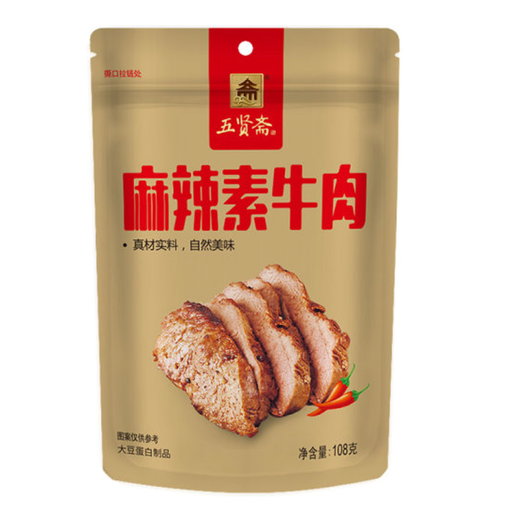
Why it suits this profile: A good match for fans of bold Sichuan snacks with chilli and Sichuan pepper. The product description mentions a chewy texture, individual mini packs and mala seasoning.
The product information lists both the main ingredient and nutritional values: textured soya product, 20.9 grams of protein and 6.75 grams of salt per 100 grams. This lets you weigh up the spicy flavour against the salt content.
Chewy soya product, 108 grams per pack and several small portions according to the product description. Contains soya; check the spice level and salt content before buying.
We’ve put together a complete, up-to-date list of products that meet these strict selection criteria and the applicable European safety regulations.
No, not necessarily. Some snacks contain only plant-based ingredients, but always check the label and allergen information. Look for an explicit vegan claim if that’s important to you. Soya and wheat gluten are common ingredients, but they aren’t animal-derived.
Products made with soya protein, wheat gluten or konjac often have a firm, elastic or fibrous bite. A Wuxianzhai snack made with konjac has a different texture from a seitan snack made with wheat gluten. Lotus root is usually crunchier and less like meat.
Store unopened products according to the label, usually in a cool, dry place away from direct sunlight. After opening, some snacks need to be refrigerated or eaten soon. Check the packaging and don’t use a product that’s swollen, leaking or damaged.
