
Vandaag of morgen in huis

Kwaliteit gegarandeerd

Welkomstaanbiedingen ontgrendelen: GRATIS bezorging | Tot 80% korting | Gratis 30 dagen JoyPlus-proefperiode
Download de app
Chinese pickled mustard tuber, also known as zhacai, is a ready-to-eat Chinese side dish with a firm bite and a savoury, slightly tangy flavour. You serve it with rice, noodles, congee or steamed buns. Yet many packets look alike, while the differences in salt content, spiciness, texture and portion size can be quite significant.
If you only look out for words like “crunchy”, “traditional” or “premium”, you could end up buying a product that doesn’t suit your eating habits. Below are the key points to check, followed by a few product choices for different households in the UK.
Pickled mustard greens are preserved with salt. As a result, the salt content can vary greatly from brand to brand. Always check the nutritional information per 100g and don’t just look at the front of the packet.
For example: the Jixiangju Reduced-Salt Preserved Mustard Tuber Heart lists 11g of salt per 100g. The name refers to a reduced-salt version, but that doesn’t mean the product is low in salt by general dietary standards. The Wujiang Crisp Mustard Tuber lists 5.1g of salt per 100g, while the Wujiang Spicy Pickled Mustard Tubers lists 3.4g of salt per 100g.
The flavour isn’t just determined by chilli. Ingredients such as garlic, ginger, star anise, fennel, sesame oil, sugar and soy sauce all influence the final result. If you’re looking for a neutral pickled mustard tuber, it’s a good idea to read the ingredients list.
Also watch out for allergens. Many products list mustard, sesame, soya or wheat. Products with sweeteners or flavour enhancers aren’t necessarily unsuitable, but the information should match your own preferences.
A 400g packet or a box with multiple portions might seem appealing for a family, a student house or a catering kitchen. However, once opened, pickled vegetables often need to be kept refrigerated and consumed quickly. For one person, sachets of 70 to 80g or individually wrapped portions are often more practical.
Compare at least these points:
A lower salt content can make the flavour milder, but it doesn’t tell you anything about the overall taste experience. Rinsing can help reduce the salty impression with some products. After that, do check the preparation instructions on the packet.
The characteristic quality of zhacai is its firm, crunchy bite. The cut determines how you use the product:
“Fresh-pressed” or “crispy” are product descriptions. So also assess the ingredients, shelf life and packaging. According to brands’ own product information, a particular preparation method can help support crunchiness; that’s no guarantee for every individual portion.
A small 80g sachet is fine for one or two meals. Multipacks with, for example, four or five sachets are handy if you want to keep portions separate. Large packs of 400g times twenty are mainly relevant for heavy use, larger households or catering.
Store unopened products according to the label, usually in a cool, dry place. Once opened, many varieties need to be kept refrigerated and consumed quickly. Always check the best-before date and the current information on the packet.
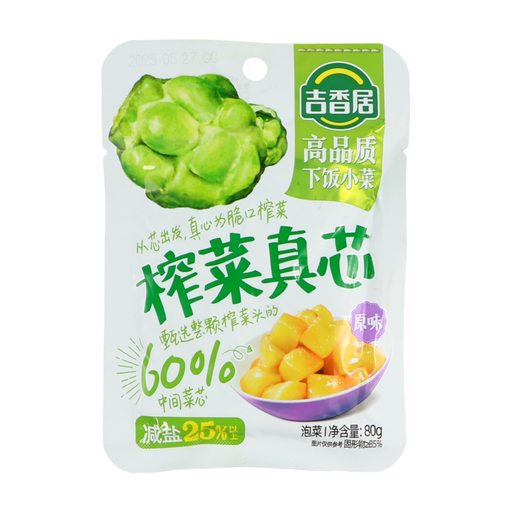
Why this fits the profile: A small packet is easy to manage when you’re trying Chinese pickled mustard tuber for the first time or only need a side dish occasionally.
The 80g portion limits waste. Do check the stated salt content of 11g per 100g before you order.
Original flavour, shreds, ready to serve and suitable for congee, noodles and rice.
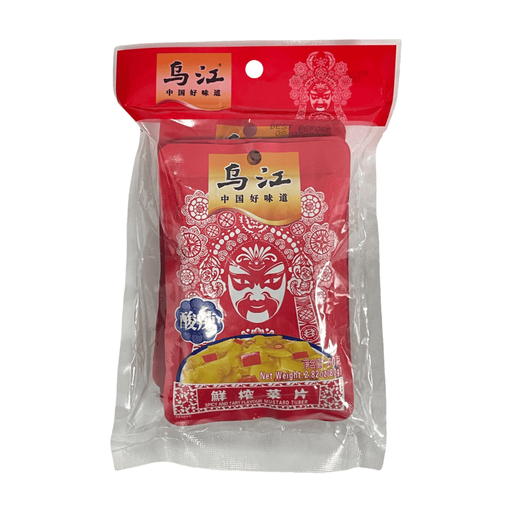
Why this fits the profile: Suitable for enthusiasts who pay attention to cut, bite and a clearly described flavour profile.
The product information states 87.6 per cent pickled mustard tuber and gives 6g of salt per 100g, making comparison easier.
Slices with a crunchy texture, lightly spicy flavour and use as a side dish or cooking ingredient.
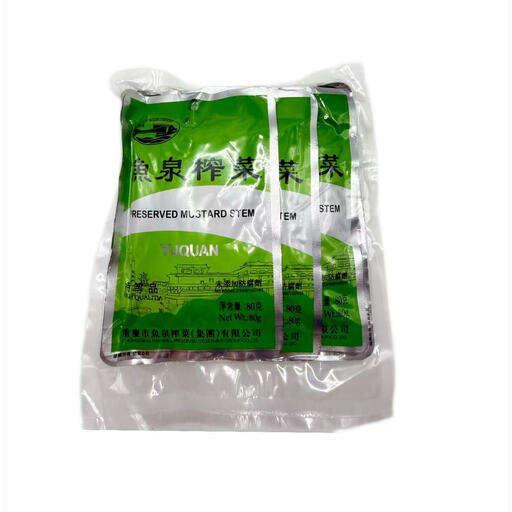
Why this fits the profile: The box of 20 packets is aimed at households, bulk buyers and heavy use in a professional kitchen.
The individual packets help keep unopened portions separate. A box of 8kg only makes sense with regular consumption.
Shreds, 89.05 per cent mustard stem according to the product information and 5.2g of salt per 100g.
We’ve put together a full, up-to-date list of products that fully meet these strict selection criteria and comply with current European safety regulations.
Zhacai is usually made from the thickened stem or tuber of mustard greens. Labels may also use terms such as mustard tuber, mustard stem or Chinese mustard greens. The cut and seasoning differ per product, so check the ingredients list and product photo.
That depends on your taste and the salt content. You can rinse a small amount if the vegetable tastes too salty. This may also wash away some of the seasoning. When using it in soup or stir-fries, you can add the vegetable directly and not add extra salt to the dish.
Always follow the label. Many varieties need to be kept refrigerated after opening and eaten quickly. Individual sachets are therefore handy if you don’t cook a Chinese meal every day. Before eating, check the smell, colour, packaging and the stated storage advice.
