
Vandaag of morgen in huis

Kwaliteit gegarandeerd

Welkomstaanbiedingen ontgrendelen: GRATIS bezorging | Tot 80% korting | Gratis 30 dagen JoyPlus-proefperiode
Download de app
If you want to make Sichuan noodles, Chongqing noodles or a simple bowl of noodle soup at home, you’ll quickly notice that Chinese noodles vary greatly in shape, texture, cooking time and packaging. A wide noodle that holds sauce well, for example, behaves very differently from a thin noodle used for Dan Dan noodles.
However, the packaging doesn’t always tell the full story. So, before you buy, keep a few practical points in mind.
Terms like hand-rolled, hand-cut or hand-pulled often refer to the shape or production method. Many of these products are dried noodles with a shelf life that makes them suitable for storing in your kitchen cupboard. Always check whether the product is dried, pre-cooked or ready to eat.
Wide noodles usually have a larger surface area. This means they hold sauces and broth well, but they may be less suitable for a light soup or a quick stir-fry when you’re after a finer texture. Look at the stated cooking time and shape: ribbon-shaped, round and thinly cut noodles each give a different result.
The flavour packets make for a quick meal, but the nutritional values vary considerably. For example, the product information for Jin Mai Lang Chongqing Style Noodles states 5.7 grams of salt per 100 grams. For Lamianfan Chongqing Small Noodles, 25.8 grams of salt per 100 grams is listed. These values refer to the product as stated on the label; check the packaging for the most up-to-date information.
If you wish, you don’t have to use all the sauce or seasoning packets. Also watch out for allergens such as wheat, gluten, soya, sesame, peanuts and barley.
The shape determines how the noodle feels and how much sauce it carries.
Products such as Bai Xiang Knife-shaved noodles state a width of around 8 mm. That’s a more concrete reference point than just a marketing term like “extra chewy”.
Check whether you need to boil, soak or simply mix the noodles with sauce. Dried Asian noodles usually need to be cooked in boiling water for a few minutes. The times stated in this selection range from approximately 3 to 8 minutes.
Instant noodles are handy on busy days, but check whether the product:
According to the product description for A'Kuan, the noodle cakes are not fried and need to be soaked in hot water for about 4 to 5 minutes. That’s a product specification, not a general statement about nutritional value or health.
A portion of 115 or 210 grams is practical for one quick meal. For families or regular noodle meals, packs of 800 grams to 1.82 kilograms are better value per portion, provided you store them in a dry, well-sealed container.
Also pay attention to:
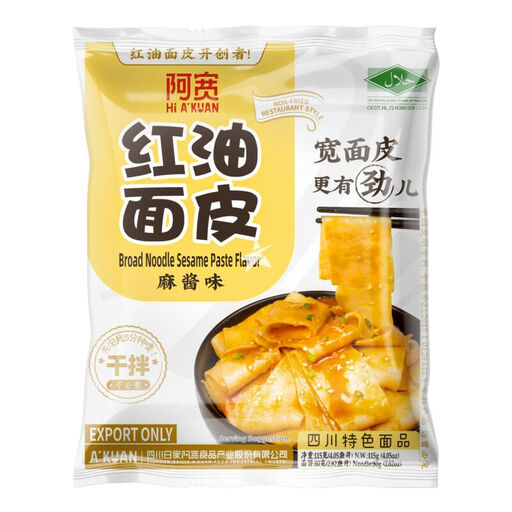
Why this fits the profile: A compact portion with wide noodles, sesame paste, red chilli oil and separate flavour packets. Handy if you want to try spicy Sichuan-style noodles for the first time.
The packaging states the portion size, cooking time of 5-6 minutes and the allergens present. This way you know what you’re buying before you purchase.
Wide noodle shape, sesame paste with a stated amount of 46% in the sauce and a 115-gram portion.
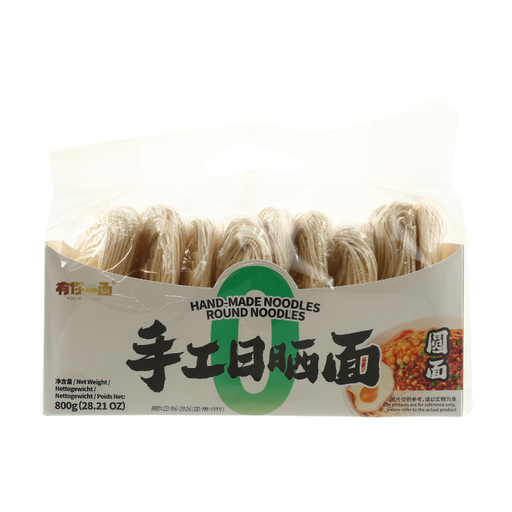
Why this fits the profile: Ideal for anyone looking for a bulk pack with a simple ingredients list of wheat flour, water and salt.
The product information clearly states that cooking is required and gives a cooking time of 5-8 minutes. The packaging therefore doesn’t rely on vague preparation claims.
Round, dried noodles in an 800-gram pack; suitable for soup, stir-fry dishes and cold noodles.
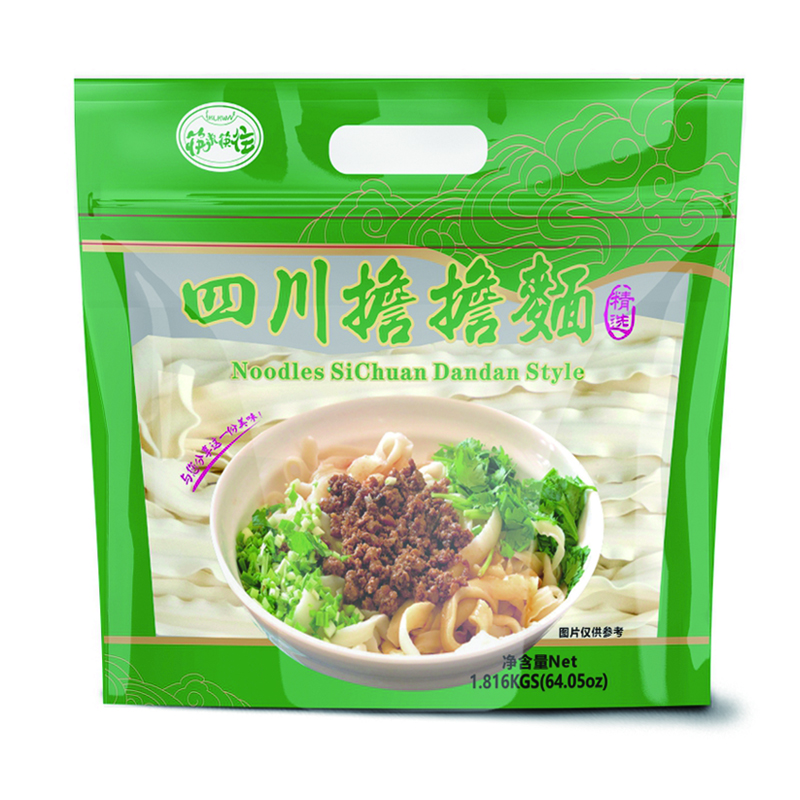
Why this fits the profile: A bulk pack for fans of Sichuan noodles, Dan Dan noodles and spicy stir-fry dishes.
The product specification states a round noodle width of 0.125 cm, a length of 20 cm and a cooking time of around 5 minutes.
1.816 kilograms of dried noodles; according to the product description, suitable for soup, stir-fry, cold noodles and hotpot.
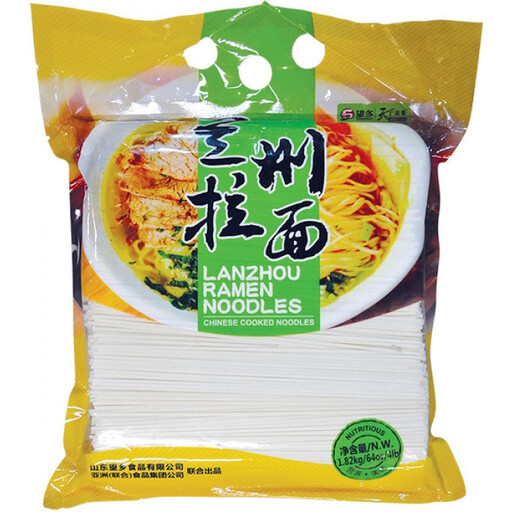
Why this fits the profile: The large pack suits families, meal-preppers and households that often make Lanzhou noodle soup or other noodle dishes.
The ingredients list is straightforward: wheat flour, water and salt. The net weight of 1.82 kilograms is also clearly stated.
Large bulk pack with, according to the product description, a firm, smooth and springy texture.
We’ve put together a full, up-to-date list of products that fully meet these strict selection criteria and comply with current European safety regulations.
Use plenty of boiling water and stir the noodles immediately after adding them. Stick to the stated cooking time and drain them well. For cold noodles, you can briefly rinse them with cold water. For stir-fry dishes, it helps not to overcook the noodles, as they will continue to cook in the pan.
For noodle soup, round, hand-rolled or thinly cut noodles are practical choices. Lanzhou noodles work well with a clear broth, while wide noodles carry more sauce and a hearty broth. Always check whether the noodle needs to be cooked separately or can go straight into the soup, according to the packaging.
Store unopened dried noodles according to the date on the packaging, in a cool, dry place. Once opened, keep the packaging well sealed and protected from moisture. Instant products with sauce packets are usually intended to be eaten immediately after preparation. Always check the packaging, ingredients and best-before date before use.
