
Vandaag of morgen in huis

Kwaliteit gegarandeerd

Welkomstaanbiedingen ontgrendelen: GRATIS bezorging | Tot 80% korting | Gratis 30 dagen JoyPlus-proefperiode
Download de app
A Chinese mushroom sauce can quickly add more flavour to a bowl of rice, noodles, tofu or stir-fried vegetables. However, these products vary widely. One is a salty broth in granules, another a thick sauce with oil, sugar, pulses or chilli. If you only look at the front of the packaging, you could end up buying a product that doesn’t suit your everyday cooking.
In this buying guide from the Joybuy Product Recommendation Officer, you’ll discover what to look for when choosing Chinese mushroom sauce, shiitake sauce, mushroom powder and other Asian seasonings.
A product name may refer to mushrooms, yet the actual mushroom content could be limited. Always check the ingredients list and the percentage of mushroom. For example, Zhongjing Mushroom Sauce Original Flavor states at least 70% Xixia shiitake mushrooms according to the product information. In other sauces, the flavour mainly comes from soy sauce, salt, sugar, oil, yeast extract or flavour enhancers.
“Vegetarian” means that, according to the product information, no meat ingredients have been used, but it doesn’t automatically mean the product is free from milk, egg or other animal-derived ingredients. The LEE KUM KEE Mushroom Vegetarian Stir Fry Sauce is described as suitable for vegetarians and vegans; the ingredients list includes water, sugar, salt, mushroom extract and soy sauce. If you follow a vegan diet, always check the current label.
A mushroom sauce for rice and noodles can be concentrated. As a result, a small amount is often enough, but the salt content can be high. For instance, Totole Granulated Mushroom Bouillon states 17,000 mg of sodium per 100 grams. Healthy Boy Mushroom Vegetarian Sauce contains 11 grams of sugar and 8.2 grams of salt per 100 grams according to the product information. So compare the nutritional values, especially if you use the sauce regularly.
The form determines how you use the seasoning:
Also consider the texture. A smooth sauce works well as a base for a stir-fry, while a sauce with pieces of mushroom adds more structure to rice or noodles.
Look at which ingredients are listed first. These are typically the components present in the largest quantity. A sauce with lots of mushrooms has a different flavour profile than a product where oil, soy sauce or fermented bean paste dominates.
For a pronounced Chinese umami sauce, look out for shiitake, yeast extract, dried mushroom or mushroom extract. For a lighter seasoning, a soy sauce with a small amount of mushroom extract may suffice.
Many Chinese sauces contain soya and wheat. Some products also contain sesame, mustard, celery or milk. So always read the allergen information, even if you’ve bought the product before.
Also check:
An opened sauce often needs to be refrigerated. According to the product information, Ji Xiang Ju Original Flavor should be kept chilled after opening and used within seven days. Always follow the instructions on the packaging of the specific variant you’ve bought.
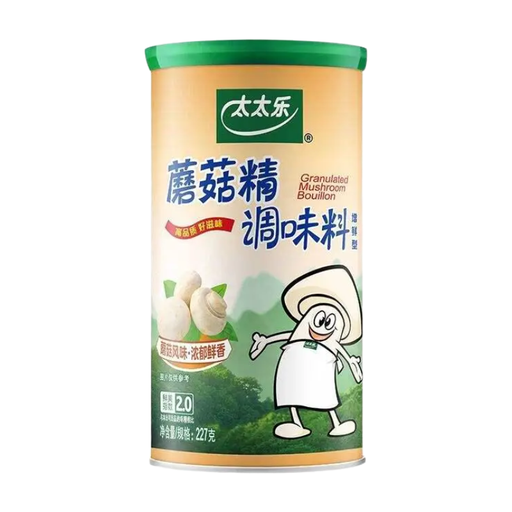
Why it fits this profile: The granule form is easy to measure and can be used in soup, stir-fries, sauces and marinades.
The product information lists dehydrated mushroom, but also flavour enhancer, salt and soya. So you know upfront that this is a concentrated broth, not a sauce with large pieces of mushroom.
227 grams, granule form and suitable for multiple cooking methods. Contains soya; check the salt content for your recipe.
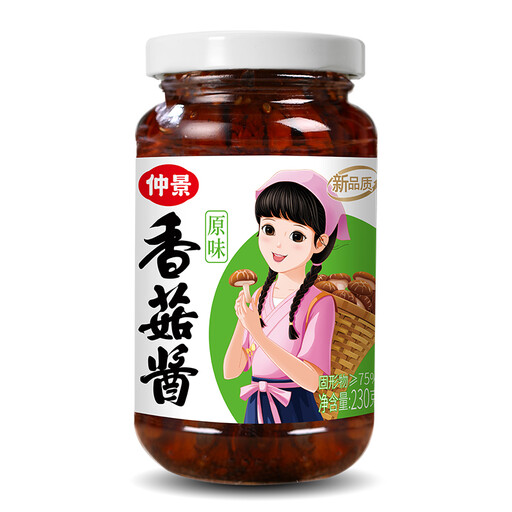
Why it fits this profile: If you’re after a hearty sauce with a clear mushroom texture, this variant contains no chilli and, according to the product information, at least 70% shiitake mushrooms.
The stated mushroom percentage makes the composition more verifiable than a product that only mentions a mushroom flavour.
Suitable for rice, noodles, soups and stir-fries. Contains soya and sesame; refrigeration after opening is recommended.
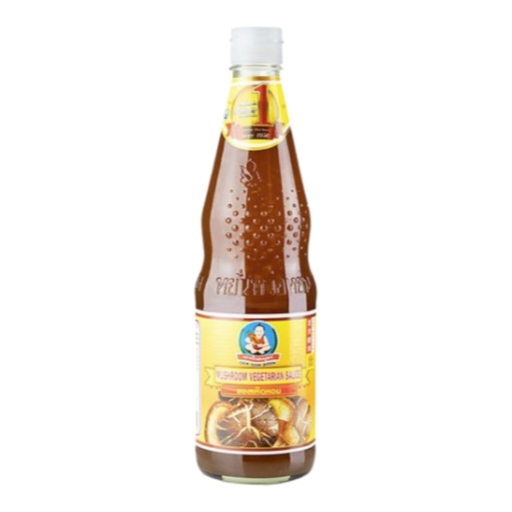
Why it fits this profile: The large pack is practical for households that frequently prepare vegetarian or vegan stir-fries, rice and noodles.
The net weight is clearly stated, and the product information mentions mushrooms, soy sauce and spices. So you’re buying a bulk pack with a recognisable use.
800 grams for regular use; according to the product information, suitable for vegetarians and vegans. Contains soya and wheat.
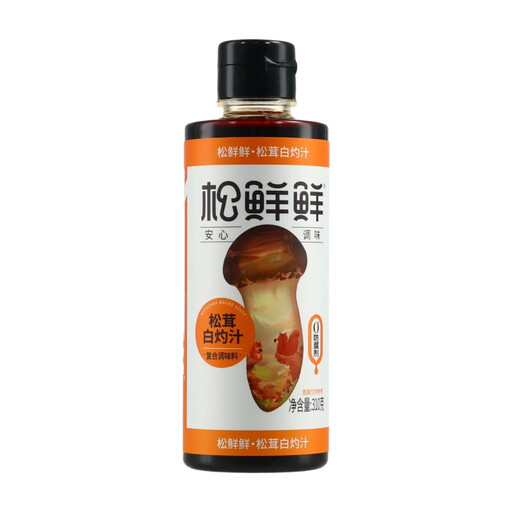
Why it fits this profile: This ready-to-use liquid seasoning is ideal for blanching, soups, noodles and dips. The product information states 0 grams of sugar per 100 grams.
The nutritional information gives concrete figures: 62 kcal and 0 grams of sugar per 100 grams. It remains a salty seasoning though: the stated salt content is 13.4 grams per 100 grams.
310 grams, ready to use and suitable for multiple preparations. Contains soya and wheat; refrigerate after opening.
We’ve put together a full, up-to-date list of products that fully meet these strict selection criteria and comply with current European safety regulations.
That depends on the specific product. Some variants are described as vegetarian or vegan, while others may contain milk, egg or unspecified flavourings. Always check the ingredients list and allergen information on the packaging. Soya and wheat are common in many Chinese mushroom sauces.
Start with a small amount and mix it through warm rice or cooked noodles. A thick sauce can be used directly as a topping. A broth granule or mushroom powder should first be dissolved in a little water or added during stir-frying. Taste before adding extra soy sauce or salt.
This varies by product. Some jars need to be refrigerated after opening and used within a few days or weeks. Seal the packaging tightly and follow the storage advice on the label. Do not use the product if the smell, colour, packaging or texture has clearly changed.
