
Vandaag of morgen in huis

Kwaliteit gegarandeerd

Welkomstaanbiedingen ontgrendelen: GRATIS bezorging | Tot 80% korting | Gratis 30 dagen JoyPlus-proefperiode
Download de app
A Chinese mushroom sauce can quickly add more umami to a simple bowl of rice, noodles, tofu or vegetables. Yet many products on the shelf look very similar. One is a liquid mushroom soy sauce, another a thick mushroom sauce with pieces, oil, sugar or chilli.
If you only look at words like “premium”, “natural” or “authentic”, you could end up buying a sauce that doesn’t suit your dish. That’s why, as a Joybuy Product Recommendation Officer, I focus on verifiable points: ingredients, salt content, texture, allergens, usage and storage instructions.
Not every Chinese mushroom sauce contains a large amount of mushrooms. Some products mainly use soy sauce with a small amount of extract. That can be suitable for marinating or seasoning, but it won’t give you the same texture as a thick sauce with visible pieces of shiitake.
So check the quantitative ingredient declaration. For example, Zhongjing Mushroom Sauce Original Flavor states at least 70% Xixia shiitake mushrooms, while Healthy Boy Mushroom Soy Sauce contains 1% mushroom extract according to the product information.
A vegetarian mushroom sauce may be suitable without meat or fish, but that doesn’t always tell you enough about the full composition. Check the label for milk derivatives, animal ingredients and possible cross-contamination. The product information for LEE KUM KEE Vegetarian Oyster Flavour Sauce describes it as suitable for vegetarians and vegans; always check the current packaging when you buy.
Also pay attention to allergens. Many sauces contain soya and wheat, and some varieties also contain sesame.
Soy sauce and stir-fry sauce are concentrated flavourings. A high salt content isn’t automatically a product fault, but it does determine how much you need and whether you’ll add extra salt to your dish. The values vary widely: the Haday sauce mentioned states around 21.1–21.7g of salt per 100ml, while Zhongjing Original Flavor states 3.5g of salt per 100g.
Use nutritional values as a point of comparison, not as a medical assessment. The taste, portion size and overall meal remain the deciding factors.
A liquid shiitake sauce or mushroom soy sauce mixes easily into a marinade, soup or stir-fry. This type is also handy when you mainly want to add colour and savouriness. A dark soy sauce, such as Haday 0% additives Mushroom-Flavored Soy Sauce, is intended for braising and dishes where a deep colour is desired, according to the product description.
A thick mushroom sauce stays on rice, noodles, tofu or vegetables better. Zhongjing Mushroom Sauce Original Flavor and Jixiangju Mushroom Sauce for Rice are examples of ready-to-use sauces that can be stirred directly into rice or noodles, according to their descriptions.
Don’t just look at the product name; look at the ingredients list. A higher percentage of real mushrooms usually means more pieces and a more distinct mushroom texture. It doesn’t automatically mean the flavour will suit everyone, because oil, soy sauce, sugar and spices also have an influence.
For a pronounced umami sauce, shiitake, straw mushroom or boletus are possible flavour providers. With products that have a matsutake or boletus infusion, it’s wise to check how much is actually included. Songxianxian Golden Label Fresh Matsutake-Flavored Soy Sauce states at least 0.3% Boletus Edulis, for example.
A Chinese mushroom sauce can be mild, sweet, savoury or spicy. Varieties with chilli and Sichuan pepper, such as Zhongjing Shiitake Mushroom Sauce Mala Spicy Flavor, suit spicy noodles and stir-fries better than a neutral sauce for children.
Also check for E621, E635, preservatives, colourings and thickeners if you prefer to limit those. The Haday sauce is offered with a “0% additive” approach according to the product description; the listed ingredients are water, soya beans, wheat, salt, sugar and straw mushroom extract. The product information from the brand is the source here, not an independent performance test.
After opening, most of these sauces need to be stored in the fridge. Always follow the label. A jar of 800g is good value per quantity, but less practical if you only cook Asian food occasionally.
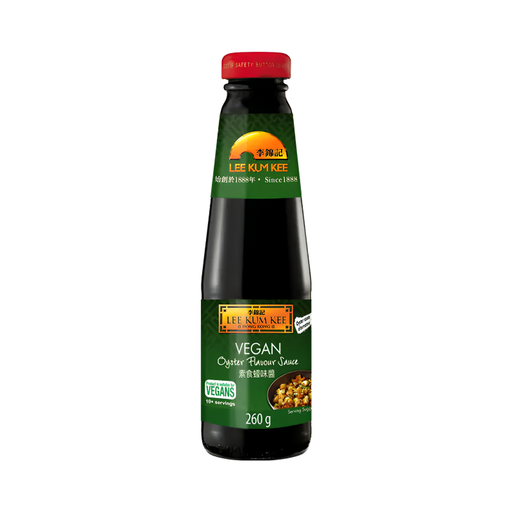
Why this fits the profile: A compact jar for anyone looking for a vegetarian or vegan seasoning for tofu, vegetables, noodles and stir-fries.
The product description explicitly states an oyster flavour without oysters. Always check the current packaging and allergen information.
260g; suitable for stir-frying, marinating, dipping and noodle dishes; contains soya as a listed allergen.
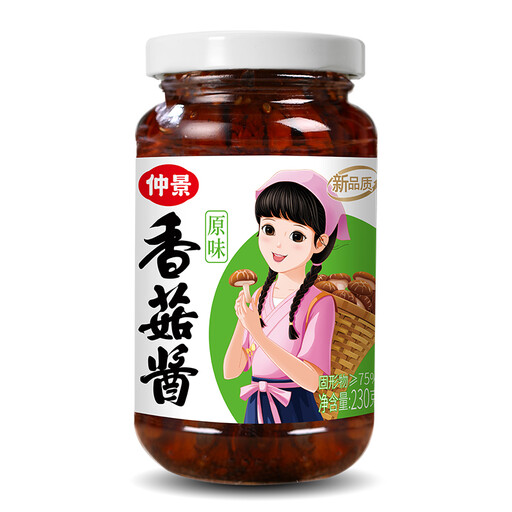
Why this fits the profile: For home cooks who want a distinct mushroom texture and a sauce for rice, noodles and soup.
The product information states at least 70% Xixia shiitake mushrooms, so you’re not relying on just a flavouring or extract.
230g; no chilli according to the product description; ready to use; contains soya and sesame.
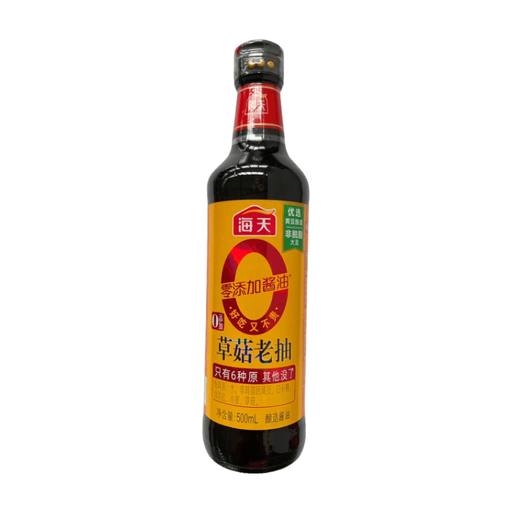
Why this fits the profile: For those who often braise, marinate or want a liquid Asian sauce for multiple dishes.
The product description mentions the uses of braising and red-cooking and lists ingredients without preservatives, colourings or flavour enhancers.
500ml; straw mushroom extract; suitable for stews and vegetables; contains soya and wheat.
We’ve put together a full, up-to-date list of products that fully meet these strict selection criteria and comply with current European safety regulations.
That varies by product. A sauce with “mushroom” in the name isn’t automatically vegetarian. Check ingredients and allergens. The LEE KUM KEE Vegetarian Oyster Flavour Sauce and Healthy Boy Mushroom Vegetarian Sauce mentioned are described in the product information as vegetarian or vegan options, but check the current packaging on delivery.
That depends on the product. Many jars and bottles need to be refrigerated after opening and used within the recommended period. Some products state consumption within one to two weeks, others only advise storing the sauce chilled and well sealed. Always follow the date and instructions on the packaging.
For noodles, both a thick mushroom sauce and a liquid stir-fry sauce are suitable. Choose a thick variety for a direct topping with pieces of mushroom. Choose a liquid shiitake sauce when you want to mix the sauce with stock, oil or cooking water. For spicy noodles, varieties with chilli work well; for a mild dish, an original flavour is more practical.
