
Vandaag of morgen in huis

Kwaliteit gegarandeerd

Welkomstaanbiedingen ontgrendelen: GRATIS bezorging | Tot 80% korting | Gratis 30 dagen JoyPlus-proefperiode
Download de app
Chinese instant noodles are a handy option for a quick meal, but the differences between packs can be significant. If you’re looking for Sichuan noodles, Dan Dan noodles or wide noodles with chilli oil, you shouldn’t just rely on the flavour name on the front. The noodle texture, preparation method, portion size and allergens are just as important in determining whether a product is right for you.
A product may contain plenty of chilli, yet still lack a true Sichuan character. With Sichuan and Mala noodles, Sichuan peppercorns, vinegar, sesame and fermented bean paste also play a key role. Sichuan peppercorns create a tingling, slightly numbing sensation that is quite different from just fiery chilli.
So, check the ingredients list. Does it mention chilli oil, Sichuan peppercorns or sesame paste? If so, you’ll typically get a more layered sauce than you would from a product that only contains chilli powder.
Wide noodles, also known as noodle sheets, can be firm and chewy. Some varieties only need to be steeped in boiling water; others need to be cooked in a pan. If you’re in an office or a student room with limited kitchen equipment, this could lead to an inconvenient purchase.
Pay attention to the preparation instructions: 5 to 6 minutes steeping, 3 to 5 minutes boiling and the required amount of water are practical differences to note.
A pack containing multiple portions is handy for the store cupboard, but first check the weight per portion and the best-before date. A multipack makes most sense if you eat noodles regularly. For occasional use, individual pots or packets are simpler, especially if you want to try different flavours.
For fans of wide, chewy noodles, products made with wheat flour, potato starch or tapioca starch are worth considering. The composition affects how elastic and firm the noodles remain after cooking.
“Non-fried” can be a relevant product feature, but it doesn’t mean a meal is automatically light or low in salt. Check the nutritional information table for that.
Mala generally means a combination of spicy and tingling. A sachet of chilli oil can often be used partially, giving you more control over the intensity. With hot and sour noodles, a separate vinegar sachet provides the sour element.
Also check how many sauce sachets are included. A product with separate chilli oil, vinegar, sesame oil and seasonings gives you more scope to adjust the flavour than a single mixed sauce.
The nutritional values in the product information are usually given per 100g and sometimes per portion. Always compare the same unit. In the product information provided, salt levels vary, for example; with some varieties, the salt content is around 2 to 4.5g per 100g.
In the UK, pay extra attention to the allergen declaration. Many Chinese instant noodles contain wheat, soya and sesame. Some products also contain peanut or mustard. Check the packaging before use, especially if you’re cooking for others. The actual packaging is the definitive source for any changes in recipe or labelling.
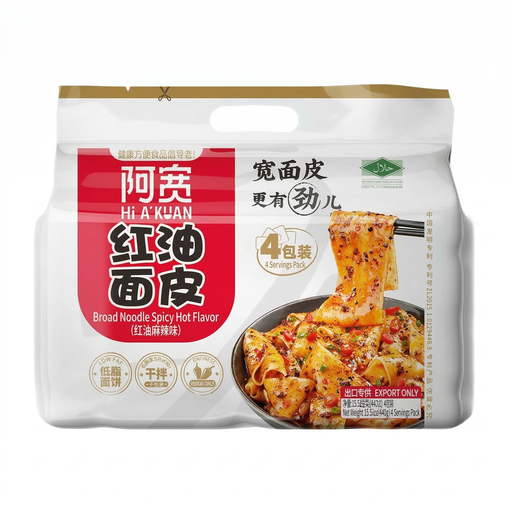
Why this fits the profile: This pack offers wide noodles and a simple preparation method that doesn’t require a hob. You just pour boiling water over the product and leave it to steep for 5 to 6 minutes.
The instructions clearly state 5 to 6 minutes steeping, then draining completely. This makes it suitable for a quick meal with minimal kitchen equipment.
440g total weight, wide chewy noodles and a Sichuan-style chilli oil sauce according to the product description.
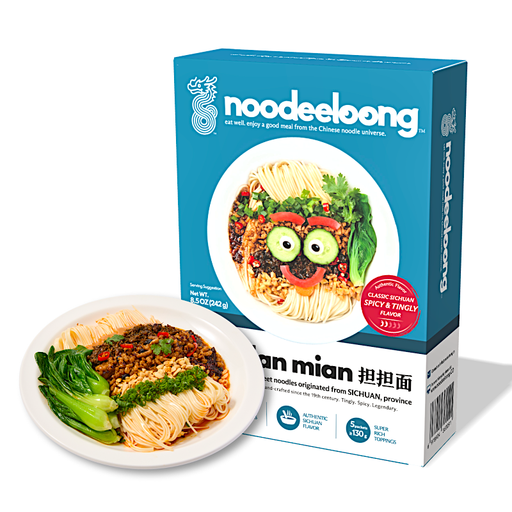
Why this fits the profile: The composition includes separate sesame sauce, chilli oil and seasonings. This appeals to those looking for more complexity in their Dan Dan noodles.
The flavour isn’t just described as spicy: the product information also mentions a tingling component and sesame paste. You can mix the sauce with 2 to 3 tablespoons of cooking water.
Cooking time of around 4 to 5 minutes, with wheat noodles, sesame paste and Sichuan peppercorns among the flavour components.
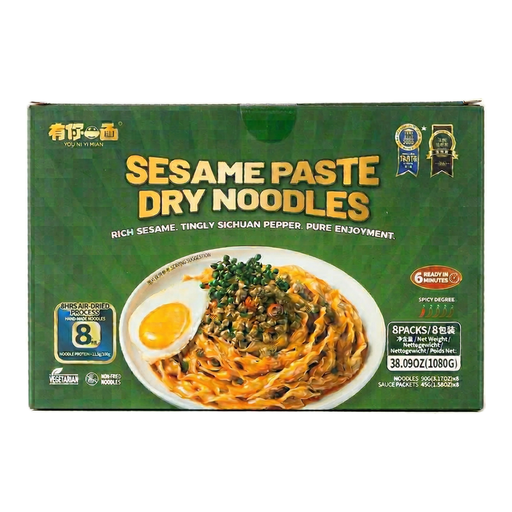
Why this fits the profile: With 8 portions of 135g each, this is a practical store-cupboard staple for households that cook Asian noodles regularly.
The number of portions and total weight are clearly stated. So you don’t need to combine several small packs for regular use.
Wide noodles, a sauce with chilli and Sichuan peppercorns, and a preparation time of around 5 to 8 minutes.
We’ve put together a full, up-to-date list of products that fully meet these strict selection criteria and comply with current European safety regulations.
Always follow the pack instructions, but this method works for many varieties:
With Chongqing noodles, some of the cooking water is often added to the sauce. With dry Dan Dan noodles, the amount of water is kept to a minimum so the sauce clings to the noodles.
No. The intensity varies by recipe and brand. Some packs state medium heat, while other varieties combine chilli oil, Sichuan peppercorns and vinegar. Use only part of the oil or seasoning sachet first if you want to build up the flavour.
The best-before date is on the packaging. Store unopened products in a cool, dry place away from direct sunlight. Once opened or mixed, product instructions usually advise preparing and eating the noodles straight away.
Dan Dan noodles are often mixed with sesame paste, chilli oil and savoury seasonings. Mala noodles place more emphasis on the combination of chilli and Sichuan peppercorns. The exact composition varies by product, so check the sauce sachets and ingredients list.
