
Vandaag of morgen in huis

Kwaliteit gegarandeerd

Welkomstaanbiedingen ontgrendelen: GRATIS bezorging | Tot 80% korting | Gratis 30 dagen JoyPlus-proefperiode
Download de app
Chinese duck snacks are popular with fans of savoury, spicy and sweet-and-spicy flavours. Think marinated duck wings, duck neck, duck feet and duck drumsticks. Many of these products are ready to eat, making them ideal for home, on the go or with a drink.
Even so, it pays to compare. A striking packet doesn’t always tell you how spicy a snack really is, how long it keeps after opening or which allergens it contains. The points below will help you avoid a disappointing purchase.
“Spicy”, “mala” or “sweet & spicy” can vary hugely from one product to the next. One snack might rely mainly on chilli, while another also contains Sichuan pepper, garlic, ginger, star anise or sweet soy sauce. If you only go by the front of the packet, you could end up with a snack that’s too mild, too salty or far too sharp.
Always check the ingredients list. For Sichuan duck snacks, ingredients such as Sichuan pepper, chilli, star anise and rice wine point to a fragrant, complex flavour. A sweet-and-spicy duck will often contain sugar, sweet chilli powder or sweet bean paste.
Vacuum packaging helps with transport and convenience, but once opened, the storage rules often change. Some ready-to-eat duck snacks need to be eaten straight away. Others must be kept chilled and consumed within 48 hours.
Look out for the difference between:
A 300g bag might look generous, but the edible portion varies from product to product. Duck necks and duck feet contain bone and also require more chewing. Duck wings and drumsticks generally give you a more recognisable piece of meat. So look at the net weight, the percentage of duck in the ingredients list and the type of cut.
For a quick bite, ready-to-eat duck wings, duck necks and duck feet are the most practical. They can usually be eaten straight from the packet. If you’re after a meal component, you’re better off choosing a duck drumstick or roast duck that needs to be reheated.
A frozen duck leg is not a ready-to-eat snack. This product needs to be fully defrosted and cooked. Always check the cooking instructions on the packet for poultry and make sure the meat is cooked through.
Chinese marinades often contain soy sauce, sugar and flavour enhancers. That’s not automatically a problem, but it can affect the nutritional value and taste. For example, the salt content in different snacks ranges from around 1.8g to 7.3g per 100g.
Also look out for soya, wheat, gluten, fish and sulphites. For instance, some duck wings contain soy sauce and fish sauce with anchovies. A product with lotus root in black duck flavour lists sulphites and sweetener. Always read the label on the packet, because the actual composition may differ from the information online.
A small packet of 75g to 118g is ideal for a solo snack or lunchbox. A 300g packet is better for sharing or serving alongside rice and noodles. Individually wrapped snacks are handy for eating on the go, while a larger bag is often better value per portion.
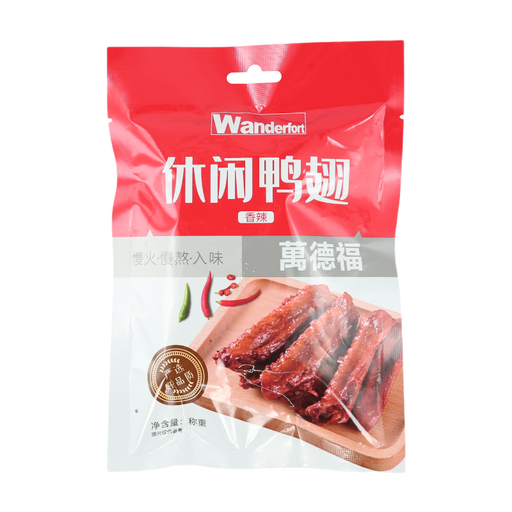
Why this fits the profile: The 105g packet is a manageable size for a first taste of spicy duck snacks. According to the product information, the wings are ready to eat and can be enjoyed straight away or lightly warmed.
The net weight, duck content of 95% and storage instructions after opening are clearly stated in the product information.
Ready to eat, 25g protein per 100g and suitable as a snack or party nibble.
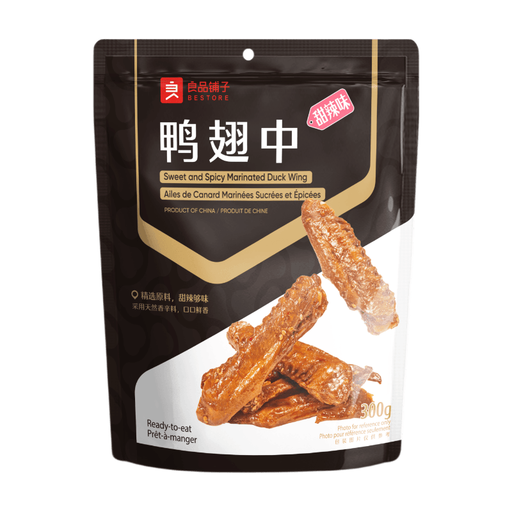
Why this fits the profile: The 300g packet is ideal for sharing. The ingredients include duck wings, soy sauce, chilli, garlic and ginger for a recognisable sweet-and-spicy profile.
The flavour isn’t just described with a marketing name; the ingredients list also shows the spices and marinade used.
300g, ready to eat and 14g protein per 100g according to the product information.
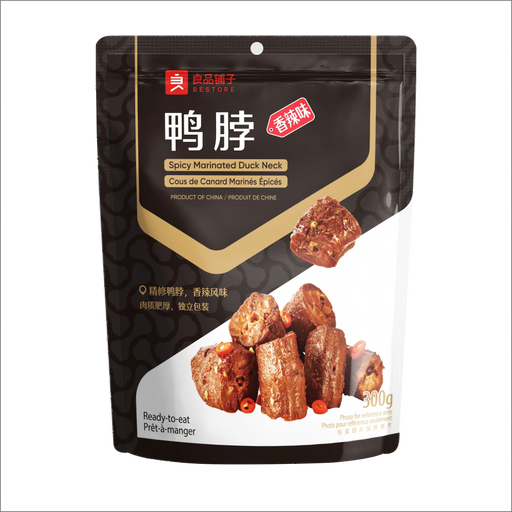
Why this fits the profile: Duck neck has a firm, chewy texture and suits snackers who want to make one portion last longer. The product information lists chilli, natural spices and soy sauce.
The fixed 300g portion size makes it easier to compare than loose, vaguely portioned snacks.
28g protein per 100g, ready to eat and a clear spicy flavour profile.
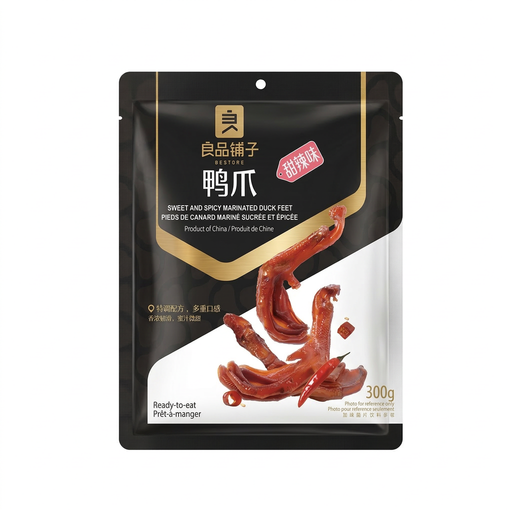
Why this fits the profile: The combination of sugar, sweet bean paste and chilli appeals to anyone looking for a pronounced sweet-and-spicy snack. According to the product description, the texture is firm and chewy.
The product information lists both the sweet and spicy ingredients, so your flavour expectations are better matched to your choice.
300g, ready to eat and 15.6g protein per 100g according to the label.
We’ve put together a full, up-to-date list of products that fully meet these strict selection criteria and comply with current European safety regulations.
No. There are mild, savoury, sour and sweet-and-spicy varieties. Check the ingredients for chilli, Sichuan pepper and chilli oil. A product labelled “sweet & spicy” will usually contain both sugar and chilli, but the intensity varies from recipe to recipe.
Always follow the instructions on the packet. Some unopened snacks can be kept at room temperature, while others need to be chilled or frozen. Once opened, many products need to be eaten straight away or kept chilled and consumed within the stated time.
Duck neck and duck feet usually have a firm, chewy texture and contain bone. Duck wings tend to offer more recognisable meat. For a snack that needs no preparation, marinated wings, necks and feet are the most practical. For a meal, you can choose duck drumsticks or roast duck, but you’ll need to follow the cooking instructions.
Before you buy, check the ingredients, allergens, portion size and storage conditions. That way, you’ll choose Chinese duck snacks that suit your taste and the occasion you want to enjoy them.
